How to Choose Automated Packaging Equipment in 2026?
Choosing automated packaging equipment in 2026 requires more than comparing machine prices. It requires matching technology with products, labor conditions, line speed, floor space, and future production changes. On a busy factory floor, a small sensor delay can create cartons, labels, or trays waiting beside the conveyor. That is expensive.
Industry data supports a careful approach. The International Federation of Robotics reported 541,302 industrial robots installed worldwide in 2023, a 10% annual increase. This growth shows how manufacturers are investing in repeatable automation, but packaging lines have different demands. PMMI’s 2024 packaging industry research also highlights labor shortages, operational efficiency, and flexible machinery as continuing priorities for North American producers. These findings suggest that automated packaging should improve measurable performance, not simply add advanced controls.
The right equipment may include robotic case packers, automatic fillers, vision inspection, or integrated palletizing systems. However, faster is not always better. A machine designed for one container size may struggle when packaging formats change. Buyers should examine changeover time, cleanability, spare-parts access, operator training, energy use, and total cost of ownership. Request real product trials, not only showroom demonstrations. Measure damaged packages, unplanned stops, and average changeover minutes.
Some forecasts sound confident. Reality is less tidy. Production data can be incomplete, and supplier claims may omit maintenance conditions. A reliable decision combines audited reports, factory references, technical documentation, and a controlled pilot. The best 2026 investment will be the system that remains useful when products, staffing, and customer expectations change.
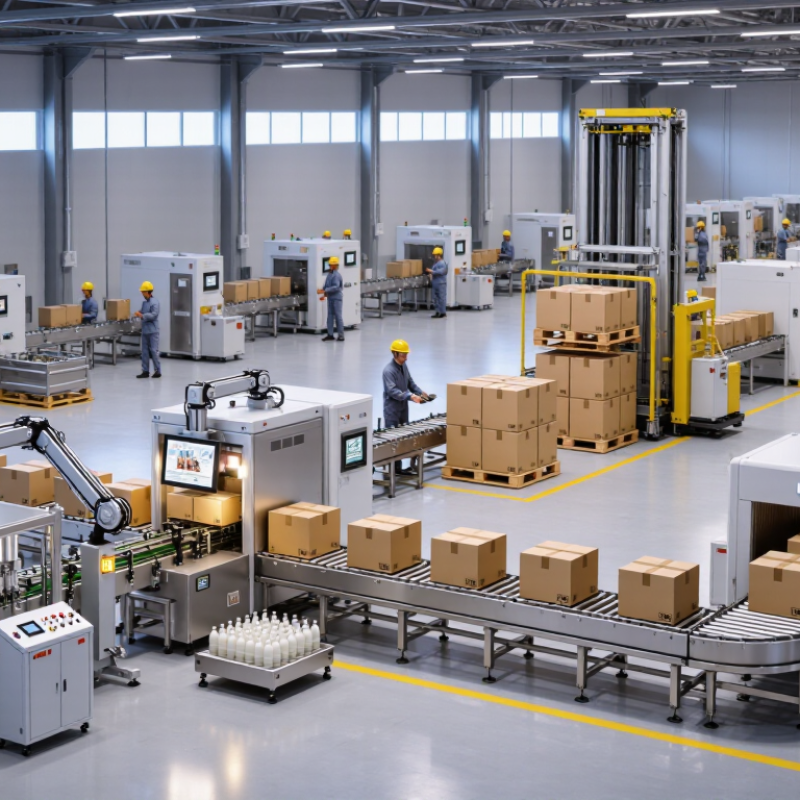
Define Your Packaging Requirements and Production Goals
How to Choose Automated Packaging Equipment in 2026?
Define the product before selecting the machine. Record dimensions, weight, fragility, moisture sensitivity, and acceptable package damage. Measure current output by shift, not by monthly averages. Include changeover frequency, staffing levels, floor space, and future product variations. Small details matter. A pouch line handling dusty powder needs different sealing controls than a carton line handling rigid goods.
Set measurable production goals. Specify target packs per minute, uptime, labor reduction, waste limits, and changeover time. The International Federation of Robotics reported 541,302 industrial robot installations worldwide in 2023. This confirms strong automation demand, but robotics alone cannot fix unclear requirements. PMMI’s 2024 State of the Industry report also identifies labor availability, flexibility, and uptime as important investment pressures. Ask suppliers to demonstrate your actual materials, formats, and operating speeds. Test the difficult product, not only the easy one.
Leave room for uncertainty. In plant assessments, the stated production rate is sometimes optimistic. A machine rated for 120 packs per minute may deliver less after film changes, cleaning, or minor jams. Build goals from verified production records. Include acceptance tests, operator training, spare-part access, and data integration requirements. The first specification may be wrong. Revise it after a short production trial.
How to Choose Automated Packaging Equipment in 2026?
Define Your Packaging Requirements and Production Goals
Use your required saleable units per shift to define the equipment capacity you need. The chart shows calculated output for common nominal line speeds, based on an 8-hour shift and 85% effective operating time. Actual requirements should also account for package size, changeover frequency, product handling, quality control, and future production growth.
Calculation basis: 480 minutes per shift × 85% effective run time × nominal packs per minute.
Compare Automation Levels, Machine Types, and System Compatibility
How to Choose Automated Packaging Equipment in 2026?
Choosing packaging equipment starts with the required automation level, not the machine catalog. Manual systems suit variable products and low volumes. Semi-automated equipment adds controlled filling, sealing, or labeling while keeping operators involved. Fully automated lines can improve throughput, but they demand stable materials, accurate dosing, and trained maintenance staff. It depends.
Review real production data before deciding. Record hourly output, changeover time, rejected packs, and operator handling points. A line producing 40 packs per minute may fail its target if cleaning takes two hours. Measure twice. My first equipment estimate was wrong because I ignored film changes and product variation.
Machine type must match the package and process. Vertical systems often handle loose products, while horizontal equipment may suit formed pouches or wrapped items. Cartoners, case packers, checkweighers, and vision inspection units should communicate through compatible signals and control protocols. Confirm available power, air pressure, floor space, guarding, and data connectivity before purchase. A machine can run perfectly alone and still disrupt the line.
Ask suppliers for documented speed ranges, test results, maintenance intervals, spare-part plans, and operator training details. Request trials using your actual product, packaging material, and planned settings. Compatibility also includes future expansion. Leave space for an additional printer, inspection station, or robotic loading unit. Do not over-automate too early. A flexible semi-automated cell may outperform a complex line when demand remains uncertain.
Evaluate Speed, Accuracy, Flexibility, and Product Handling
How to Choose Automated Packaging Equipment in 2026?
Speed matters, but speed without control creates damaged cartons and costly rework. Measure actual throughput during changeovers, not only the advertised cycle rate. Deloitte’s 2024 Smart Manufacturing Survey found that 86% of manufacturers expect smart operations to support competitiveness within five years. That investment needs measurable results. Track packs per minute, unplanned stops, and average recovery time. Accuracy also matters. A misplaced label or weak seal can stop a whole shipment.
Flexibility should match your product range. Test different package sizes, materials, weights, and surface textures before approving equipment. A machine may handle one format perfectly, then struggle with a soft pouch or dusty product. Product handling needs careful observation. Watch transfers, guides, belts, and drop points during a live trial. Excessive pressure can bruise products; loose control can cause jams. The International Federation of Robotics reported 162 robots per 10,000 manufacturing employees globally in 2023, showing wider automation adoption, but robotics alone does not guarantee gentle handling.
Tips: Request a factory acceptance test with your most difficult product. Record changeover minutes, reject rates, and operator adjustments. Ask for data logs, training plans, and maintenance access. Do not trust a perfect demonstration. Real production is less polite. Review energy use and spare-part availability, too. A faster line may still be the wrong choice if cleaning takes hours or operators cannot correct small faults safely.
Calculate Total Cost, Return on Investment, and Future Scalability
Choosing automated packaging equipment in 2026 starts with total cost, not purchase price. A machine listed at $120,000 may require conveyors, guarding, software integration, training, spare parts, and installation. Measure current labor hours, material waste, changeover time, energy use, and unplanned downtime. Use twelve months of production records, if available. Real numbers beat optimistic forecasts. Include floor space and utility upgrades. They often appear late.
For ROI, calculate annual savings from labor, reduced waste, higher throughput, and fewer stoppages. Subtract maintenance, consumables, financing, and expected downtime. Divide net annual benefit by the total installed cost. Then test the result against conservative production volumes. Our first estimate once assumed full utilization and looked excellent. Actual demand was uneven, so payback stretched. That mistake changed our evaluation method. We now model low, normal, and peak months. Ask operators to review assumptions. They notice friction spreadsheets miss.
Future scalability deserves equal weight. Choose equipment with accessible controls, adjustable formats, and modular feeding or labeling options. Confirm whether new products need expensive tooling. Check data connectivity, cybersecurity practices, and service availability before signing. A faster machine is not automatically better. If changeovers take forty minutes, extra speed may create queues. Request a live trial using your cartons, films, and real product variation. Record rejects and restart time. Leave capacity for growth, but avoid buying unused complexity. Flexible expansion usually protects cash flow better than oversized automation.