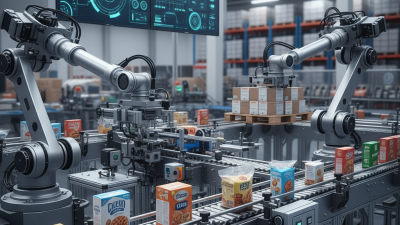
The Duravant family of operating companies serve the food processing, packaging and material handling segments.

China has become a major source of automated packaging solutions for food, beverages, pharmaceuticals, cosmetics, and industrial goods. Its manufacturers now supply complete lines, robotic palletizers, filling machines, cartoners, labeling systems, and inspection equipment. However, factory scale alone does not prove technical strength.
This guide examines China’s top 10 automated packaging solutions manufacturers through practical criteria. These include machine reliability, integration skills, production speed, customization, after-sales service, certifications, and export experience. A modern line may include stainless-steel conveyors, servo-driven wrappers, vision cameras, and robotic arms working within seconds of each other. Small details matter. A poorly aligned sensor can stop an entire shift.
Jorge Izquierdo, Vice President of Market Development at PMMI, has emphasized, “Automation is not a one-size-fits-all solution.” That point deserves attention. The cheapest machine may create higher maintenance costs later. The most advanced system may also be excessive for a small factory. This ranking therefore considers real operating conditions, not impressive brochures alone. It also recognizes an uncomfortable limitation: supplier performance can vary between projects, regions, and service teams. Buyers should verify references, inspect test runs, and review spare-parts support before signing contracts. The companies discussed here represent strong candidates, but no list can replace technical due diligence. Expect practical comparisons, visible strengths, and a few areas where each manufacturer still needs improvement.
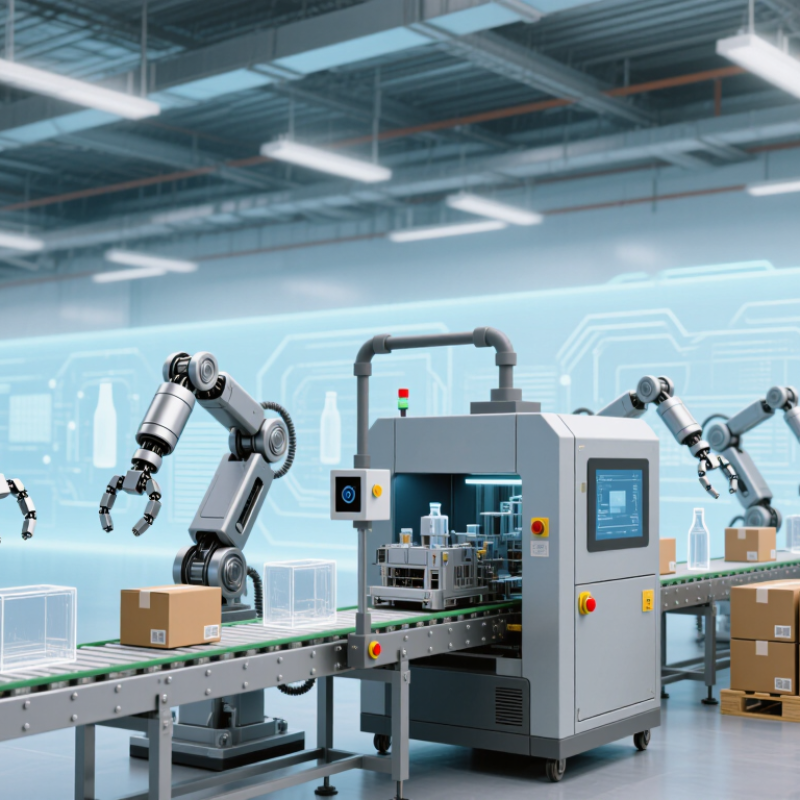
Automated packaging solutions combine machines, sensors, software, and conveyors to prepare products with limited manual handling. A typical line may fill containers, check weight, apply labels, seal cartons, and record production data. Each step works like a connected checkpoint. When one sensor detects an empty container, the system can stop the filler before waste increases.
These solutions matter because packaging affects safety, speed, consistency, and operating costs. A trained technician can inspect hundreds of packages, but fatigue may cause missed defects during long shifts. Automated vision systems can check seals, labels, and foreign particles with repeatable accuracy. Digital records also improve traceability, helping teams identify a production time, material batch, or equipment fault. Reliable systems need calibrated sensors, documented testing, guarded moving parts, and clear maintenance procedures.
Automation is not flawless. A poorly adjusted sensor may reject good packages or allow damaged ones through. Dust, vibration, and changing product sizes can create unexpected errors. I have found that practical line testing often reveals problems that software simulations miss. Operators still need training and authority to pause production. The best solution is not always the fastest machine. It should match the product, package format, workforce skills, floor space, and inspection needs. Small details matter, such as a readable control screen or a tool-free changeover that saves several minutes per cycle.
Evaluating China’s top 10 automated packaging manufacturers requires more than comparing machine prices. China installed 276,288 industrial robots in 2023, representing 51% of global installations, according to the International Federation of Robotics’ World Robotics 2024 report. That scale shows strong engineering capacity, but it does not guarantee reliable packaging performance.
Build a scoring sheet before contacting suppliers. Check proven output speed, changeover time, filling accuracy, reject rates, and overall equipment effectiveness. Request factory acceptance data from comparable products, not attractive showroom videos.
Ask for three export references and inspect their production records. The best suppliers explain failure rates openly. That matters.
Evaluate electrical standards, guarding, sanitation design, software access, and spare-parts availability. PMMI’s packaging industry reports repeatedly identify labor shortages and operational flexibility as major automation drivers.
A machine that changes formats in twelve minutes may outperform a cheaper unit requiring an hour.
Calculate total cost over five years, including installation, training, maintenance, energy, and downtime. Also test remote diagnostics and response times. A low quotation can hide expensive delays.
My own caution is simple: supplier rankings often reward marketing visibility, not engineering discipline. A practical audit, witnessed trial, and clearly written acceptance criteria remain more reliable than any “top 10” list.
China’s top ten automated packaging solutions manufacturers are best assessed by engineering depth, not factory size. These profiles examine equipment builders and system integrators across filling, sealing, cartoning, labeling, case packing, and palletizing. Smithers’ Future of Packaging reports that the global packaging market is expected to exceed US$1.2 trillion by 2028. That growth increases demand for stable, traceable, and flexible production lines.
The ten profiles highlight practical differences. Some manufacturers focus on high-speed vertical form-fill-seal machines for snacks and powders. Others build servo-driven cartoners, robotic case packers, or complete end-of-line systems. Stronger suppliers usually provide factory acceptance testing, remote diagnostics, and changeover guides. Their engineers should explain cycle speed, film tolerance, reject rates, and cleaning access in measurable terms. A machine that reaches 120 packs per minute means little if operators need forty minutes to change formats.
Automation capacity also matters. The International Federation of Robotics reported 276,288 industrial robots installed in China during 2023, representing about 51% of global installations. This supports a deep local automation ecosystem, including vision inspection, motion control, and collaborative robotics. Still, catalog claims require caution. I would request production samples, three comparable customer references, and a recorded endurance test. A polished showroom can hide unstable feeding or difficult maintenance. Some profiles may appear less sophisticated, yet their simpler designs can reduce downtime, training needs, and spare-parts risk. That trade-off deserves closer review.
Industry-reference view of the main automation stages commonly covered by leading packaging solution providers. The chart does not disclose company names or company-specific figures.
The sequence follows a typical automated packaging line, from product feeding to palletizing and production-data integration. Values represent the number of core automation functions associated with each stage, rather than manufacturer rankings.
China Top 10 Automated Packaging Solutions Manufacturers: Which Packaging Technologies and Industries Do They Serve?
China’s leading packaging solution manufacturers support food, beverages, pharmaceuticals, cosmetics, chemicals, and household goods. Their equipment commonly includes filling machines, capping systems, labeling units, cartoners, case packers, and palletizers. Many factories combine these machines with conveyors, robotic arms, vision inspection, and programmable control systems. This creates smoother production with fewer manual handling points. However, “fully automated” does not always mean maintenance-free.
Different industries require different technologies. Food producers often need hygienic filling, sealing, and metal detection systems. Pharmaceutical facilities require accurate dosing, traceability, cleanable surfaces, and controlled environments. Cosmetic manufacturers may prioritize flexible bottle handling and attractive labeling. Chemical plants need durable equipment, sealed transfer systems, and safer material control. E-commerce operations often choose compact case packing and automatic sorting. No solution fits every factory. Product viscosity, container shape, speed, and local safety requirements can change the final design.
Tips: Ask for sample testing before purchase. Check changeover time, cleaning procedures, spare-parts access, and operator training. Request real production data, not only catalog speed. A small pilot line can reveal jams that demonstrations miss. Also review software integration carefully. Some systems connect easily; others need extra engineering. The best decision balances output, product protection, labor savings, energy use, and long-term service reliability.
| Rank | Anonymous Manufacturer Profile | Primary Packaging Technologies | Automation and Line Capabilities | Main Industries Served | Common Package Formats | Integration and Control Features | Typical Compliance Focus |
|---|---|---|---|---|---|---|---|
| 1 | Profile A Integrated end-of-line specialist |
Case packing Palletizing Stretch wrapping Conveying | Robotic and conventional palletizing cells, automatic case handling, carton accumulation, and integrated end-of-line control. | Food and beverage, household products, personal care, chemicals, and general manufacturing. | Corrugated cases, trays, shrink bundles, drums, sacks, and mixed-SKU pallets. | PLC-based line control, photoelectric sensors, barcode readers, recipe management, and production data interfaces. | Machine guarding, emergency-stop systems, risk assessment, electrical safety, and applicable export-market requirements. |
| 2 | Profile B Form-fill-seal equipment specialist |
VFFS HFFS Multihead weighing Auger dosing | Intermittent and continuous bagging lines with automatic film registration, weighing, dosing, sealing, and date coding. | Snacks, grains, frozen foods, pet food, powders, seeds, agricultural products, and industrial parts. | Pillow bags, gusseted bags, quad-seal bags, sachets, pouches, and small retail packs. | Servo-driven motion, touchscreen HMIs, recipe storage, checkweighers, metal detection, and reject systems. | Hygienic design, food-contact material controls, cleanability, weight control, and traceability requirements. |
| 3 | Profile C Cartoning and case-packing specialist |
Cartoning Carton erecting Case packing Leaflet insertion | Horizontal and vertical cartoners, automatic carton loading, glue or tuck closure, and synchronized product feeding. | Pharmaceuticals, cosmetics, personal care, food, household goods, and medical consumables. | Folding cartons, display boxes, shelf-ready cases, multipacks, and bundled retail units. | Vision inspection, serialization-ready architecture, batch-code verification, servo synchronization, and audit trails. | Good Manufacturing Practice principles, tamper evidence, product identification, documentation, and line clearance. |
| 4 | Profile D Liquid filling and capping specialist |
Liquid filling Capping Bottle rinsing Labeling | Monoblock and inline systems for volumetric, piston, time-pressure, or flowmeter filling with automatic cap placement. | Beverages, edible oils, sauces, cosmetics, detergents, pharmaceuticals, and chemical liquids. | PET bottles, glass bottles, HDPE containers, jars, cans, and small vials. | Level and fill-volume monitoring, cap presence inspection, torque control, conveyor tracking, and CIP-compatible options. | Hygienic construction, corrosion resistance, clean-in-place provisions, filling accuracy, and container-contact controls. |
| 5 | Profile E Powder and granular dosing specialist |
Auger filling Net weighing Linear weighing Dust control | Automatic dosing, bag forming, sealing, vacuum assistance, dust extraction, and integrated checkweighing. | Dairy powders, nutritional products, coffee, spices, chemicals, minerals, fertilizers, and pet food. | Sachets, stand-up pouches, valve bags, open-mouth bags, jars, cans, and fiber drums. | Load-cell feedback, dust extraction interfaces, recipe controls, metal detection, reject handling, and batch reporting. | Explosion-risk assessment where applicable, dust containment, hygienic zoning, weighing accuracy, and product segregation. |
| 6 | Profile F Thermoforming and vacuum packaging specialist |
Thermoforming Vacuum packaging MAP Tray sealing | Automatic forming, filling, gas flushing, vacuum sealing, film cutting, label application, and leak detection. | Fresh meat, seafood, poultry, cheese, ready meals, medical products, and technical components. | Vacuum packs, modified-atmosphere trays, skin packs, portion packs, and sealed technical trays. | Temperature control, film registration, gas monitoring, seal inspection, vision systems, and line-speed synchronization. | Food hygiene, seal integrity, shelf-life control, material compatibility, and controlled-atmosphere process monitoring. |
| 7 | Profile G Labeling and coding automation specialist |
Pressure-sensitive labeling Sleeve labeling Inkjet coding Laser marking | Inline label application, print-and-apply systems, automatic code verification, vision inspection, and reject stations. | Beverages, food, cosmetics, pharmaceuticals, chemicals, electronics, logistics, and industrial manufacturing. | Bottles, cartons, cases, pouches, pallets, vials, tubes, and irregular containers. | Camera-based OCR and barcode verification, database connectivity, serialization support, and conveyor-speed tracking. | Legibility, traceability, product identification, tamper-evident labeling, and regulated coding requirements. |
| 8 | Profile H Robotic pick-and-place specialist |
Delta robotics SCARA robotics Vision guidance Tray loading | High-speed robotic loading, orientation, sorting, collation, case packing, and flexible product changeover. | Bakery, confectionery, pharmaceuticals, cosmetics, consumer goods, electronics, and medical devices. | Trays, cartons, pouches, blister packs, bottles, flow-wrapped products, and retail multipacks. | 2D and 3D vision, collaborative or industrial robot options, conveyor tracking, safety scanners, and recipe-based changeover. | Product handling accuracy, operator safety, hygienic interfaces, validation documentation, and repeatable process control. |
| 9 | Profile I Bagging and palletizing specialist |
Open-mouth bagging Valve bagging Robotic palletizing Bag closing | Automatic bag filling, sewing or heat sealing, pallet pattern generation, layer handling, and stretch or hood wrapping. | Cement, building materials, animal feed, grains, chemicals, fertilizer, minerals, and agricultural commodities. | Paper bags, woven polypropylene sacks, valve bags, bulk bags, shrink-wrapped bundles, and pallet loads. | Weight feedback, pallet pattern control, dust extraction interfaces, barcode identification, and warehouse handoff signals. | Dust management, load stability, material containment, weighing accuracy, worker protection, and transport safety. |
| 10 | Profile J Complete turnkey packaging-line integrator |
Primary packaging Secondary packaging End-of-line Turnkey integration | Project engineering covering filling, wrapping, cartoning, case packing, palletizing, conveyors, utilities, and commissioning. | Food and beverage, pharmaceuticals, cosmetics, household chemicals, consumer goods, and industrial products. | Bottles, cans, jars, pouches, cartons, corrugated cases, shrink bundles, and palletized units. | Centralized line management, SCADA or MES connectivity, OEE monitoring, remote diagnostics, serialization interfaces, and data logging. | Risk assessment, hygienic design, validation support, documentation, operator training, and region-specific machinery requirements. |
Choosing among China’s top automated packaging solutions manufacturers requires more than comparing brochures. The International Federation of Robotics reported 276,288 industrial robots installed in China in 2023, representing over half of global installations. This signals strong engineering capacity, but not equal packaging expertise. Ask whether the supplier has handled your product, film, carton size, and required line speed.
Request a factory acceptance test using your real materials. Measure sealing strength, filling accuracy, changeover time, reject rates, and overall equipment effectiveness. PMMI’s 2024 packaging industry research highlights labor availability, productivity, and flexible automation as major investment drivers. Therefore, a reliable partner should explain how its system performs during frequent product changes, not only during a perfect demonstration. Watch the small details: sensor access, washdown areas, compressed-air use, and the time needed to replace a belt.
Check engineering evidence before signing. Review quality procedures, electrical documentation, software backups, spare-parts coverage, and remote-support limits. ISO 9001 certification can support process control, but it does not prove good machine design. Confirm compliance for the destination market and request references from comparable installations. A low initial price may hide difficult integration. I have seen polished proposals miss basic factory constraints. That is why a written acceptance test, realistic production data, and staged payments matter. No scorecard is perfect. Leave room for technical review after the first production trial.