What Is Industrial Packaging?

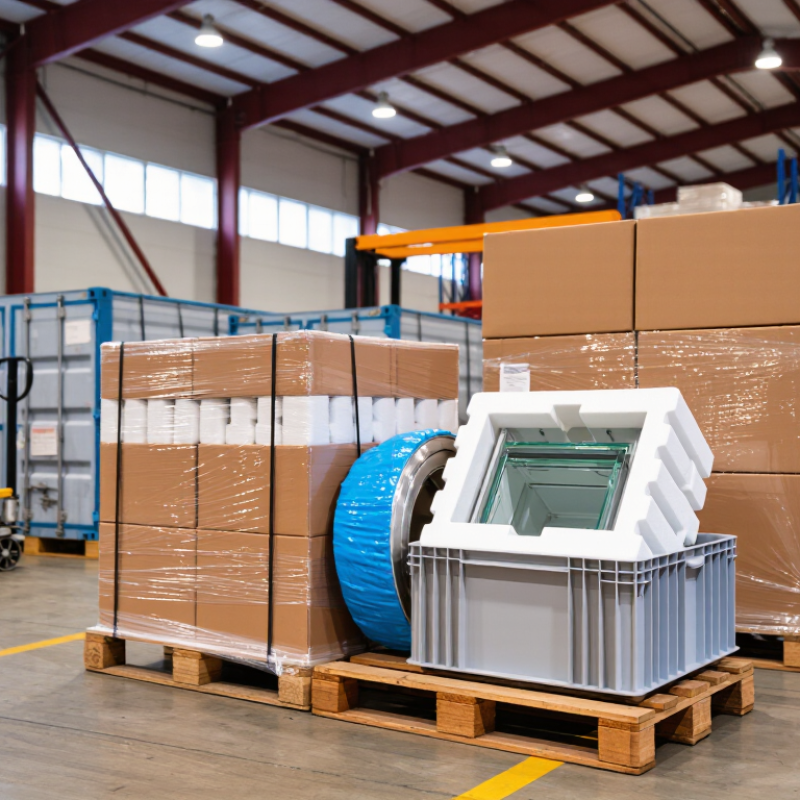
Industrial packaging is the system that protects goods as they move through manufacturing, storage, and distribution. It includes containers, pallets, cushioning, labels, and the methods used to handle them. A steel component may need a rust-resistant wrap. A glass instrument may need molded cushioning inside a rigid crate. Different products demand different safeguards.

Product-design leader Steve Jobs once observed, “Packaging can be theater, it can create a story.” His remark concerns packaging broadly, not industrial specifications. Still, it highlights a useful point: packaging communicates as well as protects. In industrial settings, clear labels and visible handling instructions can help workers identify a shipment and move it safely. The details matter.

Good industrial packaging balances protection, weight, cost, and ease of handling. A box that survives a warehouse but wastes space on a truck is not an ideal solution. Nor is a lightweight design that lets parts shift during transit. Engineers test materials, inspect damage records, and consider how packages will be lifted, stacked, and stored. Results can vary. A design that works for one route may fail on another, and real-world handling is not always tidy. That deserves attention.

This guide explains common materials, design choices, applications, and trade-offs. It also considers how businesses can assess packaging performance without assuming one solution fits every product. The goal is practical understanding, not a perfect formula.
What Is Industrial Packaging?

Industrial Packaging Defined: Bulk, Transit, and Protective Packaging

What Is Industrial Packaging?
Industrial Packaging Defined: Bulk, Transit, and Protective Packaging

Industrial packaging prepares products for storage, handling, and shipment beyond the retail shelf. It often works as a system: a container holds the goods, while added materials help manage movement and impact. The right design depends on product weight, route, storage time, and handling conditions.

Bulk packaging groups large quantities into fewer units. Rigid bins, drums, sacks, and large bags can hold components, powders, or liquids. Workers may move them with forklifts or pallet equipment. Clear weight limits and stable stacking matter. A container that looks strong may still fail when its contents shift.

Transit packaging helps goods travel through repeated handling. Pallets, crates, and corrugated cases can keep loads together during loading and unloading. Protective packaging reduces damage from vibration, abrasion, moisture, or sudden knocks. Foam, dividers, cushioning, and liners each serve different purposes. Small details count.

A useful choice starts with the product’s actual risks, not just its shape. Test packages under realistic conditions where possible, and check for scuffs, leaks, crushed corners, or shifting contents. No design is perfect. Even careful testing may miss rough handling on a long route, so feedback from people who pack and receive the goods can reveal what needs adjustment.

What Is Industrial Packaging?

Industrial packaging protects products and supports storage, handling, and shipping. Bulk packaging holds large quantities; transit packaging groups or secures goods for transport; protective packaging helps reduce damage.

The chart compares common nominal capacities for bulk containers. Actual capacity and usable fill vary by container design and product requirements. Transit and protective packaging may be used alongside bulk containers.

Core Functions: Containment, Handling, Load Stability, and Product Protection

Industrial packaging does more than surround a product. It creates a controlled space that keeps items together from the filling line to the warehouse and delivery point. Containment starts with matching package strength to product weight, shape, and sensitivity. A corrugated case holding metal fittings needs different support than one carrying glass components. Small gaps can let parts shift. Too much empty space wastes material and makes stacking less dependable.

Handling is part of the design, not an afterthought. Forklift pockets, handholds, clear labels, and consistent dimensions help workers move loads with fewer awkward lifts. On a pallet, cases should align without overhang. Stretch wrap or strapping should hold the pattern without crushing corners. Load stability matters during turns, braking, and travel over uneven floors. A stack that looks firm at rest may sway once the truck moves. Test it.

Protection depends on the route, too. Moisture, dust, vibration, and repeated transfers can affect a product before it reaches its user. A simple drop test or trial shipment can reveal weak seams and damaged edges. Still, tests cannot reproduce every warehouse or driver. Packaging decisions need real handling feedback, not just neat calculations.

Common Formats: Drums, IBCs, FIBCs, Pallets, and Corrugated Cases

Industrial packaging protects goods during storage, handling, and transport. The right format depends on the material, load size, and how often containers will be moved. Drums are common for liquids, powders, and pastes. Steel or plastic walls resist rough handling, while tight closures help limit spills. A drum can be lifted or secured on a pallet, but its weight and shape may make manual handling awkward.

Intermediate bulk containers, or IBCs, hold larger volumes in a rigid tank, often within a protective cage. Their base and outlets can support forklift movement and controlled dispensing. Flexible intermediate bulk containers, or FIBCs, are woven bags used for dry bulk goods such as granules. They collapse when empty, which saves storage space. Not every bag suits every filling method, though; lifting loops and liners need to match the load and equipment. On paper, this sounds straightforward. It isn’t always.

Pallets group cases or containers into units that forklifts can move. Corrugated cases add a lighter outer layer and can separate or cushion smaller items. A case stacked at the bottom of a pallet may crush if its board strength is poorly matched to the load. I have seen tidy pallet plans look convincing until a loose corner catches during handling. Small details matter: load distribution, moisture exposure, and whether workers can reach the closures safely.

Materials and Design: Steel, Plastics, Fiber, and Packaging Standards

What Is Industrial Packaging?
Materials and Design: Steel, Plastics, Fiber, and Packaging Standards

Industrial packaging is designed around the product, its route, and the way people handle it. Steel drums resist punctures and suit heavy or dense contents, but their weight can increase transport costs. Plastic containers are lighter and resist moisture and many chemicals. Their performance still depends on resin, wall thickness, temperature, and product compatibility. Corrugated fiber packaging is easier to handle and can cushion lighter goods, though moisture may weaken it. No material wins every time.

Design choices must work together. A drum needs secure closures and suitable handling points; a plastic container may need reinforcement around its base or neck. Fiber boxes rely on board strength, seams, and internal cushioning. Small details matter. A poorly placed handhold can make a stable package awkward to lift. Testing should reflect real conditions, including stacking, vibration, drops, and storage environments. A clean test result is useful, but it may not reproduce every rough journey.

Packaging standards and specifications help teams define dimensions, performance, labeling, and handling expectations. Requirements vary by product and shipping context, so confirm which standards apply before production. Keep records of materials, test methods, and approved changes. One weak spot: designs are sometimes judged by the package alone, not by the full supply chain. Review how workers load it, how it moves, and how it is opened.

What Is Industrial Packaging? - Materials and Design: Steel, Plastics, Fiber, and Packaging Standards

Material or topic Common industrial formats Useful characteristics Design considerations Relevant standards and guidance
Steel Drums, pails, cans, and reusable transport containers High strength and puncture resistance; can provide a strong barrier to light, gases, and moisture when properly closed. Consider package mass, corrosion protection, seam and closure integrity, handling equipment, and whether reuse or recycling is intended. For dangerous goods, applicable UN Model Regulations requirements and performance tests depend on the substance, packaging type, and packing group.
Plastics Bottles, jerrycans, drums, pails, liners, and intermediate bulk containers Low weight, resistance to many chemicals, and the ability to form complex shapes; performance varies by polymer and design. Check chemical compatibility, temperature range, permeation, UV exposure, impact performance, closure design, and stacking stability. ISO 16106 provides guidance for quality systems relating to packaging for dangerous goods; it does not replace applicable transport regulations or package testing.
Fiber-based materials Corrugated fiberboard boxes, paper sacks, molded-pulp components, and composite packages Relatively light and easy to print; corrugated board can provide cushioning and stacking support when correctly specified. Account for moisture, humidity, compression loads, product protection, closures, and the need for coatings or a moisture-resistant inner liner. ISO 12048 describes compression and stacking tests for complete, filled transport packages; ISO 2248 describes vertical impact testing by dropping.
Flexible intermediate bulk containers (FIBCs) Flexible woven containers used to handle and transport bulk solids Collapsible when empty and suited to handling dry bulk materials; available in different designs and safe working loads. Specify lifting loops, filling and discharge features, liner needs, load limits, and storage conditions. Do not assume all designs are suitable for hazardous materials. ISO 21898 covers FIBCs for non-dangerous goods. Dangerous-goods use is subject to applicable regulations and approved design requirements.
Packaging standards and testing Material specifications, package design qualification, transport testing, and quality controls Consistent test methods help assess performance under defined conditions, such as compression, impact, vibration, or leakage. Select tests based on the product, distribution route, stacking pattern, handling risks, and applicable legal requirements. A test result applies to the tested configuration. ISO 12048 covers compression and stacking tests; ISO 2248 covers vertical impact testing by dropping. Transport rules may impose additional requirements.

Note: Packaging performance depends on the exact material grade, package construction, closure, contents, and transport conditions. Confirm current standards and regulatory requirements for the intended market and use.

Industry Context: Packaging Accounted for 40% of Plastics Use in 2015 (OECD)

Industrial packaging protects materials as they move through factories, warehouses, and shipping routes. Think of a steel drum, a pallet wrap, or a corrugated box holding machine parts. These packages must resist pressure, moisture, and repeated handling. Their design also affects how much material is used and whether it can be recovered after use.

The scale matters. The OECD’s 2018 report, Improving Markets for Recycled Plastics, estimated that packaging represented about 40% of global plastics use in 2015. This figure covers packaging broadly, not industrial packaging alone. The OECD’s Global Plastics Outlook (2022) provides another lens: packaging generated about 40% of plastic waste in 2019. Together, these figures show how heavily packaging depends on plastics—and how quickly short-lived packaging can become waste.

A wrapped pallet may travel thousands of kilometres, yet its film can be discarded within hours of arrival. That mismatch deserves attention.

For packaging teams, reducing material weight is useful, but it is not the whole answer. A thinner film that tears easily may lead to damaged goods and replacement shipments. Reusable systems can also demand careful return logistics. The trade-offs are real. Assessing package weight, recycled content, durability, and end-of-life options together gives a more practical picture than focusing on one metric. Even then, data can be incomplete. Acknowledging that uncertainty is part of making better decisions.