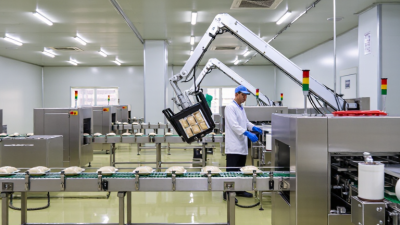
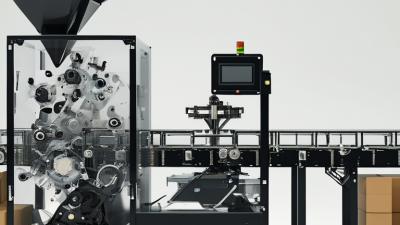
The Duravant family of operating companies serve the food processing, packaging and material handling segments.

Buying a packer machine for an international facility is rarely a simple equipment decision. Product photos may look convincing, yet performance depends on film, product density, bag dimensions, and local operating conditions. A machine that fills 60 bags per minute during a factory demonstration may deliver less on your line. That gap matters. Global buyers need evidence, not confident promises. This guide presents ten practical buying tips for comparing machines across suppliers, regions, and production environments. It focuses on measurable performance, responsible sourcing, and long-term operating value.
Experienced purchasing teams begin with the product itself. Powders, granules, liquids, and fragile goods require different dosing and handling systems. Ask suppliers for sample tests using your actual materials. Watch the seal, weigh finished bags, and inspect rejected packages. Record output during a realistic shift, not only during a short demonstration. Check stainless-steel grades, electrical standards, guarding, cleanability, and software language before approving the specification. Small omissions can create expensive delays after installation. They should not.
Reliable evaluation also includes the supplier’s service network. Confirm spare-parts availability, technician response times, training, warranty terms, and remote support. Request references from comparable plants, preferably in your region. Review certifications and documentation carefully. Confirm local import, safety, and packaging requirements with qualified professionals. No machine is perfect. Your assumptions may be wrong. A thoughtful buyer leaves room for maintenance access, future product changes, and operator feedback. These ten tips can help turn a promising quotation into a safer, more transparent, and better-supported investment.
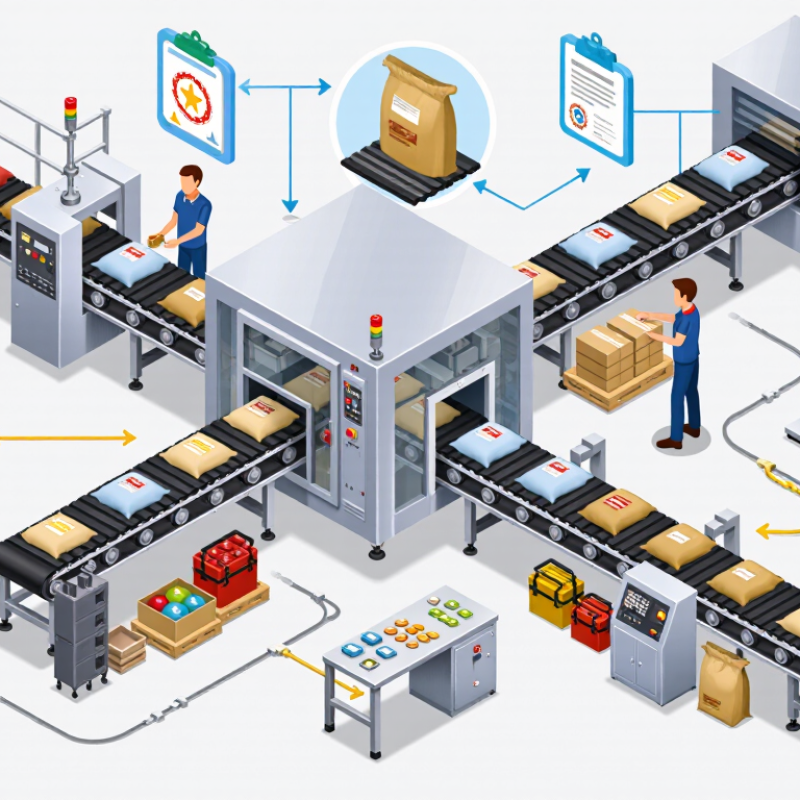
Before comparing packer machines, define the product precisely. Powder, granules, liquids, and fragile pieces behave differently during filling. Record density, moisture, particle size, temperature, and flow behavior. A flour-like powder may bridge inside a hopper, while oily products can leave residue on sealing jaws. These details affect the dosing system, contact materials, and cleaning method.
Then define the packaging format. A small pillow pouch needs different controls from a premade bag, carton, jar, or bulk sack. Specify the package dimensions, target weight, seal type, film thickness, and acceptable weight variation. Include product changes in your plan. A machine running one size perfectly may perform poorly after a quick format adjustment. That assumption causes expensive delays.
Production requirements should be measurable. State bags per minute, operating hours, labor availability, installation space, utilities, and required inspection points. Ask for test runs using your actual product and packaging materials. Check start-up waste, changeover time, seal strength, and cleaning access. Keep these results in writing.
A practical warning: theoretical speed is not always usable speed. Real production includes refilling, adjustments, rejected packs, and operator breaks. I once underestimated changeover time because the calculation ignored cleaning. That mistake was avoidable. Leave room for future capacity, but do not pay for features your product cannot use. Supplier documentation, training quality, spare-part access, and service response should be evaluated as carefully as machine speed.
10 Packer Machine Buying Tips for Global Buyers
Choosing a packer machine starts with the product, not the catalog photograph. Powder, granules, liquids, and fragile pieces need different feeding and sealing systems. A vertical machine may suit free-flowing goods, while a horizontal unit can handle delicate products more gently. Check the package shape, film width, seal temperature, and changeover time during a real trial. Fit matters more.
Speed figures often describe ideal conditions. Ask for practical output with your product, including stoppages and rejected packs. A machine rated at 80 packs per minute may deliver less after film changes or cleaning. Capacity also depends on hopper size, conveyor flow, and operator loading. Measure your peak demand, not only today’s average. Leave room for growth, but avoid paying for unused capacity.
Automation should match your labor skills and maintenance resources. Sensors, automatic weighing, recipe storage, and remote diagnostics can improve consistency. They also add software, calibration, and training requirements. Test whether operators can adjust settings without excessive downtime. Inspect access to belts, sealing jaws, and electrical panels. Simple maintenance often beats impressive automation. During acceptance testing, record fill accuracy, seal strength, noise, energy use, and recovery after a fault. Some specifications remain optimistic. Recheck them under local power conditions, packaging materials, and climate.
When buying a packer machine, material compatibility deserves careful testing. Film, paper laminate, and coated foil behave differently under heat and pressure. Ask for technical data on temperature ranges, friction, thickness, and barrier performance. Then test your actual packaging material, not only a sample supplied by the machine maker.
Sealing quality protects products from moisture, air, dust, and leakage. Check seal width, strength, appearance, and consistency across repeated runs. A seal may look clean but still fail during transport. Use burst tests, peel tests, and drop tests with filled packages. Record results from cold starts and long production cycles. Small gaps matter.
Product protection also depends on handling inside the machine. Confirm that guides, belts, and filling parts will not crush delicate goods. Product size changes can affect alignment and sealing pressure. I once trusted a successful trial too quickly. Later, minor wrinkles appeared after storage. That mistake showed me the value of extended testing. A reliable supplier should explain adjustments clearly, provide maintenance records, and support operator training. Ask difficult questions. Watch the machine run. Do not accept perfect demonstrations without checking ordinary production conditions.
Priority weighting for evaluating material compatibility, sealing quality, product protection, and total operating performance.
Use this planning benchmark to compare machines consistently. Material compatibility and sealing quality receive the highest weighting because unsuitable films or weak seals can cause leaks, waste, and product contamination. Product protection, throughput, changeover time, maintenance access, energy use, safety, controls, spare parts, and compliance should also be checked before purchase.
10 Packer Machine Buying Tips for Global Buyers
Supplier comparison should begin with evidence, not attractive photographs. Request factory acceptance records, maintenance logs, spare-parts availability, and customer references from similar industries. The Fortune Business Insights Packaging Machinery Market report valued the sector at about USD 52.83 billion in 2023. That scale creates many suppliers, but quality varies sharply. Compare output speed, filling accuracy, changeover time, and documented uptime under realistic conditions. A low quote can still be the wrong purchase.
Certifications need careful checking. Ask whether certificates cover the complete machine, electrical cabinet, software, and safety controls. The ISO Survey 2022 recorded more than 1.2 million ISO 9001 certificates worldwide, yet certification alone does not prove machine performance. Request certificate numbers and verify them with the issuing body. For customization, define product dimensions, packaging materials, line speed, factory voltage, cleaning methods, and future expansion space. Vague specifications usually become expensive revisions.
Calculate total cost over five years. Include shipping, installation, operator training, tooling, energy, planned maintenance, downtime, and critical spare parts. The International Energy Agency reports that electric motors account for roughly 45% of global electricity consumption. Efficient drives can therefore influence operating costs, especially on continuous lines. Ask suppliers for measured energy data, not estimates. My checklist is not perfect; production conditions change. A pilot test remains valuable. Watch the machine handle real materials, awkward cartons, dust, and rushed changeovers before approving the purchase.
Use this table as a supplier-comparison checklist. Performance figures and cost items are indicative planning benchmarks; the final specification should be confirmed through product trials, approved drawings, a signed technical specification, and a delivered-duty quotation.
| Tip | Buying Dimension | What to Compare | Reliable Evidence to Request | Practical Benchmark or Decision Rule | Impact on Total Cost |
|---|---|---|---|---|---|
| 1 | Define the Product and Pack Format | Product type, density, particle size, moisture, temperature, target weight, bag style, seal type, and package dimensions. | Product samples, packaging-film samples, product data sheet, approved pack drawing, and a written list of operating conditions. | A supplier should quote against the same product, package size, target weight, and film specification. Avoid comparing prices based only on a machine name. | Product characteristics determine the dosing system, sealing method, contact materials, tooling, and achievable output. A poor initial definition can create major retrofit costs. |
| 2 | Compare Capacity Using Acceptance Criteria | Rated speed, guaranteed output, weighing accuracy, reject rate, changeover time, and operating availability. | Factory acceptance test procedure, sample-run video with visible counters, test results using the buyer’s product, and proposed performance guarantees. | Compare net saleable packs per hour, not only cycles per minute. Require the supplier to state the test product, pack weight, film, operator assumptions, and acceptable reject percentage. | Higher nominal speed may increase the price of feeders, conveyors, sealers, controls, and spare parts. Net output is the correct basis for payback calculations. |
| 3 | Verify the Supplier’s Technical Capability | Relevant machine experience, in-house engineering, service coverage, spare-parts availability, software support, and commissioning resources. | Reference installations using comparable products and formats, documented response times, service scope, training plan, spare-parts list, and maintenance manuals. | Require at least one reference with a similar product, package format, and production environment. A low purchase price should not replace documented after-sales capability. | Local service and spare-parts stock can increase the initial quotation but may reduce downtime, emergency freight, travel charges, and lost production. |
| 4 | Check Applicable Certifications and Standards | Market-specific conformity, machinery safety, electrical safety, hygienic design, food-contact materials, and documentation requirements. | For the European Economic Area, request the applicable EU Declaration of Conformity and technical documentation. Check risk assessment against ISO 12100, safety-related control design against ISO 13849-1 where applicable, electrical design against IEC 60204-1 where applicable, and enclosure ratings against IEC 60529 where relevant. | CE marking is a conformity requirement for applicable products in the European market; it is not a substitute for a machine-specific risk assessment or complete technical file. Confirm the exact requirements in the destination country before ordering. | Guarding, interlocks, safety scanners, documentation, testing, and certified components can materially affect the machine price. Missing compliance work may cause redesign, customs, or commissioning delays. |
| 5 | Assess Food-Contact and Hygienic Design | Product-contact materials, cleanability, drainage, surface finish, dust control, lubrication, washdown requirements, and allergen changeover. | Material declarations, certificates of conformity for product-contact parts, stainless-steel grade information, welding and surface-finish details, cleaning instructions, and lubrication specifications. | Do not treat “stainless steel” as a complete specification. Confirm the material grade, contact area, finish, seals, gaskets, and suitability for the product and cleaning method. | Hygienic construction may require stainless-steel frames, washdown-rated components, special seals, quick-release parts, dust extraction, and additional cleaning accessories. |
| 6 | Separate Standard Features from Customization | Machine dimensions, infeed and discharge orientation, dosing technology, film width, bag length, sealing jaws, coding, inspection, conveyors, and line integration. | General arrangement drawing, electrical load list, utility list, interface signals, software-function list, change-part drawings, and a written deviation list from the standard model. | Customization should be priced line by line. Confirm which items are included, optional, or excluded before comparing quotations. | Custom hoppers, tooling, servo axes, inspection systems, special coatings, and non-standard layouts increase engineering, testing, spare-parts, and lead-time requirements. |
| 7 | Confirm Utilities and Site Compatibility | Voltage and frequency, compressed-air pressure and quality, electrical load, floor space, access height, ambient conditions, and network requirements. | Utility schedule, connection drawings, air-consumption data, heat and noise information, shipping dimensions, lifting points, foundation requirements, and installation-clearance drawing. | The machine must be specified for the destination electrical system and available utilities. Confirm whether the quoted price includes transformers, air preparation, extraction, or network hardware. | Site modifications, electrical conversion, air compressors, extraction, lifting equipment, and installation work are often excluded from the machine price. |
| 8 | Compare Delivery Terms and Logistics | Incoterms, production lead time, export packing, insurance, port handling, inland transport, import duty, customs clearance, and delivery to the final site. | A formal quotation showing the Incoterm and named place, packing dimensions and weight, commercial invoice details, packing list, origin documents, and proposed shipping schedule. | Compare quotations on the same landed-cost basis. A factory price, FOB price, CIF price, and delivered price are not directly comparable without adding the missing logistics costs. | Total logistics cost can include freight, insurance, destination charges, broker fees, duties, taxes, inland delivery, unloading, and storage. Verify duty classification with the importer or customs broker. |
| 9 | Calculate Total Cost of Ownership | Purchase price, installation, training, tooling, film waste, energy, compressed air, labor, maintenance, spare parts, downtime, and end-of-life value. | Five-year spare-parts recommendation, preventive-maintenance schedule, energy and air-consumption figures, consumables list, warranty terms, service rates, and software-support policy. | Total cost of ownership = equipment price + logistics and import costs + installation and training + utilities and consumables + maintenance and spare parts + expected downtime costs. | A machine with a higher purchase price may have a lower operating cost if it reduces film waste, labor requirements, changeover time, energy use, or unplanned downtime. |
| 10 | Protect the Purchase with Testing and Contract Terms | Payment milestones, factory acceptance test, site acceptance test, warranty, delivery penalties, documentation, software access, spare parts, and training. | Signed technical specification, FAT protocol, SAT protocol, warranty exclusions, response-time commitments, installation scope, training agenda, and complete manual and parts documentation. | Link the final payment to measurable acceptance criteria such as output, accuracy, seal quality, safety functions, documentation, and successful operation with approved materials. | Clear acceptance terms reduce the risk of paying for equipment that has not met the agreed performance. Include the cost of repeat testing, corrective work, and travel responsibility. |
Recommended comparison method: Create one evaluation sheet for every supplier and score technical compliance, verified performance, certification documents, customization scope, delivery risk, service support, and five-year total cost using the same assumptions.
A successful purchase depends on more than speed, capacity, and price. Verify who will install the machine, how long commissioning takes, and what your facility must prepare. Ask for a written installation checklist covering floor level, power supply, compressed air, drainage, and operating temperature. Request factory acceptance testing with your actual package sizes. A polished demonstration can mislead when your products are heavier, softer, or irregular.
Tips: Confirm whether remote guidance, on-site technicians, and translated manuals are included. Training should cover setup, format changes, cleaning, fault diagnosis, and safe shutdown. Ask how many operators can attend and whether training uses your production materials. Short videos help, but they cannot replace hands-on practice. I have seen teams understand the controls yet struggle with film threading on the first shift.
Maintenance planning deserves equal attention. Request a recommended spare-parts list with part numbers, prices, and delivery times. Check lubrication points, sensor access, belt replacement, and software backup procedures. Ask for a preventive-maintenance schedule based on operating hours. After-sales support should state response times, service channels, warranty limits, and escalation contacts. Test the support process before buying by sending a technical question. A fast, precise reply is useful evidence; a vague promise is not. Also, review what happens when local technicians lack experience. That gap is easy to overlook.