Why Choose the Right Packaging Machine for Your Business?
Choosing the right packaging machine affects more than production speed. It shapes product protection, labor needs, changeover time, and the consistency customers see on every shelf. A line that runs smoothly with one bottle size may struggle when formats change. Small details matter: seal quality, label alignment, available floor space, and the minutes needed to clean or reset equipment.
Jim Pittas, president and CEO of PMMI, represents a useful industry perspective on matching automation to manufacturers’ needs. A practical paraphrase of that perspective is: “Choose equipment for the operation you actually run.” That sounds obvious. It is not always easy. A machine with impressive output figures may still be a poor fit if it cannot handle your materials, product range, or staffing realities. Verify specifications with real samples and ask suppliers how performance was measured.
This guide explores how to assess capacity, flexibility, total operating costs, service support, and future growth before buying a packaging machine. It also considers the trade-offs between manual, semi-automatic, and automated systems. A cheaper purchase price can hide higher costs in downtime, change parts, or waste. And forecasts can be wrong. The best choice is not necessarily the largest or fastest machine; it is the one your team can operate reliably, maintain safely, and adapt as demand changes.
Understanding the Role of Packaging Machines in Business Operations
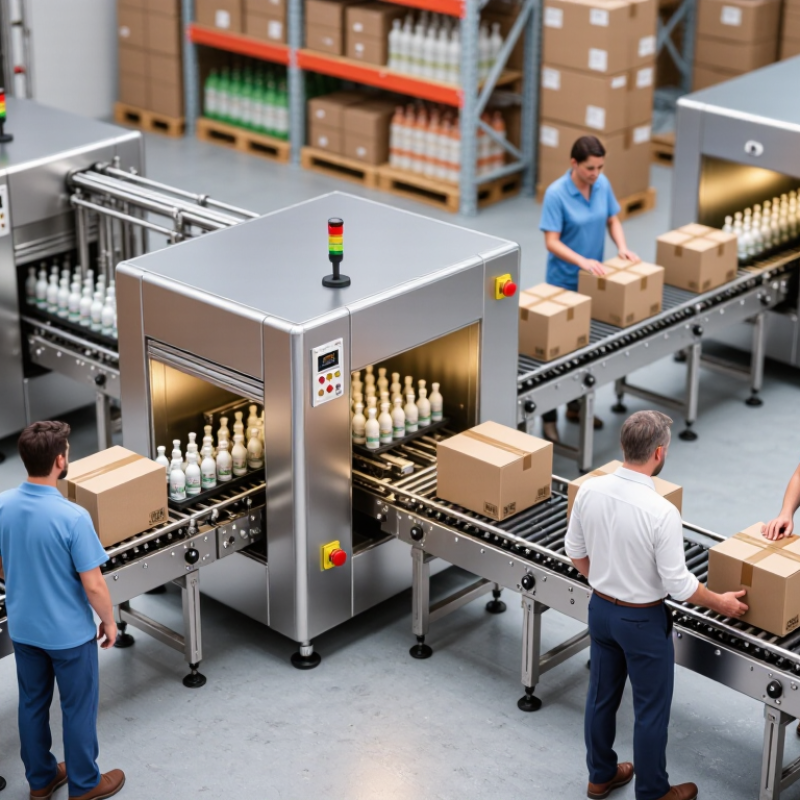
Packaging machines turn a product into a unit that can be stored, shipped, and recognized. Their role extends beyond speed: they help standardize filling, sealing, labeling, and case packing across a shift. A beverage line, for example, depends on consistent fill levels and secure caps before cartons move toward a pallet. If one stage drifts, downstream staff may face rework, delays, or damaged goods. Small details matter.
The right equipment should match the product, package format, output target, and available floor space. A compact tabletop sealer may suit short runs, while a larger automated line can support steady volume. Yet higher automation is not automatically better. Changeovers, cleaning access, operator training, and spare parts all affect daily performance. A machine that runs quickly on paper may still interrupt production when staff need extra time to adjust guides or clear jams. That is easy to overlook.
Operators also provide useful feedback: recurring crooked labels or uneven seals can reveal setup or material issues. Maintenance logs, reject counts, and cycle-time checks help teams identify patterns rather than guess. Packaging equipment cannot fix every process weakness. It can, however, make routine work more repeatable when specifications and inspections are clear.
Identifying Product and Production Requirements
Choosing a packaging machine starts with the product, not the catalogue. Record its dimensions, weight, surface sensitivity, flow behavior, and temperature. Note whether it sheds crumbs, leaks, or sticks to filling equipment. A powder that bridges in a hopper behaves differently from a chilled sauce that strings at the nozzle. Small details matter.
For food products, package integrity is operational, not decorative. FAO’s The State of Food and Agriculture 2023 estimates that 13.2% of food was lost between harvest and retail in 2021. Packaging cannot prevent every loss, but weak seals, inaccurate dosing, and rough handling can cause avoidable damage. Match the machine to the product’s shelf-life needs and the packaging material’s sealing requirements.
Then calculate actual production demand: good units per minute, daily run time, changeover frequency, staffing, and peak-season volume. Compare these figures with a machine’s sustained rate, not its advertised maximum. UNEP’s Food Waste Index Report 2024 estimates 1.05 billion tonnes of food waste in 2022 across households, food service, and retail. Packaging is only one part of that problem, yet consistent portioning and sealing can help protect products during distribution. Ask for a trial using your actual product and package. Bring awkward samples. A clean, uniform test batch can flatter a machine. Leave room for uncertainty, too: recipes and forecasts change, and today’s ideal line may become tomorrow’s bottleneck.
Evaluating Costs, Efficiency, and Long-Term Business Impact
Choosing a packaging machine starts with its full operating cost, not just the quoted price. Include installation, operator training, spare parts, energy use, and routine maintenance in your estimate. A machine that runs quickly but causes frequent product jams may cost more over time. Track changeover time and rejected packs during a production trial. Use your own products and packaging materials, not only sample figures from a supplier.
Efficiency depends on the fit between the machine and your daily workload. Check whether it handles your current package sizes and likely product changes without lengthy adjustments. Ask technicians to explain cleaning and fault-recovery steps; a complicated restart can leave a line idle. Compare expected output with observed output across a full shift. Even careful estimates miss things. I would revisit them after a few months of real production.
Tips: List every recurring cost before comparing quotes. Request a trial with your actual packaging. Measure good packs per hour, changeover minutes, and material waste. Ask what maintenance your team can perform safely in-house. Keep a small budget for unexpected adjustments. It happens. A machine that suits today’s volume may not suit next year’s, so weigh flexibility against features you may never use.
Why Choose the Right Packaging Machine for Your Business? — Evaluating Costs, Efficiency, and Long-Term Business Impact
Planning ranges only: prices and throughput vary substantially by product, package format, machine configuration, region, and supplier. Figures exclude installation, shipping, tooling, facility upgrades, and packaging materials. Request a product trial and written quote, and compare total cost of ownership against your actual production volume, labor cost, changeover needs, and expected downtime.
Choosing a Machine That Supports Growth and Compliance
Why Choose the Right Packaging Machine for Your Business?
Choosing a Machine That Supports Growth and Compliance
A packaging machine should fit today’s output and tomorrow’s product mix. PMMI’s 2023 State of the Industry report put U.S. packaging machinery shipments at $10.5 billion in 2022, up 9.4% from 2021. That growth signals investment, but a faster line is not automatically a better choice. Check whether the machine can handle your actual container sizes, materials, and changeover schedule. A few minutes saved per changeover can add up across a busy week.
Compliance depends partly on what the equipment can document. Look for clear settings, repeatable recipes, accessible maintenance records, and data that can support quality checks. Ask how operators will verify fill levels, seals, and label placement, and how the system flags a deviation. A beautifully fast machine may still create headaches if settings drift or records are difficult to retrieve. Be honest about your current process; new equipment cannot fix every weak handoff.
Tips: Bring sample packages and run a trial at your expected production speed. Record changeover time, rejected units, and cleaning steps. Ask for training materials and a sample maintenance log before purchase. Leave room for future formats—but don’t pay for features your team cannot maintain. One overlooked detail can matter.
Why Choose the Right Packaging Machine for Your Business?
Choosing a Machine That Supports Growth and Compliance
These milestones highlight why packaging equipment should accommodate compliant materials, hygienic production, traceability, and changing packaging formats. Requirements vary by market and product; the dates shown are regulatory milestones, not machine-performance ratings.
Sources:
EU Regulation 1935/2004;
EU Regulation 2023/2006;
U.S. FDA FSMA;
EU Regulation 2025/40.