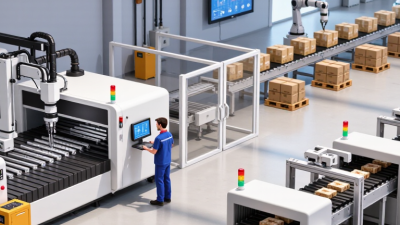
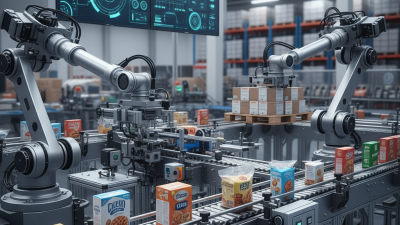
The Duravant family of operating companies serve the food processing, packaging and material handling segments.

Choosing machinery automation suppliers in 2026 requires more than comparing prices and product catalogs. A supplier may offer impressive robots, vision systems, and control software. Yet performance depends on integration quality, service response, and long-term reliability. A polished demonstration proves little.
This guide examines practical criteria for evaluating machinery automation partners. It considers engineering experience, production capacity, software compatibility, and documented quality processes. Buyers should inspect similar installations, request measurable performance data, and speak with recent customers. A factory visit can reveal important details, including cable routing, panel labeling, spare-parts storage, and technician training. Small details matter.
Supplier evaluation should also cover safety documentation, applicable certifications, cybersecurity practices, and change-control procedures. These areas protect production continuity and support responsible purchasing. Clear maintenance plans are essential. Ask how quickly technicians respond when a conveyor stops at 2 a.m. Ask whether remote diagnostics are secure and properly documented.
Cost remains important, but the lowest quotation may create expensive downtime later. A stronger decision compares total ownership costs, expected output, energy use, upgrades, and support. No scorecard is perfect. Weighted scoring can still hide risks when the project requirements are unclear. That assumption can fail.
The best machinery automation supplier communicates limitations openly and explains trade-offs without exaggerated promises. Reliable partners provide realistic timelines, trained teams, and verifiable references. They also adapt designs when operators identify practical problems. In 2026, successful automation selection will depend on evidence, not attractive presentations. This introduction sets a clear path for comparing suppliers with greater confidence, discipline, and useful skepticism.

Choosing a machinery automation supplier in 2026 should begin with a measurable production goal.
The International Federation of Robotics reported 541,302 industrial robot installations worldwide in 2023. This figure shows strong adoption, but it is not a universal target. Your factory may need one robot, ten robots, or better process control instead.
Study the benchmark by application, region, and manufacturing scale. Then compare it with your own data: cycle time, labor availability, defect rates, changeover delays, and floor space. A reliable supplier should translate these details into a clear automation plan. Ask for cycle-time tests, integration procedures, safety documentation, training plans, and maintenance response times. Request evidence from similar production environments. Marketing promises are not enough. I have seen projects fail because engineers measured robot speed but ignored feeding, inspection, and operator handoffs. That mistake is expensive, and surprisingly common.
Tips: Define one baseline before requesting quotations. Record current output, downtime, and reject rates for several weeks. Use the 541,302-installation benchmark as context, not as pressure. Check whether the supplier explains limitations honestly. A thoughtful provider will discuss commissioning risks, spare parts, software compatibility, and future expansion. Leave room for doubt. Your first automation estimate may be incomplete.
When comparing machinery automation suppliers in 2026, use a measurable labor benchmark. The International Federation of Robotics reported 162 installed robots per 10,000 manufacturing workers worldwide in 2023. This figure is not a purchase target. It is a screening signal. Ask suppliers to explain how their proposed system improves output, safety, and staffing resilience against your local baseline.
The same IFR World Robotics 2024 report recorded more than 541,000 new industrial robot installations in 2023. Supplier capability therefore requires more than an attractive quotation. Request verified cycle-time trials, fault-recovery records, spare-parts lead times, and technician training plans. Watch the demonstration closely. A machine that stops during a simulated sensor fault reveals more than a polished presentation.
Use recognized safety requirements, including ISO 10218 and ISO/TS 15066, when reviewing robotic cells. Check whether risk assessments cover maintenance, manual loading, and unexpected restarts. The U.S. Bureau of Labor Statistics reported continuing productivity pressure across manufacturing, but productivity varies sharply by process and workforce. Do not copy a global robot-density figure without adjustment. A supplier that admits integration limits may be more reliable than one promising instant payback. Calculate total ownership costs over several years, including software updates, tooling changes, energy use, and unplanned downtime. My screening would remain provisional until the equipment performs consistently in the real production environment.
Choosing machinery automation suppliers in 2026 requires more than comparing equipment prices. Ask how each supplier handles OPC UA, MQTT, ISA-95, and IEC 62443 in real projects. Request architecture diagrams, interface lists, and commissioning records. A polished presentation proves little. Walk through a production cell instead. Check whether controllers expose consistent tags through OPC UA, including timestamps, quality states, and alarm descriptions. MQTT testing should cover certificates, reconnect behavior, retained messages, and bandwidth limits. Small details matter.
ISA-95 alignment reveals whether machines communicate clearly with operations, maintenance, and enterprise systems. Ask suppliers to map equipment, work orders, material status, and performance data across defined levels. Avoid vague claims about seamless integration. Require a sample data model. Then test it with a simulated order and a rejected batch. IEC 62443 assessment should include asset inventories, zone-and-conduit design, secure remote access, patch procedures, account control, and incident response. Ask who owns each task after handover. Silence is a risk.
Reliable suppliers explain trade-offs instead of promising universal compatibility. They should document test results, known limitations, and support response times. Speak with engineers who performed the integration, not only sales representatives. In one factory review, a gateway passed normal traffic but failed during network recovery. That issue delayed production testing. No assessment is perfect. Repeat failure tests under heat, noise, and poor connectivity. Choose a partner whose evidence survives practical questioning, even when the answer is uncomfortable.
This chart shows the initial publication year of four widely referenced industrial automation and cybersecurity standards. When assessing suppliers, verify support for current revisions, documented data models, secure connectivity, production-system integration, and lifecycle cybersecurity controls.
Historical starting years: MQTT (1999), ISA-95 (2000), OPC UA (2006), and IEC 62443 (2009). These dates indicate the standards’ origins, not the release dates of their latest editions.
The IFR’s 4.28 million installed robots show how widely automation has entered modern factories. That figure also raises a practical question: what will each robot truly cost over its working life? A low purchase price can hide integration fees, programming hours, operator training, energy use, spare parts, and production downtime. Compare suppliers through total ownership cost, not the quotation alone.
During a factory assessment, measure cycle time, changeover frequency, floor space, and maintenance access. A robotic cell may require new guarding, electrical work, software updates, and staff training. Ask suppliers to separate hardware, installation, validation, annual service, and emergency support. Request realistic downtime estimates. “Fast deployment” sounds attractive.
A useful comparison uses a five-year model. Include purchase cost, installation labor, utilities, preventive maintenance, software licenses, replacement parts, and lost output during repairs. Check whether technicians can diagnose faults without waiting for overseas support. One supplier may offer cheaper equipment but slower recovery after a failed sensor. That delay can cost more than the original discount.
Real projects rarely match the spreadsheet perfectly. We once underestimated changeover interruptions and overestimated operator adoption. The lesson was uncomfortable: technical performance does not guarantee financial performance. Ask for references from similar production volumes, inspect a working cell, and test recovery procedures under controlled conditions. Also review warranty limits and training records before signing.
Supplier selection should begin with measurable ROI, not impressive demonstrations. The International Federation of Robotics reported 541,302 industrial robot installations worldwide in 2023. Operational stock exceeded 4.28 million units. This growth signals stronger automation demand, but it does not guarantee savings. Ask suppliers to show cycle-time evidence, labor assumptions, energy use, maintenance costs, and payback under your actual production mix. A twelve-month payback may disappear when changeovers increase.
Safety requires documented engineering, not verbal confidence. Request risk assessments, guarding layouts, emergency-stop tests, and training records aligned with applicable machinery safety standards. The IFR’s World Robotics data also reported global robot density of 162 robots per 10,000 manufacturing employees in 2023. More machines mean more interfaces between people and equipment. Small gaps matter. A sensor mounted too high can create a real blind spot.
Service and scalability deserve equal scoring. Check response times, spare-parts availability, remote diagnostics, software ownership, and technician coverage near your facility. Ask for references from plants with similar loads. Deloitte’s 2024 Smart Manufacturing and Operations Survey found that 86% of manufacturers expect smart manufacturing to become a primary competitiveness driver within five years. That expectation can encourage rushed buying. A modular cell, open data access, and expandable controls usually age better. Still, scalability is not free. Oversized hardware may remain idle, quietly damaging ROI.