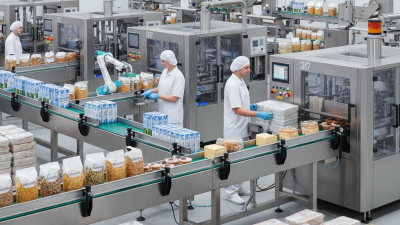
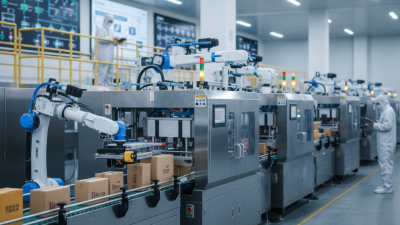
The Duravant family of operating companies serve the food processing, packaging and material handling segments.

Choosing industrial packaging equipment in 2026 is less about buying the fastest line and more about matching equipment to the product, people, and production floor. Grand View Research estimated the global packaging machinery market at approximately $45.8 billion in 2023, projecting a 5.8% compound annual growth rate through 2030. That growth signals investment, not a guarantee that every upgrade will pay off. A line that handles today’s carton may struggle with tomorrow’s lighter material or a new package size.
PMMI’s industry research also points to persistent workforce and operating challenges, making usability and service support practical selection criteria. Packaging expert Dr. R. Andrew Hurley’s work on packaging systems offers a useful reminder: the package, product, and process must be considered together. That is a guiding principle, not a substitute for testing your own line.
Look closely at changeover time, machine footprint, cleaning access, parts availability, and integration with existing conveyors. Ask suppliers to demonstrate your actual product—not a convenient stand-in. Watch the seals, labels, and rejects. Small details matter.
A little caution helps. Forecasts are not purchase orders, and impressive speeds on a specification sheet may not survive real shifts, staff turnover, or frequent format changes. This guide outlines how to compare industrial packaging equipment in 2026, assess total operating needs, and choose a system your team can run reliably.
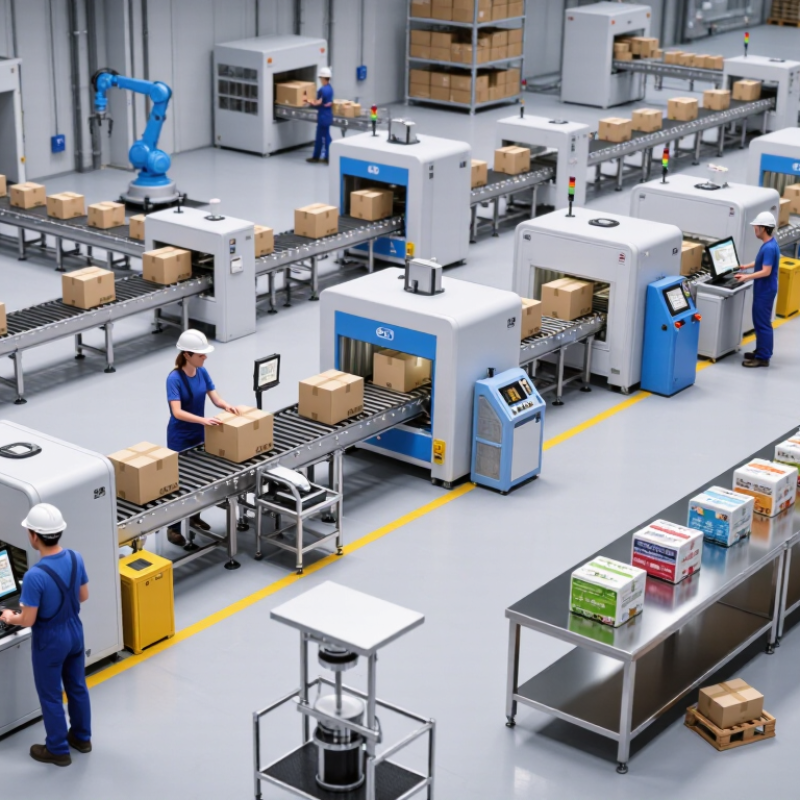
Industrial packaging equipment refers to machines that prepare products for storage, shipping, or sale. Some equipment handles one task, such as filling bottles or sealing cartons. Other machines connect several steps into a production line. The right choice depends on the product’s shape, fragility, and output volume. A dry powder behaves differently from a liquid. So does a small component compared with a large box.
Main types include filling and dosing machines, which measure products into containers; form-fill-seal machines, which create packages from film, fill them, and seal them; and cartoners or case packers, which place products into cartons or shipping cases. Labeling and coding equipment adds product information, while inspection systems can detect missing items or damaged seals. At the end of a line, palletizers stack cases for transport. Categories can overlap, and a machine that looks suitable on paper may not fit a real production space.
Tips: Test with your actual product and packaging materials, not just sample specifications. Check changeover time, cleaning access, and operator training needs. A fast machine can still create delays if it is difficult to maintain. Leave room for adjustments; production rarely stays perfectly uniform.
Choosing packaging equipment starts with the product, not a machine catalog. Record each product’s dimensions, weight, shape, and temperature at the point of packing. A rigid jar, a dusty powder, and a soft pouch place very different demands on feeding and sealing. Note fragile corners, oily surfaces, static, or contents that settle during transport. These details affect contact surfaces, dosing accuracy, seal design, and product protection. Measure real samples. Include the awkward ones. Averages hide trouble.
Next, define the package and production requirements in measurable terms. Specify material, dimensions, closure, label position, and acceptable variation; bring samples of current and proposed packaging to trials. Map the production day: target units per minute, shift length, changeover frequency, cleaning time, operator skill, and available floor space. A line that meets a peak rate may still miss daily output after breaks and changeovers. This is easy to underestimate. Check upstream supply and downstream case packing, too; a fast filler cannot fix a slow conveyor. Set a realistic range, not only a maximum. Oversized equipment can sit idle and complicate operation. Confirm tests with representative products and packaging, then document what failed as well as what worked.
When comparing packaging equipment, look beyond the advertised maximum speed. Check sustained output using your actual product, package size, and shift pattern. A machine rated for 40 cartons per minute may run slower when operators reload film or clear jams. Ask for a live trial with representative materials. Note changeover time, rejected packs, and how often staff intervene. A small buffer conveyor can help, but it cannot fix a persistent bottleneck.
Automation should match both production needs and the skills available on site. Automatic feeding may reduce repetitive handling, while sensors and clear alarms can help operators spot misfeeds quickly. Confirm that the equipment fits existing conveyors, electrical supply, floor space, and maintenance routines. Review compatibility with every package format you use, including less common sizes. One overlooked detail: a line may run smoothly with one product, then struggle during a rushed changeover. Real conditions are rarely that tidy.
Tips: Request cycle-time data from a trial, not just a brochure. Measure changeovers. Check spare-part availability and operator access before installation. If possible, test several package sizes on the same setup.
When choosing industrial packaging equipment in 2026, assess safety at the machine—not just in the brochure. Check guarding around conveyors, accessible emergency stops, safe jam-clearing procedures, and ergonomic reach during changeovers. The U.S. Bureau of Labor Statistics reported a 2.8 total recordable injury and illness rate per 100 full-time workers in manufacturing for 2023. That figure is a useful reminder: a faster line is not a better investment if routine tasks expose operators to avoidable hazards. For U.S. operations, review applicable OSHA machine-guarding requirements and document how operators will be trained.
Compliance details can affect both installation and uptime. Confirm that electrical controls, guarding, sanitation design, and equipment documentation suit your site and product. Compare total ownership costs, including energy, packaging-material waste, tooling, planned maintenance, and lost production during service. Ask suppliers for realistic changeover times and written response targets. A small detail matters: can a technician reach the sensor without removing half the line? Sometimes the answer is no.
Tips: Bring operators and maintenance staff into the review. Test a real package, run a changeover, and record stoppages. Request a parts list, service coverage, and training plan before purchase. Leave room for doubt; quoted throughput rarely reflects every shift, material variation, or awkward restart.
How to Choose Industrial Packaging Equipment in 2026
Selecting equipment for 2026 operations starts with the actual package, product, and production environment. Record the required output per hour, package dimensions, changeover frequency, and available floor space. Include awkward cases, such as slippery pouches or cartons that arrive slightly out of square. A machine that performs well with one sample may struggle during a full shift. Request trials using your own materials and realistic operating speeds.
Integration deserves the same attention as machine capacity. Check how equipment will connect to upstream filling, downstream inspection, and existing controls. Confirm utility needs, guarding, cleaning access, and the time required for routine adjustments. Ask operators and maintenance staff to review the proposed layout; they often spot access problems on a drawing. Forecasts can also be optimistic. Leave room for product variation and future changeovers, rather than sizing the line around a perfect day.
Tips: Measure the line before ordering. Test real packages. Confirm spare-part availability and training needs. Keep a short record of jams, changeover times, and operator feedback during commissioning; small issues can reveal mismatches that a sales specification misses.
| Equipment Type | Best Suited For | Indicative Throughput | Key Selection Checks | Integration Considerations |
|---|---|---|---|---|
| Filling and dosing equipment | Liquids, powders, granules, and other products that must be dispensed into containers. | Varies widely by product, fill volume, number of heads, and container handling; compare using the required saleable units per minute. | Fill accuracy, product viscosity or flow behavior, changeover method, cleanability, container range, and reject handling. | Confirm container infeed and discharge heights, upstream product supply, guarding, controls, and any cleaning or sanitation procedures. |
| Labeling equipment | Applying product, case, or pallet labels for identification, handling, or traceability. | Depends on label position, product spacing, print requirements, and whether application is continuous or intermittent. | Label dimensions, placement tolerance, print resolution, barcode readability, substrate, and recipe changeovers. | Plan for trigger sensors, line-speed signals, data exchange with production or enterprise systems, and verification or reject devices. |
| Case erectors and case sealers | Forming corrugated cases and closing filled cases with tape or adhesive. | Select against the sustained case rate required by the line; achievable speed depends on case dimensions, blanks, and operator or automatic replenishment. | Case size range, board quality, flap geometry, closure method, adjustment time, and jam access. | Match discharge height and conveyor speed; provide space for blank storage, replenishment, maintenance access, and downstream accumulation. |
| Checkweighers and inspection systems | In-line verification of package weight, presence, or selected product and package characteristics. | Must be confirmed for the package size, spacing, belt speed, and inspection method; rated speed alone may not represent production performance. | Measurement range, required accuracy, product stability, reject mechanism, calibration routine, and record retention needs. | Allow for a stable conveyor section, controlled product spacing, safe reject collection, and connection to line controls or quality records. |
| Case packers | Loading products into cases in a defined count or pattern, manually assisted or automatically. | Depends on product orientation, pack pattern, case format, and the number of loading lanes or heads. | Product fragility, pack pattern, case-size range, format-change time, and ability to handle planned product variations. | Coordinate product collation, case supply, case sealing, accumulation, and controls; verify that upstream and downstream rates are balanced. |
| Palletizers | Building pallet loads from cases, trays, or other unit loads using robotic or conventional configurations. | Specify the required cases per minute together with the pallet pattern, layer count, and pallet exchange frequency. | Case dimensions and weight, pattern flexibility, pallet types, load stability, guarding, and floor-space limits. | Plan pallet and slip-sheet supply, full-pallet removal, conveyor interfaces, safety zones, and access for maintenance and replenishment. |
| Stretch wrappers | Applying stretch film to unitize and stabilize pallet loads for storage or transport. | Evaluate complete pallet cycles per hour, including load transfer and film handling, rather than relying only on turntable speed. | Pallet dimensions and weight, load stability, containment needs, film options, and film roll change method. | Check conveyor or forklift access, pallet detection, safe operating area, and interface with palletizing and warehouse workflows. |
| Conveyors and accumulation systems | Moving packages between operations and buffering short stops between machines. | Size to the line’s target rate and package characteristics; buffer capacity should reflect the expected duration and frequency of interruptions. | Package dimensions, weight, orientation, transfer points, accumulation pressure, and cleaning or access requirements. | Map elevations, turns, controls, sensors, and emergency stops; confirm the layout allows safe operator movement and maintenance access. |
| Planning note: Throughput is product- and configuration-dependent. Treat rate descriptions as comparison guidance, not guaranteed machine specifications. Request a test using representative products, packaging materials, and changeover conditions. Before purchase, confirm the available utilities, footprint, guarding, controls interfaces, installation requirements, and maintenance support. | ||||