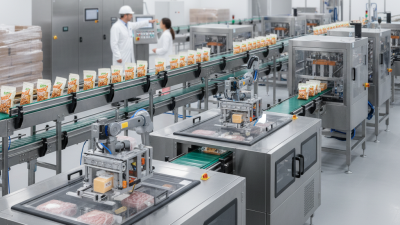
The Duravant family of operating companies serve the food processing, packaging and material handling segments.

For global buyers, machinery automation is no longer a distant factory concept. It affects production speed, product consistency, labor planning, and long-term operating costs. A packaging line in Germany, a CNC workshop in Vietnam, or a food-processing plant in Brazil may face different conditions. Yet each buyer must assess similar questions. Can the equipment deliver stable output? Will it integrate with existing systems? Can local technicians maintain it safely?
Joseph F. Engelberger, widely recognized as the father of industrial robotics, once said, “I can’t think of any problem that can’t be solved by robotics.” His statement captures automation’s ambition, but modern purchasing requires more careful judgment. Robots and automated machinery can reduce repetitive work, improve precision, and provide useful production data. They can also create unexpected costs when training, spare parts, software support, or regional service are ignored. That part is easy to underestimate.
Reliable machinery automation decisions should combine factory experience with measurable evidence. Buyers need cycle-time tests, energy data, safety documentation, and clear acceptance standards. Supplier references matter, especially from companies operating in similar environments. A machine that performs well in a showroom may struggle with dust, humidity, unstable power, or changing product sizes. Automation is powerful, but it is not magic. Global buyers should examine the complete system, not only the robot, price, or promised output. A thoughtful evaluation can protect productivity today and preserve flexibility for tomorrow.
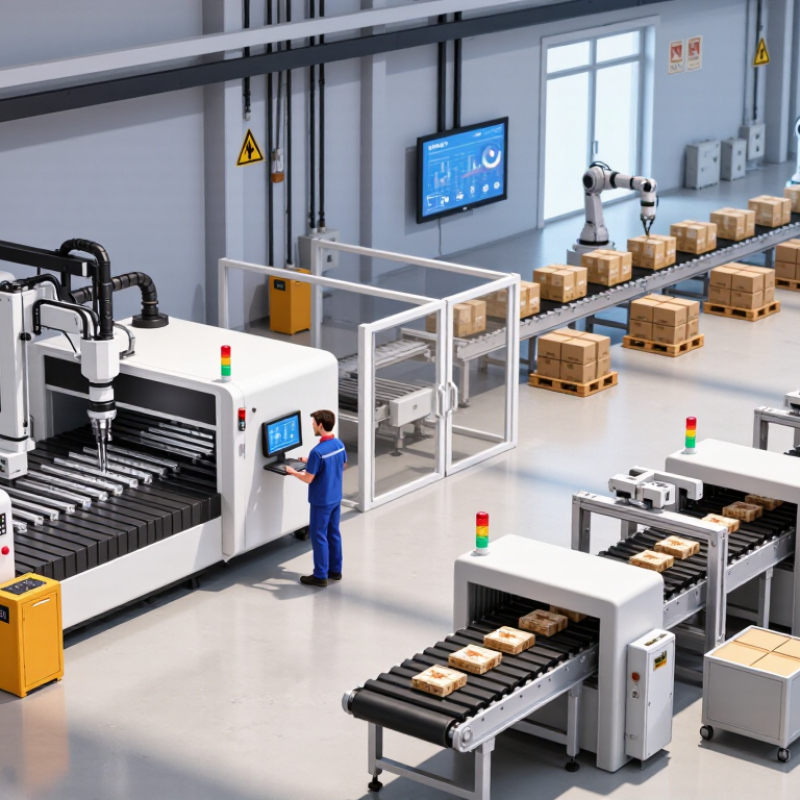
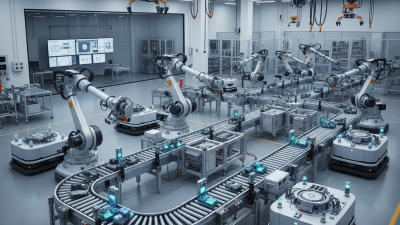
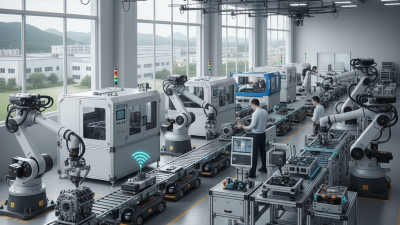
Machinery automation is not simply a robot beside a production line. It is an integrated system of sensors, controllers, drives, software, safety devices, and mechanical equipment. These elements measure conditions, make decisions, and execute repeatable movements with limited human intervention. A packaging cell, for example, may detect a carton, adjust its speed, reject defects, and record output. The boundary remains imperfect. Some suppliers call one programmable machine “automation,” while buyers expect a connected production system. This difference can create costly misunderstandings.
According to the International Federation of Robotics’ World Robotics 2024 report, 541,302 industrial robots were installed worldwide in 2023. The figure shows market scale, not project suitability. Automation also supports welding, machining, assembly, inspection, warehousing, and process control. Applications should follow measurable problems: unstable cycle times, repetitive handling, poor traceability, or unsafe exposure. In practical projects, a fast demonstration can hide difficult integration work. Data mapping, tooling changes, operator training, and maintenance access often decide the real result.
541,302 industrial robots
were installed worldwide in 2023.
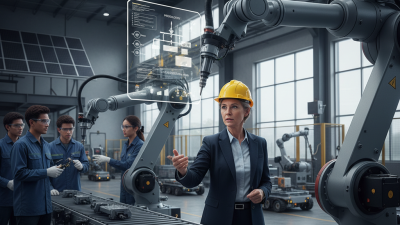
Global buyers therefore need more than a machine price. They need clear capacity figures, tolerances, utility requirements, spare-parts plans, software ownership, and recovery procedures. The same report records more than 4.2 million industrial robots operating globally in 2023. The World Economic Forum’s Future of Jobs Report 2023 found that 44% of workers’ core skills may change by 2027. Training is not optional.
Buyers should verify safety rules, electrical requirements, documentation languages, and local conformity duties before contracting. Cybersecurity also matters when machines exchange production data across networks.
Payback calculations should include downtime, energy, training, and future modifications. Not every automated cell needs maximum complexity. Sometimes, simpler is more reliable.
Why Is Machinery Automation Important for Global Buyers?
IFR reported 541,302 industrial robots installed worldwide in 2023. This figure shows that automation is no longer limited to large factories. It is becoming a practical purchasing consideration for manufacturers across many regions. Robots can support welding, assembly, packaging, inspection, and material handling. They also help maintain stable production when labor availability changes.
For global buyers, the number matters because it reflects growing industrial experience. A larger installed base can mean more trained technicians, proven applications, and accessible maintenance knowledge. It may also improve confidence when comparing equipment suppliers. In a real factory, a robotic arm can repeat a fastening movement beside a conveyor for several hours. That consistency can reduce variation and improve workplace safety.
Automation is not a magic switch. A poorly planned system may create delays, difficult maintenance, or unused capacity. Buyers should examine cycle time, floor space, operator training, spare parts, software compatibility, and local service support. The cheapest quotation may not deliver the lowest operating cost. This deserves careful review. Businesses should also measure whether automation solves a clear production problem, rather than adding technology for appearance. The 2023 IFR figure is impressive, but each purchase still requires evidence, testing, and honest expectations.
Global industrial robot installations increased substantially from 2019 to 2023, reaching 541,302 units in 2023. This sustained adoption highlights the growing importance of machinery automation for improving productivity, consistency, flexibility, and long-term manufacturing competitiveness.
For global buyers, machinery automation should be measured beyond faster cycle times. A reliable system produces more units with fewer interruptions and less manual variation. Track output per shift, cycle time, changeover duration, and unplanned downtime. A three-minute stoppage repeated twenty times can erase impressive hourly performance. Small losses matter.
Quality data reveals another benefit. Automated inspection can identify incorrect dimensions, missing components, or surface defects before shipment. Record first-pass yield, rejection rates, and rework hours. Consistent results support stable production across different operators and locations. However, automation does not correct poor specifications. It may repeat a mistake perfectly.
Safety improvements deserve equal attention. Guarding, interlocks, controlled movement, and reduced lifting can lower exposure to common hazards. Review near-miss reports, ergonomic complaints, and manual handling frequency. OEE combines availability, performance, and quality into one practical measure. Yet OEE can mislead when teams hide minor stops or use unrealistic target speeds. Honest data is essential. A lower initial score may reveal better management, not worse machinery. Global buyers should request maintenance records, training procedures, acceptance-test results, and clear recovery steps. Automation becomes valuable when the numbers remain credible during ordinary shifts, difficult changeovers, and unexpected faults.
Why Is Machinery Automation Important for Global Buyers?
Calculating ROI begins with labor, energy, and payback. A buyer should record current wages, overtime, training, rejects, and downtime. Then compare them with automation costs, maintenance, software, and operator training. The International Federation of Robotics reported 541,302 industrial robots were installed worldwide in 2023. This signals strong adoption, but adoption alone does not guarantee profit. A machine saving two operators per shift may recover its cost quickly. A low-volume line may not.
Energy deserves equal attention. The International Energy Agency reports that industry consumes about 37% of global final energy. Efficient motors, shorter idle periods, and controlled heating can reduce operating expenses. For example, a machine using 12 kilowatts for 4,000 hours annually consumes 48,000 kilowatt-hours. At $0.12 per kilowatt-hour, that equals $5,760. A 15% reduction saves about $864 yearly. The estimate is useful, but real production rarely behaves perfectly. Tariffs, product changes, and maintenance interruptions can distort it.
Tips: Use this simple formula: payback period equals total investment divided by annual net savings. Include installation, spare parts, financing, and lost production during commissioning. Test the calculation with low, expected, and high output scenarios. A shorter payback is attractive, yet reliability matters more than optimistic spreadsheets. Ask suppliers for measured cycle times and energy data from comparable applications. Then verify those figures on your own production floor.
| Automation Application | Labor Cost Baseline | Post-Automation | Annual Financial Impact | Investment Returns | |||||||
|---|---|---|---|---|---|---|---|---|---|---|---|
| Manual FTEs | Hourly Wage | Annual Labor Cost | Automated FTEs | Labor Savings | Energy Savings | Added Annual Costs | Net Annual Benefit | Initial Investment | Payback Period | 3-Year ROI | |
| Packaging and Case Packing | 7 | $22 | $308,000 | 2 | $220,000 | $14,000 | $22,000 | $212,000 | $520,000 | 2.45 years | 22.3% |
| CNC Machine Loading and Unloading | 4 | $28 | $224,000 | 1 | $168,000 | $10,000 | $18,000 | $160,000 | $390,000 | 2.44 years | 23.1% |
| Robotic Palletizing | 5 | $24 | $240,000 | 1 | $192,000 | $8,000 | $20,000 | $180,000 | $450,000 | 2.50 years | 20.0% |
| Automated Welding Cell | 6 | $30 | $360,000 | 2 | $240,000 | $18,000 | $30,000 | $228,000 | $680,000 | 2.98 years | 0.6% |
| Automated Visual Inspection | 3 | $20 | $120,000 | 1 | $80,000 | $5,000 | $12,000 | $73,000 | $180,000 | 2.47 years | 21.7% |
| Portfolio Total / Weighted Average | 25 | $25.04 | $1,252,000 | 7 | $900,000 | $55,000 | $102,000 | $853,000 | $2,220,000 | 2.60 years | 15.3% |
Why Is Machinery Automation Important for Global Buyers?
Global buyers should compare machinery automation suppliers by evidence, not attractive quotations. Standards reveal how a supplier controls design, testing, and safety. Request certificates, risk assessments, factory acceptance records, and calibration reports. Check whether documents match the exact machine model. Generic files may look professional but offer little protection. A supplier with field experience should explain failed tests and corrective actions clearly, without hiding uncomfortable details.
Integration often decides whether automation creates value or delays production. Ask how the equipment connects with existing PLCs, MES, ERP, sensors, and safety systems. Confirm communication protocols, data ownership, alarm handling, and cycle-time assumptions. A useful supplier can provide an I/O list, network diagram, and sample production data before installation. Small gaps matter. One missing signal can stop a complete line. Buyers should test these assumptions with real components, not only digital simulations.
Cybersecurity needs equal attention. Use segmented networks, role-based access, strong authentication, secure backups, patch procedures, and detailed audit logs. Remote service access should be temporary and approved by the factory. Support quality also matters after commissioning. Ask about spare-part availability, response times, training, manuals, and local technical coverage. In practice, support promises can be vague. Put them into measurable service terms. No supplier gets every detail right, so buyers should review lessons from previous projects and leave room for honest correction.