The Duravant family of operating companies serve the food processing, packaging and material handling segments.

Choosing the right wrapping machine is rarely a simple price comparison. Global buyers must examine product dimensions, film behavior, line speed, power standards, safety features, and after-sales support. A compact bakery may need gentle handling and quick changeovers. A logistics warehouse may value consistent pallet tension and remote diagnostics. The “best” option depends on the application.
Charles D. Yuska, former president and CEO of the Packaging Machinery Manufacturers Institute, expressed a practical industry principle: “The right machine is the one that fits the application, not the one with the longest feature list.” That idea guides this comparison of seven wrapping machines for international buyers. Each model is considered through measurable details, including sealing quality, material waste, operator access, maintenance needs, and control-system flexibility. Reliable documentation matters, too. A machine can look impressive in a showroom, yet perform poorly with dusty products, uneven loads, or frequent format changes.
Real factories are less tidy.
This guide also considers supplier experience, installation training, spare-parts availability, and regional technical support. Buyers should confirm certifications and electrical compatibility before placing an order. They should request production trials with their own products and wrapping materials. That step is sometimes skipped, and it can create expensive surprises. No ranking can replace a site assessment. Still, the following selection offers a practical starting point for comparing performance, value, and long-term reliability across different markets.
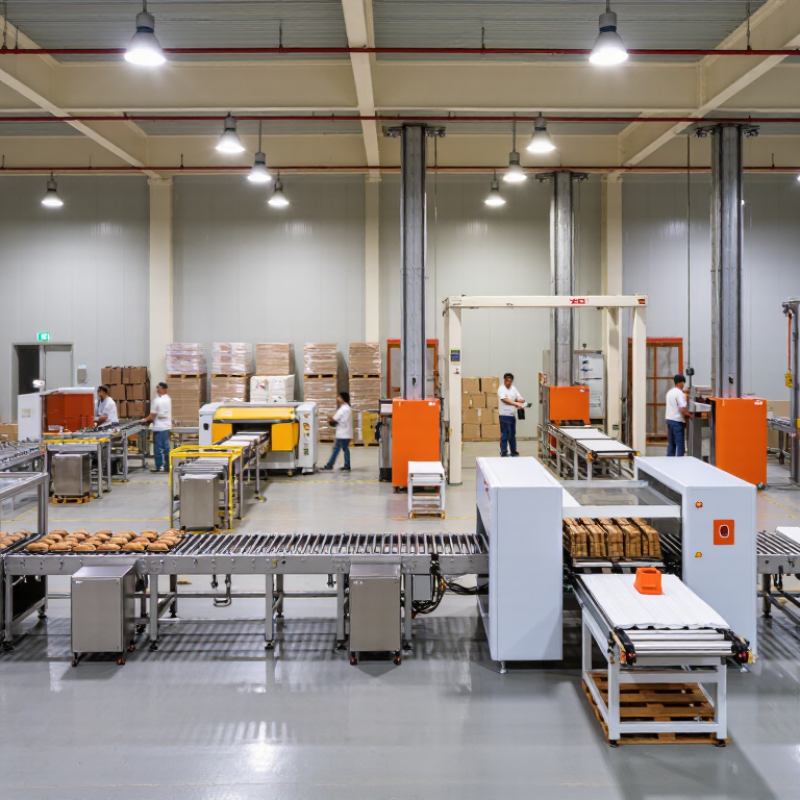
A high-quality wrapping machine should protect products without slowing the line. In real packaging rooms, consistency matters more than impressive speed. Film tension must remain stable around uneven cartons, sharp corners, and mixed pallet heights. A well-built system detects load dimensions and adjusts its cycle with minimal operator input. The wrap should look firm, not crushed.
Construction reveals much about long-term value. A rigid frame, protected wiring, and accessible components reduce maintenance delays. Stainless steel near washdown areas can resist corrosion, but material alone is not enough. Sealed controls and sensible drainage matter too.
Check motor noise, turntable movement, and film carriage alignment during a site test. Small vibrations often become expensive faults.
Reliable machines also provide measurable control. Operators should set pre-stretch, overlap, rotation speed, and wrap counts easily. Clear displays reduce training errors. Safety guarding, emergency stops, and documented risk controls should match local workplace requirements. Ask for test records, spare-part availability, and service response times before purchase. Real users can explain details that brochures miss. Some machines promise more than they deliver. That deserves scrutiny. A practical evaluation should include fragile boxes, unstable loads, and a full shift of operation. Even then, no machine is perfect. Maintenance habits, film quality, and operator training can change results significantly.
The seven leading wrapping machine types serve different products and shipping conditions. Stretch-film pallet wrappers stabilize mixed cartons on pallets, while shrink wrappers use heat to tighten film around bundles. Horizontal flow wrappers seal individual bars, tools, or medical supplies in continuous film. Orbital wrappers rotate film around long items such as pipes or furniture components. Stretch-hood systems cover tall pallet loads without a heat-shrink tunnel. Tray overwrappers fold film neatly around trays, and banding machines secure compact bundles with narrow film or paper bands. The fit matters.
Grand View Research’s 2024 Packaging Machinery Market report estimated the global market at about US$45.5 billion in 2023, with projected growth of 4.8% annually from 2024 to 2030. That broad market figure is not specific to wrapping equipment, but it signals sustained investment across packaging lines. Buyers should compare film use, line speed, changeover time, and access to local maintenance—not just the advertised output rate. A machine rated for 60 packs per minute may run slower with awkward products or frequent size changes. Not always. A useful test is to run actual products and measure film waste, seal quality, and downtime. One overlooked detail: operators need room to clear jams safely, even on compact lines.
7 Best Wrapping Machines for Global Buyers?
How the Seven Machines Compare in Performance and Cost
The seven options suit different loads and line speeds. Manual turntables have the lowest purchase cost, but an operator must position and wrap every pallet. Semi-automatic turntables reduce hand-wrapping, though workers still attach film and remove loads. Fully automatic turntables cost more and suit repeatable, steady production. Small details matter: film breaks and awkward pallet placement can slow a line.
Rotary-arm machines wrap heavy or unstable loads without rotating them, while ring wrappers offer high throughput for consistent pallet sizes. Both usually need more floor space and investment. Orbital wrappers protect long or irregular products, but they are not direct substitutes for pallet machines. Shrink-hood systems create a tight cover for bundled loads; heat use and film expense should be included in operating-cost estimates. That matters.
The International Federation of Robotics’ World Robotics 2024 report records 541,302 industrial robot installations worldwide in 2023. That is useful automation context, not proof that a wrapping machine will pay back. Compare actual pallets per hour, film consumption, changeover time, service access, and staffing needs. A caveat: the cheapest quote can still be the wrong buy. Request a trial with your own load and film, then verify the measured cycle time. A little friction remains: published speeds rarely match a busy shift.
| Machine Type | Best-Suited Applications | Typical Throughput | Typical Load or Product Range | Automation Level | Indicative New-Equipment Budget (USD) | Main Advantages | Key Considerations |
|---|---|---|---|---|---|---|---|
| Semi-Automatic Turntable Stretch Wrapper | Low- to medium-volume pallet wrapping in warehouses and shipping areas | Approximately 15–30 pallet loads per hour | Commonly handles pallet loads up to about 2,000 kg; machine limits vary | Operator attaches and cuts film; powered turntable wraps the load | $3,000–$15,000 | Low entry cost, compact footprint, and straightforward operation | Requires an operator at each cycle; less suitable for high-volume lines |
| Automatic Turntable Stretch Wrapper | Stable pallet loads on conveyor-fed production or distribution lines | Approximately 30–80 pallet loads per hour | Typically designed for standard pallet loads; maximum load and dimensions depend on configuration | Automatic film application and cutting; often integrated with conveyors | $20,000–$70,000 | Consistent wrapping with reduced manual handling; good for repeatable loads | Loads must be stable enough to rotate; conveyor and safety integration add cost |
| Automatic Rotary-Arm Stretch Wrapper | Light, tall, or unstable pallet loads that should remain stationary | Approximately 30–60 pallet loads per hour | Suitable for a range of pallet sizes; allowable height and weight are model-specific | Automatic arm rotation, film application, and cutting | $25,000–$80,000 | Wraps without rotating the load, helping reduce movement of fragile products | Needs clear space around the wrapping area; guarding and layout affect installation |
| Horizontal Orbital Stretch Wrapper | Long products such as pipes, profiles, lumber, furniture, and rolled goods | Approximately 5–30 products per minute, depending on product length and line setup | Product dimensions are determined by the ring opening and conveyor design | Semi-automatic or automatic, with optional conveyor integration | $15,000–$80,000 | Wraps long or irregular products efficiently while using stretch film | Must be sized to the product cross-section and length; not intended for pallet loads |
| L-Bar Shrink Wrapper with Shrink Tunnel | Retail multipacks, cartons, and small or medium-sized grouped products | Approximately 10–30 packs per minute | Limited by the sealing-frame opening, tunnel size, and product dimensions | Semi-automatic and automatic configurations are available | $2,000–$25,000 | Creates a neat, close-fitting film package; available in relatively compact formats | Uses heat and shrink film; film selection and tunnel settings must match the product |
| Horizontal Flow Wrapper | Individually wrapped food, consumer goods, and regularly shaped products | Approximately 30–300 packs per minute, depending on product and machine design | Best for products that can be fed consistently and fit the forming-set range | Typically automatic, with product feeding and cutting systems | $15,000–$120,000 | High output for individual packages and consistent package presentation | Product feeding, film format, sealing requirements, and changeovers require careful planning |
| Automatic Stretch Hood Wrapper | High-volume palletizing lines needing weather-resistant load containment | Approximately 40–120 pallet loads per hour | Designed around specified pallet footprints, load heights, and hood-film sizes | Fully automatic, usually integrated into a production line | $150,000–$600,000+ | Applies a close-fitting hood and can provide strong load containment with little or no heat | High capital cost; requires line integration and film specification testing |
Figures are indicative planning ranges for general equipment configurations, not guaranteed specifications or quotations. Actual throughput and cost depend on product dimensions, line layout, options, safety requirements, local standards, freight, duties, installation, and service support.
A wrapping machine should match the product’s shape, weight, and travel conditions. For palletized boxes in warehouses or distribution centers, a stretch wrapper can secure mixed loads with film. Turntable models suit stable pallets and steady volumes; rotating-arm systems may work better for tall or unstable loads. Check the pallet dimensions and load weight before choosing. It depends. A wrapper that runs quickly may still cause loose corners or crushed cartons if tension is poorly set.
For individual food items, flow wrappers form a sealed film around products such as bars or baked goods. Shrink systems can bundle retail cartons, but heat settings need careful testing on printed packaging and heat-sensitive contents. Furniture makers and metal fabricators often need orbital wrapping, where film travels around long or irregular items. Measure twice. Film width, roll changes, cleaning access, and operator training matter in daily use. A machine may fit the product but slow the line during changeovers. Run sample products at realistic speeds, then inspect seals, film use, and package stability. One detail is easy to miss: seasonal changes in product size can make an otherwise suitable setup awkward.
When comparing wrapping machines for overseas purchase, match the equipment to the product, film, and required output. A machine tested with one film may behave differently with a locally sourced roll. Confirm roll width, core size, and film specifications before ordering. Small details matter.
Check the destination site’s voltage, frequency, phase, air pressure, and floor capacity against the machine’s requirements. Ask for wiring diagrams, utility drawings, and a clear installation schedule. Measure doorways and loading access, too. A machine that fits the production area may not fit through the entrance. Measure twice.
Shipping preparation deserves equal attention. Confirm crate dimensions, lifting points, moisture protection, and the documents needed for import clearance. Request a parts list and identify which wear items can be sourced locally. Remote support can help, but time-zone gaps and language differences may slow troubleshooting. That risk is easy to underestimate.
Before shipment, agree on acceptance tests using your actual products and packaging materials. Clarify who provides technicians, tools, and operator training during installation. Keep translated operating instructions available for the people running the line. Even with careful planning, commissioning can reveal overlooked needs, such as extra clearance for film changes. Allow time and budget for adjustments.