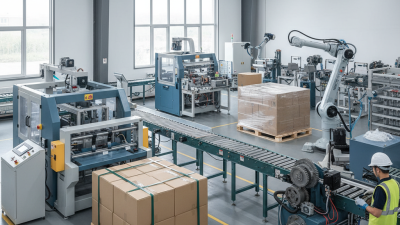
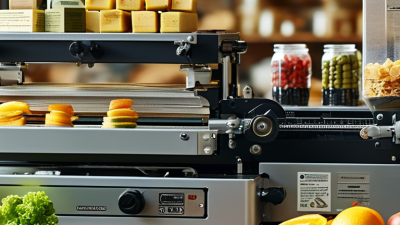
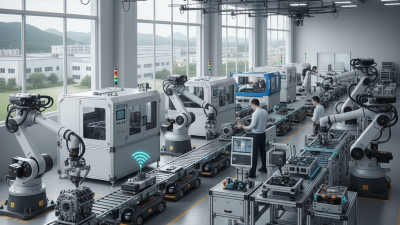
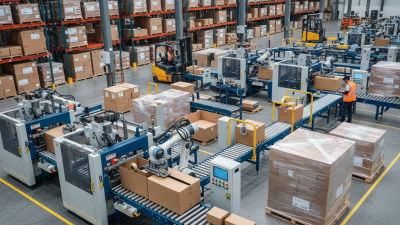
The Duravant family of operating companies serve the food processing, packaging and material handling segments.

Choosing the 2026 best wrapping machine types requires more than comparing prices or advertised speeds. Global buyers must match equipment with product shape, film behavior, factory space, labor skills, and local service availability. A machine wrapping frozen cartons may perform poorly with fresh produce, irregular loads, or dusty products. Small details matter, such as roll-change time, film tension, conveyor height, and touchscreen language.
Packaging machinery specialist Jorge Izquierdo has emphasized, “Flexibility and automation are becoming essential for packaging operations facing constant market change.” His observation remains relevant for buyers evaluating stretch wrappers, shrink wrappers, flow wrappers, pallet wrappers, and horizontal wrapping systems. Each type solves a different production problem. Stretch wrapping supports pallet stability. Shrink wrapping creates compact retail bundles. Flow wrapping protects individual products while maintaining high throughput.
No machine wins every factory. That assumption fails quickly.
A reliable 2026 evaluation should examine sealing consistency, servo control, energy consumption, film waste, cleaning access, and operator training. Buyers should also request test runs using their actual products and packaging materials. A glossy demonstration is not enough. The machine should handle uneven cartons, changing film widths, and realistic production interruptions. Total ownership cost deserves equal attention. Spare parts, remote support, preventive maintenance, and regional technicians can determine whether a low-priced machine remains economical. This guide compares leading wrapping machine types through practical performance, application fit, safety expectations, and long-term reliability. Some recommendations may still require adjustment after site testing. That is not a weakness; it is responsible purchasing.
A wrapping machine secures products with stretch film, paper, or other approved packaging materials. It reduces shifting, dust exposure, and handling damage during storage or transport. The machine usually includes a film holder, drive system, control panel, and safety guards. Some models rotate the load. Others move the film carriage around it. The load stays still.
The working process is straightforward. An operator places cartons or containers on the platform. The film attaches near the lower section, then the machine begins wrapping. A sensor or programmed setting controls rotation, film tension, overlap, and wrapping height. Pre-stretch rollers can extend the film before application. This uses material efficiently, but incorrect tension may crush soft cartons. That matters.
Different loads need different wrapping methods. A turntable suits stable pallets and moderate production volumes. A rotary-arm machine helps wrap light or unstable loads without spinning them. A ring-style system supports faster, continuous operations. Heat-shrink equipment uses controlled heat to tighten suitable plastic film around products. Buyers should check load size, weight, surface shape, moisture conditions, and available floor space before choosing equipment.
In production trials, film tension often needs adjustment after real testing. A setting that works for dense boxes may fail with irregular containers. Operators should inspect loose edges, exposed corners, and crushed packaging each shift. Safety barriers, emergency stops, and clear operating instructions are essential. Automation saves labor, but it does not remove the need for trained judgment.
In 2026, buyers can choose from several wrapping machine types. Stretch wrapping machines secure pallets with elastic film. They suit warehouses handling mixed loads and uneven cartons. Shrink wrapping machines use heat to create a tight, protective cover. They work well for bundled products, trays, and retail packs. Flow wrapping machines seal individual items in a horizontal film tube. Vertical wrapping machines handle loose products, powders, and granules. Orbital wrappers protect long or fragile products, such as profiles and furniture parts.
PMMI’s global packaging machinery research reports continuing investment in automation, labor reduction, and flexible equipment. Smithers also forecasts the global packaging market will exceed US$1.2 trillion by 2028. These figures support demand for adaptable wrapping systems, but market estimates differ by region. That matters. A high-speed machine may underperform when film quality, pallet sizes, or operator training vary. Buyers should test real products before approving specifications.
Tips: Compare film consumption, sealing temperature, speed, footprint, and maintenance access. Ask suppliers for documented trial results. Check voltage, safety certification, spare-part availability, and local service coverage. I have found that “maximum speed” often describes ideal conditions, not daily production. A slower machine with stable tension may reduce damaged loads and hidden costs. Consider that carefully.
How to Match Machine Types With Products and Packaging Needs
Choosing a wrapping machine starts with the product, not the machine catalogue. Flow wrapping suits small, regular items such as biscuits, soap bars, and hardware kits. Stretch wrapping works better for palletized cartons and warehouse loads. For moisture-sensitive products, shrink wrapping or vacuum packaging may provide stronger protection. Product shape, surface strength, weight, and required output should guide the decision.
Tips: Test real products before ordering. Check film width, sealing temperature, changeover time, and power requirements. Ask for samples from different packaging materials. A machine may perform well in a factory trial but struggle with dusty products or unstable cartons. Leave space for future product sizes, if possible.
Experienced buyers should also examine operator training, spare-part access, safety guarding, and local service capability. These details often affect production more than advertised speed. A high-speed model can become inefficient when workers need frequent adjustments. Packaging conditions also vary by region. Heat, humidity, voltage, and transport distance can change film performance. We have seen promising specifications fail during seasonal production. That is why a measured trial remains more reliable than a confident sales claim. Do not choose the fastest machine automatically. Choose the one that protects the product consistently, supports practical maintenance, and matches your actual packaging workflow.
Global wrapping machine buyers now prioritize measurable performance over attractive brochures. The key question is technical fit.
The International Federation of Robotics reported 541,302 industrial robots installed worldwide in 2023, a 10% annual increase. This growth supports demand for wrapping systems with servo-driven film carriages, automatic tension control, and stable high-speed operation. Buyers should check whether the machine maintains film tension when pallet dimensions change. A few millimeters can affect load security and material waste.
Changeover speed matters, especially for exporters handling mixed products. Tool-free adjustments, recipe storage, and multilingual HMI controls reduce operator errors across different sites. Remote diagnostics can shorten downtime, but only when data access is secure and practical. The system should record film usage, motor faults, cycle time, and energy consumption. Useful data beats decorative dashboards.
Energy performance deserves closer testing. The European Commission’s Ecodesign approach increasingly encourages measurable efficiency across industrial equipment, while packaging reports from PMMI continue to identify automation and sustainability as major investment drivers. Buyers should request energy figures per wrapped load, not only motor wattage. That comparison is more realistic. I would also question impressive maximum-speed claims. They may exclude corner reinforcement, unstable loads, or frequent product changes. A technically strong machine must survive dust, voltage variation, cold warehouses, and imperfect operator habits. No specification is perfect. Field trials remain necessary.
| Machine Type | Best-Suited Products | Common Packaging Material | Typical Output | Main Sealing Method | Important Technical Features | Global Buyer Priorities | Typical Application |
|---|---|---|---|---|---|---|---|
| Flow Wrapping Machine | Bakery products, confectionery, soap, stationery, medical disposables | Polypropylene, polyethylene, laminated and recyclable heat-sealable films | Approximately 30–150 packs/minute | Longitudinal fin seal and end seals | Servo-driven film feeding, automatic product spacing, print-mark tracking, no-product/no-film logic | Film compatibility, changeover time, sealing temperature stability, spare-part availability | Retail unit packaging and multipacks |
| Vertical Form-Fill-Seal Machine | Grains, powders, snacks, frozen foods, pet food, hardware components | Heat-sealable laminated films, polyethylene, polypropylene and recyclable mono-material films | Approximately 20–100 bags/minute | Center seal, three-side seal or four-side seal | Multihead weighing or auger dosing, bag-length control, film-end detection, dust-resistant sealing area | Accurate dosing, dust management, food-contact compliance, easy cleaning and recipe storage | Pillow bags, gusseted bags and sachets |
| Horizontal Form-Fill-Seal Machine | Solid products, trays, hardware, personal-care items and irregular-shaped products | Heat-sealable laminate, polypropylene, polyethylene and paper-based sealable structures | Approximately 20–80 packs/minute | Three-side or four-side heat sealing | Film tension control, adjustable forming box, servo cross-sealing jaws, product-in-film detection | Product-size flexibility, seal integrity, tool-free adjustment and integration with feeding systems | Individual products and retail multipacks |
| L-Bar Shrink Wrapping Machine | Cartons, books, household goods, stationery and bundled retail products | Polyolefin, polyethylene and PVC shrink film, subject to local regulations | Approximately 10–25 packs/minute | Impulse sealing followed by heat shrinking | Teflon-coated sealing knife, adjustable sealing time, film perforation control, temperature-controlled tunnel | Film waste, sealing-knife durability, tunnel energy use, electrical safety compliance | Protective overwrapping and retail presentation |
| Continuous Band Sealer | Powder, granule and liquid-filled preformed bags | Polyethylene, laminated pouches, polypropylene and coated paper bags | Approximately 20–40 bags/minute | Continuous heat sealing | Adjustable conveyor height, digital temperature control, horizontal or vertical configuration, date coding option | Bag thickness range, seal strength, product orientation, cleanability and coding quality | Small and medium-batch bag sealing |
| Vacuum Chamber Packaging Machine | Meat, seafood, cheese, coffee, prepared foods and moisture-sensitive products | Vacuum pouches and multilayer barrier films | Approximately 1–4 cycles/minute, depending on chamber size | Vacuum extraction followed by heat sealing | Vacuum-level control, gas flushing, dual sealing bars, transparent lid and programmable cycles | Pump capacity, residual oxygen target, hygienic design, chamber dimensions and service access | Extended shelf-life and oxygen reduction |
| Stretch Wrapping Machine | Palletized cartons, bags, drums and industrial loads | Stretch polyethylene film | Approximately 20–40 pallet loads/hour | Film stretch and containment without heat sealing | Powered pre-stretch, adjustable film tension, load-height sensing, automatic film cutting and clamping | Film consumption, load stability, pallet-size range, safety guarding and floor requirements | Transport protection and warehouse handling |
| Carton Erecting and Sealing Line | Corrugated cartons for e-commerce, food, beverages and industrial goods | Corrugated board cartons, kraft cartons and printed shipping cases | Approximately 8–25 cartons/minute | Pressure-sensitive tape or hot-melt adhesive sealing | Carton magazine monitoring, flap folding, jam detection, automatic size adjustment and conveyor synchronization | Carton quality, size-change flexibility, adhesive or tape availability, line integration and safety standards | Secondary packaging and shipping preparation |
Choosing a wrapping machine starts with the product, not the supplier’s brochure. Flow wrappers suit trays and individual goods, while VFFS machines handle powders, granules, and lightweight products. Shrink wrappers fit bundled items, and stretch wrappers secure pallets. According to Smithers, the global packaging market is forecast to exceed 1.2 trillion dollars by 2028. That growth increases equipment choices, but also creates more confusing quotations.
Compare total cost, not only the purchase price. Request film consumption, power demand, changeover time, spare-part prices, and expected output. PMMI industry data places U.S. packaging machinery shipments above 10 billion dollars, showing the scale of this investment. A machine producing 80 packs per minute may lose its advantage after frequent stoppages. Ask for verified factory tests. Forecasts are not promises. A useful comparison includes guaranteed uptime, operator training, remote diagnostics, and local service coverage. I would also request three customer references in similar climates.
Compliance needs written evidence. Check risk assessments, electrical documentation, guarding, emergency stops, and applicable standards such as ISO 12100 and IEC 60204-1. For European sales, confirm the current machinery conformity route and transition dates before ordering. After-sales support deserves equal attention. Require response times, stocked-part locations, software access, warranty limits, and installation responsibility. A cheap machine with a six-week servo replacement is not cheap. No comparison is perfect. Leave a documented contingency for training gaps, customs delays, and packaging-material changes.
Indicative 2026 purchase-price ranges by machine type. Use total cost of ownership, required certifications, production speed, spare-parts availability, and after-sales service when comparing suppliers.
The ranges are planning benchmarks for new industrial equipment and can vary with capacity, automation level, materials, safety systems, installation, and regional compliance requirements. Confirm CE, UKCA, UL, or other applicable documentation before purchase.