Why Do You Need a Case Packer for Your Business?
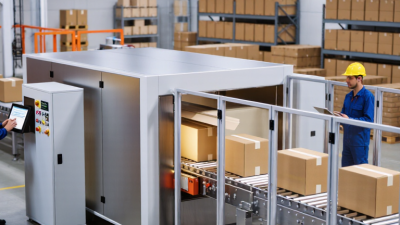
A case packer can turn a slow, repetitive end-of-line task into a steady, controlled process. It groups products, loads them into cartons, and prepares cases for sealing and palletizing. That can reduce manual handling and help keep output consistent. The fit matters. A machine must match your product, carton style, line speed, and available floor space.
Workforce pressure makes the decision more urgent. The 2024 report by Deloitte and the Manufacturing Institute projects that U.S. manufacturing could need 3.8 million workers by 2033, with 1.9 million jobs potentially unfilled. PMMI’s research on packaging operations also highlights labor and workforce skills as ongoing concerns. A case packer will not solve every staffing problem. It can, however, take on repetitive case-loading work and give operators more time for changeovers, quality checks, and troubleshooting.
There is a useful warning from management and quality expert W. Edwards Deming: “A bad system will beat a good person every time.” His point applies to automation. A poorly planned machine may simply make a bottleneck faster. Before investing, examine carton handling, product stability, cleaning needs, and the space around the line. Sometimes the best answer is a new machine. Sometimes the line needs better layout or simpler changeovers first. The details matter. A careful case-packer decision starts with observing the real work, not just comparing brochure speeds.
Case Packers Defined: Their Role in End-of-Line Packaging
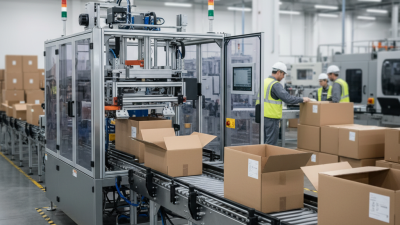
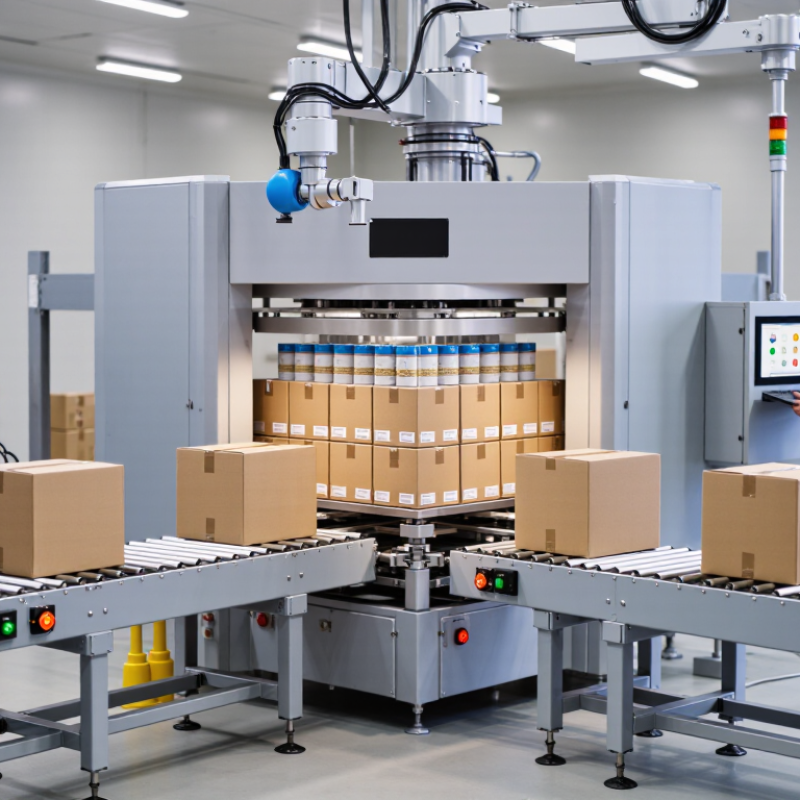
A case packer is an end-of-line machine that places finished products into shipping cases. Products may arrive in rows on a conveyor, while empty cases are opened, positioned, and filled. Depending on the design, the machine may use robotic arms, mechanical guides, or a drop-loading system. The goal is controlled, repeatable case packing—not simply moving products faster.
After filling, cases can be closed and sent toward palletizing or shipping. Sensors may detect missing products, misaligned cartons, or jams before they create larger disruptions. Operators still matter. They set changeover guides, replenish case blanks, and check that product counts match the packing plan. Small details count, like a carton flap catching on a guide. That can stop a line.
A case packer can reduce repetitive lifting and help a business handle steady production volumes. But it is not a cure-all. Product shapes, case sizes, line speed, and available floor space all affect the right setup. A machine configured for one package may need adjustment for another, and changeovers can take longer than expected. Reviewing actual product samples and observing the line during a typical shift can reveal practical needs that a specification sheet may miss.
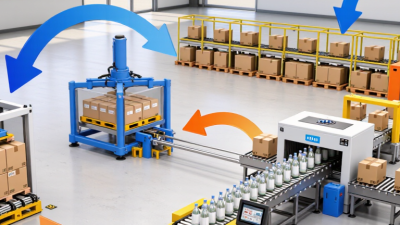
Why Use a Case Packer? A Typical End-of-Line Workflow
A case packer automates the placement of grouped products into shipping cases, helping connect product handling with downstream packing operations. The chart shows a typical workflow sequence—not processing times or performance data. Actual line layouts vary by product and equipment.
How Case Packers Form, Load, and Close Shipping Cases
A case packer starts with a flat corrugated blank. A magazine feeds each blank into the forming section, where guides open it into a square case. Folding arms tuck the bottom flaps inward, and tape or adhesive secures the base. The case needs square corners and a firm bottom. Small misalignments can cause jams later.
The open case then moves to the loading area. Depending on the product, a machine may place items individually or group them into a set pattern before loading. Guides and sensors help position each case beneath the product flow. A stable pattern limits shifting during transport, especially when heavier items sit below lighter ones. Not every product behaves neatly. Bags can slump, and cartons may arrive slightly skewed, so setup often needs adjustment.
Once filled, the case advances to the closing section. Folding rails bring the top flaps together, then tape or adhesive seals the opening. Some systems apply light pressure to help the seal hold. Operators should check case dimensions, fill patterns, and closure quality during production. Changeovers can expose weak points in a setup; a machine that handles one case size smoothly may need careful adjustment for another.
Workplace Context: 2.6M U.S. Private-Sector Injury and Illness Cases in 2023 (BLS)
The U.S. Bureau of Labor Statistics reported 2.6 million nonfatal workplace injury and illness cases in private industry in 2023. That figure covers many industries and types of work; it does not mean every case involved packaging. Still, it is a useful reminder to examine repetitive tasks on a production floor. At a packing line, cartons may collect near the end of a conveyor while workers lift, turn, and stack them throughout a shift. Small motions add up.
A case packer can automate the placement of products into shipping cartons and reduce some repeated handling. That may help businesses review how workers interact with the line, but it is not a safety guarantee. Machines also bring pinch points, jam-clearing tasks, and maintenance needs. Guarding, accessible emergency stops, training, and planned maintenance matter. So does observing the actual workflow.
It is tempting to treat automation as a safety fix. That is too simple. A careful assessment should consider carton weight, line speed, operator reach, and how often workers intervene. The BLS figure gives useful context, not proof that one machine will prevent injuries. Even a well-designed installation needs regular review, especially when products or production demands change.
Why Do You Need a Case Packer for Your Business? — Workplace Context: 2.6M U.S. Private-Sector Injury and Illness Cases in 2023 (BLS)
| Measure |
2023 BLS data |
What it means for a packaging business |
| Nonfatal recordable cases in private industry |
About 2.6 million cases |
This is a broad U.S. workplace figure, not a count of incidents involving case packers. It highlights why businesses should assess risks in their own operations. |
| Incidence rate |
2.4 cases per 100 full-time-equivalent workers |
A case packer may change how employees interact with repetitive packing tasks. Review the equipment, work area, and procedures as part of a site-specific safety assessment. |
| Change from 2022 |
The total fell by 8.4% from 2022 |
The national year-over-year decline does not establish that any particular machine or intervention caused a reduction in workplace cases. |
| Potential operational consideration |
Not measured by this BLS headline statistic |
When evaluating a case packer, consider whether it can reduce manual handling or repetitive packing work, alongside guarding, ergonomics, training, maintenance, and safe operating procedures. |
Source: U.S. Bureau of Labor Statistics (BLS), 2023 Survey of Occupational Injuries and Illnesses, private industry. The national figures describe nonfatal workplace cases overall; they do not measure case-packer-specific incidents or prove that purchasing a case packer will prevent injuries.
Automation Context: 541,302 Industrial Robots Installed Worldwide in 2023 (IFR)
IFR reported 541,302 industrial robots installed worldwide in 2023.
This figure shows how widely automation is entering production, though it does not represent case packers alone. For a business shipping cartons every hour, the trend matters. A case packer can place products into cases at a steady pace, reducing repetitive lifting and helping keep packing rates consistent.
The practical value depends on the work. A line handling small, uniform cartons may benefit from a simple packing setup. Frequent product changes, awkward packages, or limited floor space can make integration harder. A case packer is not magic. Poorly formed cases or shifting products can still interrupt a line, and automation may require staff training and regular adjustments. Measure current output, changeover time, and packing errors before choosing equipment.
Tips:
Track cases packed per hour across a typical shift. Note where workers pause to build, fill, or seal boxes. Test real products and cases before committing, especially if sizes vary. Small details matter. Leave room for safe access and maintenance, and review results after installation; the first setup may need tuning.
Choosing a Case Packer: Match Speed, Product, Format, and Floor Space
A case packer should fit the work your line actually does, not just its advertised speed. Start with the required cases per minute, then check whether that rate holds during product changes and routine pauses. A machine rated for peak output may not match a shift that includes frequent short runs. That gap matters.
The product itself shapes the packing method. Bottles, cartons, and soft pouches need different handling, support, and case-loading patterns. Confirm the packer can manage your product’s dimensions and weight, including small variations between batches. Then specify the case format: case size, flap style, and pack count all affect changeover time. Test a representative product and case together; drawings alone can miss awkward contact points or unstable stacking.
Floor space is more than the machine’s footprint. Allow room for case storage, product flow, guarding, and operators to clear jams safely. Measure access routes too, especially doorways and tight turns. A compact layout can look efficient on paper and feel cramped during a real shift. Measure twice. Compare the proposed line speed with the equipment before and after the packer, since a faster machine cannot fix every bottleneck. Leave practical room for maintenance and future adjustments, even if the first layout looks less tidy.