The Duravant family of operating companies serve the food processing, packaging and material handling segments.

Choosing a No Tear Drawstring Garbage Bag starts with a simple daily problem: waste should stay inside the bag, not on the floor.
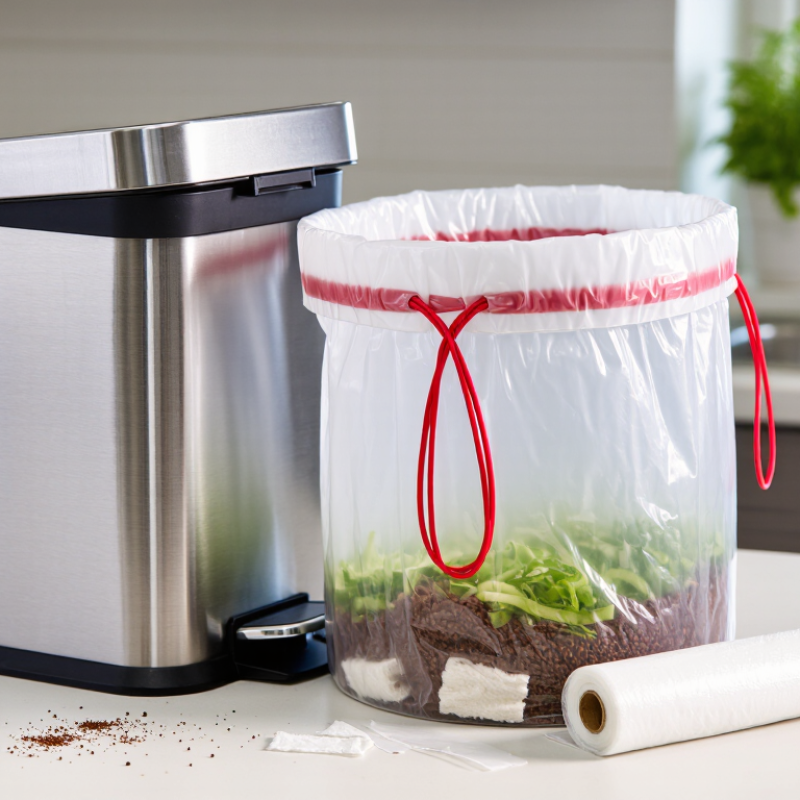
A strong bag can make kitchen cleanup calmer. Imagine lifting a full liner from a bin, with coffee grounds, vegetable peels, and damp tissues pressing against the plastic. The drawstring should tighten smoothly, while reinforced edges help reduce sudden splitting. This design can provide a more secure grip during removal and carrying. It also helps limit direct contact with household waste.
Still, no bag is invincible. Overfilling, sharp bones, broken glass, or rough handling can cause damage. That reality matters. A reliable product should be judged by material thickness, seam strength, stretch performance, and drawstring construction. Manufacturers should communicate these details clearly, rather than relying only on attractive packaging claims. Independent testing, consistent quality control, and customer feedback can support greater confidence.
A No Tear Drawstring Garbage Bag is especially practical for busy kitchens, offices, bathrooms, and community spaces. Its value appears in small moments: fewer leaks near the bin, easier lifting, and less hesitation when tying the opening. However, choosing the correct size remains essential. A bag that fits too tightly may strain at the rim. One that is too large may slide into the container.
Good waste management also requires responsible disposal. Durability can reduce messy replacements, but it does not automatically make a product environmentally friendly. Buyers should examine recycled content, packaging, and local disposal guidance. The best choice combines dependable performance, honest specifications, and suitable everyday use.
Why Choose No Tear Drawstring Garbage Bags?
No tear drawstring garbage bags are reinforced waste liners designed to resist punctures, stretching, and sudden splitting. Their drawstring closure gathers the opening tightly around a bin. This helps reduce leaks during lifting, carrying, and collection. In practical use, thicker film, stronger seams, and balanced elasticity matter more than appearance. A bag should hold wet food scraps, sharp-edged cartons, and dense household waste without separating at the bottom.
The term “no tear” is not absolute. It describes improved resistance, not an indestructible product. Careless loading can still damage any liner. According to the U.S. Environmental Protection Agency’s 2018 Facts and Figures report, Americans generated about 292.4 million tons of municipal solid waste. Plastics represented roughly 12.2% of that total, making material efficiency worth examining. The OECD’s Global Plastics Outlook reported that global plastic waste reached 353 million tonnes in 2019. These figures do not prove that stronger bags solve waste problems. They show why durability and responsible disposal deserve attention. A reliable bag should be evaluated through tear, puncture, seam, and load testing, not only a “heavy-duty” label. I would also question bags that feel unusually thin but claim extreme strength. Performance can vary with temperature, moisture, and overfilling. Small details matter.
No tear drawstring garbage bags are flexible plastic bags designed with reinforced film and a built-in drawstring closure. The chart shows common nominal household capacities and their typical uses, helping users choose a suitable bag size without relying on brand-specific data.
Larger capacities are generally suitable for kitchens, offices, and outdoor cleanup, while smaller bags work well for bedrooms, bathrooms, and daily light waste. A reinforced design helps reduce splitting during lifting and tying.
A strong garbage bag begins with its material structure. No tear materials usually combine flexible plastic layers with improved resistance to stretching and punctures. This design helps the bag handle sharp food containers, wet paper, and uneven household waste. The material can stretch around heavy objects instead of splitting immediately. That difference matters during lifting.
In practical use, I have noticed the greatest benefit near the bag’s base and side seams. These areas receive pressure when liquid collects at the bottom. A reinforced film distributes that pressure across a wider surface. The drawstring also works better when the rim stays intact. A weak rim may tear before the bag is even full. No tear construction reduces that risk, but it does not make the bag invincible. Very sharp edges can still cause damage.
Reliable performance depends on more than thickness. Manufacturers should examine puncture resistance, seam strength, stretch capacity, and leak behavior. Testing with controlled weights offers useful evidence. Temperature also matters, because some plastics become less flexible in cold conditions. A bag that feels strong in a warm kitchen may perform differently outdoors. I would check the recommended capacity and avoid overfilling, even with durable materials. That small habit prevents unnecessary strain on the film, handles, and tied opening. Sometimes, careful use matters as much as advanced material.
Why Choose No Tear Drawstring Garbage Bags?
Key Benefits for Everyday Waste Disposal
Daily waste disposal becomes easier when a garbage bag stays intact from the bin to the collection point. Tear-resistant drawstring bags are designed to handle routine household waste, including food wrappers, paper, and light packaging. Their reinforced film helps reduce splitting around the base and side seams. That matters when the bag is lifted.
I have found that the drawstring closure provides better control than loose bag edges. It gathers the opening quickly and keeps unpleasant odors and damp waste more contained. A firm knot also reduces accidental spills during transport. No sudden splits. Still, the bag is not indestructible. Sharp cans, broken plastic, or excessive weight can puncture it, so heavy objects should be wrapped separately.
Material thickness and bag size should match the task. A small kitchen bin needs flexibility, while a larger household liner benefits from stronger load support. Even distribution prevents stress on one section of the film. I once overfilled a bag to avoid using another one, and the bottom stretched badly. That was a useful reminder. Reliable disposal depends on both bag quality and sensible handling. For wet waste, checking the base before lifting is practical, especially when the bag has stood overnight. Disposal practices should also follow local collection requirements, since some areas separate food scraps, recyclables, and general waste.
| Evaluation Dimension | Typical Feature of No-Tear Drawstring Bags | Everyday Benefit | Best-Suited Waste | Practical Consideration |
|---|---|---|---|---|
| Tear resistance | Reinforced film and stronger seams are designed to resist splitting during normal handling. | Helps reduce accidental rips, dropped waste, and additional cleanup. | Household refuse, office waste, packaging, and light yard debris. | Sharp or heavy objects should be wrapped or placed in a suitable heavy-duty bag. |
| Drawstring closure | Integrated drawstrings allow the opening to be gathered and tied without touching the waste. | Makes lifting, tying, and carrying more convenient. | Kitchen bins, bathroom bins, bedroom bins, and workplace wastebaskets. | Do not overfill; leave enough space to close the drawstring securely. |
| Leak protection | Low-density polyethylene or similar plastic film can help contain ordinary damp waste when the bag is intact. | Helps protect bins and floors from minor spills. | Food scraps, used tissues, bathroom waste, and other household refuse. | Leak resistance depends on film thickness, seam quality, and the type of waste. |
| Odor containment | A closed opening limits air exchange compared with an open bag. | Can help keep ordinary waste odors contained until collection. | Kitchen and bathroom waste requiring frequent removal. | A closure does not eliminate odors; timely disposal remains important. |
| Handling cleanliness | The tied drawstring creates a practical carrying point away from the waste opening. | Reduces direct contact with the contents during removal. | Homes, offices, classrooms, retail areas, and shared facilities. | Wash hands after handling waste and follow local hygiene practices. |
| Bin compatibility | Available in different capacities and dimensions to fit small, medium, and large containers. | Improves liner fit and helps prevent the bag from slipping into the bin. | Small bathroom bins through larger kitchen and office containers. | Measure the bin opening and height before selecting a bag size. |
| Storage efficiency | Flexible plastic bags are lightweight and can be stored in rolls or compact packs. | Keeps replacement liners organized while using limited storage space. | Households, offices, hospitality areas, and janitorial supply closets. | Store in a cool, dry location away from direct sunlight and heat. |
| Environmental handling | The bag material and disposal route determine whether recycling or other recovery options are available. | Encourages more informed waste sorting and disposal decisions. | General non-hazardous household and commercial waste. | Follow local rules; do not place used garbage bags in recycling unless specifically accepted. |
Note: Actual performance varies according to bag material, film thickness, seam construction, capacity, and the weight or sharpness of the contents.
A no tear drawstring garbage bag is designed for tougher handling than a standard garbage bag. Its thicker film, reinforced seams, and stronger rim reduce splitting when sharp-edged packaging or wet waste shifts inside. The drawstring also creates a wider grip, making removal cleaner when the bag is full. Still, no bag is literally tear-proof.
The comparison matters because waste volumes continue to rise. The U.S. Environmental Protection Agency reported 292.4 million tons of municipal solid waste generated in 2018. The United Nations Environment Programme estimated global municipal waste could increase from 2.1 billion tonnes in 2023 to 3.8 billion tonnes by 2050. Better bag performance may reduce leaks, double-bagging, and cleanup time, especially in kitchens, offices, and maintenance areas.
Standard bags can remain suitable for light, dry waste. They usually cost less and may be easier to store. However, thin film can stretch unevenly around bottles, food containers, or damp paper. That failure is frustrating. In practical use, a no tear drawstring bag offers more control during lifting and tying, but material thickness alone does not guarantee reliability. Overfilling, sharp objects, and rough bins can defeat any design. Selection should consider bag capacity, puncture resistance, seam quality, and the waste type. These details are often overlooked.
Choosing the Right Size and Capacity for Your Needs
Bag size should match both waste volume and waste weight. The U.S. Environmental Protection Agency reported 292.4 million tons of municipal solid waste in 2018, or about 4.9 pounds per person daily. This figure varies by household, season, and collection schedule. A small kitchen bin may suit an eight to thirteen-gallon bag, while busy shared areas often need thirty to forty gallons.
Capacity is only half the decision. Food scraps, wet paper, and sharp packaging can stress a bag before it looks full. A practical test is simple: fill the bag to about three-quarters, then lift it by the drawstring. If the seam stretches or the base sags, choose a thicker bag or lower the load. I have found that users often select bags by volume alone. That is not always reliable.
The European Environment Agency recorded average municipal waste generation of 513 kilograms per person in the European Union in 2022. Different waste habits require different capacities. Smaller bags can reduce odors and encourage more frequent removal. Larger bags reduce replacement time but may become too heavy to carry safely. No-tear performance still depends on material strength, puncture resistance, and careful loading. A drawstring helps close and transport the bag, but it cannot correct overfilling. Slightly more capacity is useful; excessive capacity can become wasteful.