The Duravant family of operating companies serve the food processing, packaging and material handling segments.
Global exhibitions demand more than an attractive display. They require flexibility, reliable logistics, and a clear brand experience across different venues. A Modular Trade Show Booth can meet these needs with reusable frames, adjustable graphics, and interchangeable counters. The same structure may support a 10-square-meter stand in Singapore, then expand for a larger event in Frankfurt. This adaptability reduces repeated design work and helps teams maintain consistent visual standards.
In practical exhibition planning, modularity also simplifies transport and installation. Lightweight aluminum components can fit into labeled cases, while fabric graphics usually require less storage space than rigid panels. Experienced exhibitors know that these details matter when freight deadlines are tight. They also understand the limits. A modular system is not automatically the best choice for every brand or venue. Complex lighting, suspended signs, and custom architectural features may require additional engineering. That assumption deserves scrutiny.
A reliable supplier should provide clear drawings, material specifications, installation guidance, and venue-compliance support. Project managers should review floor plans, electrical access, fire-safety requirements, and local contractor rules before production. Small oversights can become expensive onsite problems. Clear communication helps prevent them.
The strongest modular booth is not merely portable. It supports measurable marketing goals, such as product demonstrations, qualified conversations, and lead capture. Its design should guide visitors naturally, from the aisle entrance to the meeting area. Details matter. A loose graphic or poorly lit display can weaken trust. With careful planning, professional fabrication, and honest evaluation, modular exhibition systems offer a practical foundation for global trade show growth.
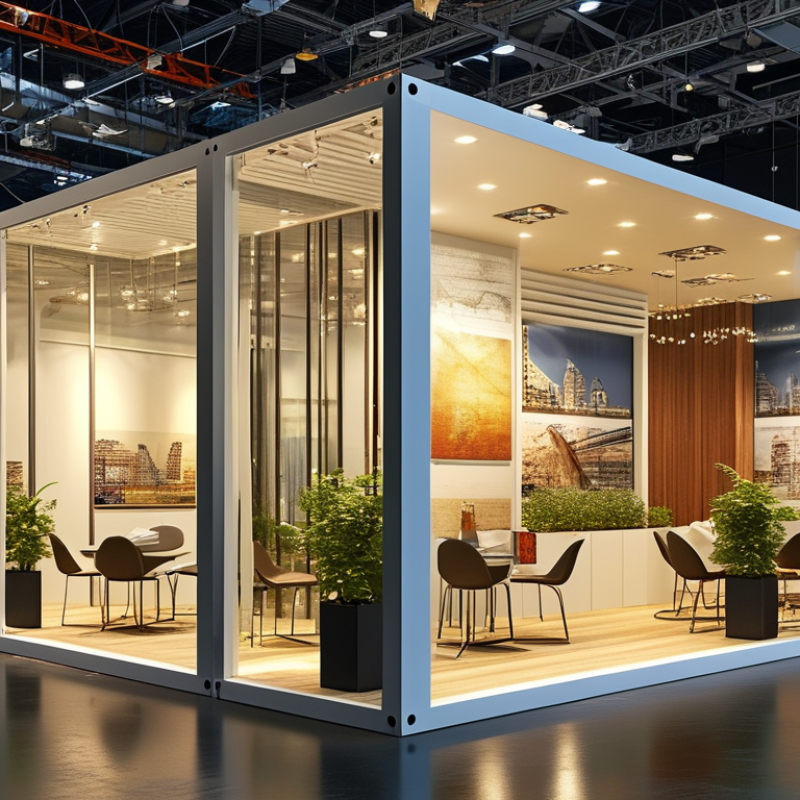
A modular trade show booth is a reusable exhibit system built from interchangeable parts. These parts may include aluminum frames, fabric graphics, shelves, counters, lighting, and storage panels. They connect through repeatable fittings, rather than permanent construction. The booth can change size and layout for different halls, markets, and transport limits.
In practice, a 3-by-3-meter version might use the same frame as a larger island booth. New graphics can refresh the message without replacing the structure. This flexibility matters for global exhibitions, where freight costs, venue rules, and labor requirements differ. UFI’s 2024 Global Exhibition Barometer reported continued growth expectations across much of the exhibition industry, increasing pressure on exhibitors to deploy efficiently. CEIR research also identifies operating costs as a major concern for exhibitors. Modular systems can reduce repeated fabrication, but savings depend on careful packing and local installation.
It is not automatically greener. That assumption needs testing. A durable frame loses value if graphics are discarded after one event. Experienced teams track reuse cycles, shipment weight, repair needs, and storage conditions. They also check fire ratings and accessibility requirements for each venue. Small design mistakes can become expensive overseas. A practical modular booth should look intentional, feel stable, and assemble with minimal tools. Its real strength is controlled adaptation, not endless decoration.
Global exhibitions demand more than attractive design. They require flexible logistics, consistent safety practices, and clear local communication. Modular booths support these needs through reusable frames, replaceable graphics, and adjustable layouts. A 3×6-meter stand can become two smaller spaces for regional events. This reduces repeated production and simplifies transport planning.
The UFI Global Exhibition Barometer 2024 reported continued growth expectations across many exhibition markets. That trend increases pressure on exhibitors to deliver efficiently. Modular systems help teams adapt to different halls, ceiling heights, visitor flows, and local venue rules. Lightweight components can also reduce shipping volume. Experienced exhibitors know that small details matter, including tool storage, cable access, lighting angles, and accessible entry points.
Freeman’s 2023 Trends Report found that 95% of attendees trusted brands more after in-person experiences. A modular booth can create that experience repeatedly, while keeping visual elements consistent across countries. Yet modular is not magic. Poorly measured graphics, weak lighting, or generic messaging can make the space feel temporary. Local teams should review translations, fire-safety documents, electrical requirements, and installation schedules before shipment. That step often prevents expensive surprises. Still, the design may need improvement after every show. Visitor behavior, transport damage, and setup time should be recorded and reviewed after each exhibition.
A modular trade show booth can simplify international exhibition logistics. Its lightweight frames pack into smaller cases than many custom-built structures. This can reduce freight volume, handling time, and storage pressure. UFI’s Global Exhibition Barometer reported that exhibition revenues recovered strongly after the pandemic, increasing the need for repeatable global programs. A booth designed for several markets can support that growth without starting from zero.
Setup is another practical advantage. Standardized connectors, numbered parts, and reusable graphics help local teams work faster. Freeman’s 2024 Trends Report found that 77% of attendees consider in-person events the best way to learn. That value is easier to protect when a booth opens on time and looks consistent. Still, speed depends on training. Poor labeling can turn a simple system into a confusing pile of parts.
Reuse can also improve purchasing control. Teams may replace one damaged panel instead of rebuilding the entire stand. Materials can move from Frankfurt to Singapore, then adapt for a smaller regional show. However, modular does not automatically mean sustainable. The European Exhibition Industry Alliance encourages measurable waste and carbon planning, rather than vague environmental claims. Organizations should record shipment weight, reuse cycles, repair rates, and disposal volumes. Some designs may cost more initially. That trade-off deserves honest review. A cheaper booth is not always cheaper after repeated freight, labor, and storage costs.
At global exhibitions, a modular trade show booth can make a brand feel familiar from city to city. The frame, lighting positions, and key graphic zones remain consistent, while local teams adjust size, language, and visitor flow. This balance matters when audiences meet the same company in different markets. Familiar, not repetitive.
In practice, I have found that consistency begins before production. A shared design guide should define logo spacing, color references, message hierarchy, and approved material finishes. It should also show real booth elevations, not only attractive digital renders. Small details matter. For example, a product counter placed near the aisle can invite conversation in one venue but obstruct traffic in another. Modular components allow these changes without rebuilding the entire environment. This reduces waste and supports more predictable installation planning.
Local adaptation still needs discipline. Translated copy may fit the panel but miss the audience’s buying concerns. Regional teams should test wording, accessibility, electrical requirements, and storage needs before shipment. I have seen elegant concepts weakened by rushed graphics and missing hardware. That failure is useful, though uncomfortable. A pre-event checklist, documented approvals, and post-show measurements create dependable learning across markets. Track visitor engagement, lead quality, setup time, and damaged parts. The next booth should improve, not merely look familiar.
Why Choose a Modular Trade Show Booth for Global Exhibitions?
Factors to Consider Before Choosing a Modular Booth
A modular booth can reduce shipping volume and support repeated use across global exhibitions. However, the frame is only one decision. Consider local venue rules, ceiling limits, electrical access, storage, and assembly labor before approving the design. A beautiful booth may fail if its crates cannot pass through a narrow loading door.
The 2024 UFI Global Exhibition Barometer reported continued growth in exhibition activity, with many industry professionals expecting revenues to exceed pre-pandemic levels. This signals stronger international competition. Your booth should therefore communicate within three seconds. Use one clear message, readable graphics, and a visible product demonstration. I have found that adjustable lighting and replaceable graphic panels are more useful than complex decorative structures.
Budget the complete lifecycle, not only the purchase price. Include freight, customs paperwork, local labor, cleaning, repairs, and storage. CEIR research has repeatedly shown that face-to-face exhibitions remain valuable for business connection and lead generation, but measurement must be practical. Set targets for qualified conversations, demonstrations, and follow-up appointments. A modular booth makes changes easier, but flexibility can become clutter. Keep fewer elements.
Test it once.
Ask whether the booth can adapt to a 3-by-3-meter space, a larger island layout, and different regional safety requirements. Materials should be durable, recyclable where practical, and supported by clear maintenance instructions. Some assumptions will be wrong. Review visitor behavior after each event, then revise the layout.
| Decision Factor | Typical Modular Booth Reality | Why It Matters for Global Exhibitions | What to Check Before Choosing | Suitability |
|---|---|---|---|---|
| Reusability | Frames, graphics, lighting and counters can usually be reconfigured for different booth sizes and layouts. | One booth system can support multiple events instead of requiring a completely new structure for every exhibition. | Ask for available layouts, replacement-part availability and compatibility between existing components. | Excellent |
| Transport and Storage | Many systems pack into reusable cases or crates, with transport volume depending on frame type, graphics and furniture. | Compact packing can simplify international freight planning and reduce storage requirements between events. | Confirm packed dimensions, gross weight, case quantity, handling requirements and local freight restrictions. | Very Good |
| Installation Time | A standard modular structure may be assembled by a trained team within several hours, depending on size and complexity. | Faster installation can reduce on-site labor time and leave more time for graphics, product placement and testing. | Request an assembly guide, tool list, crew-size recommendation and realistic setup schedule. | Very Good |
| Booth Size Flexibility | Modular components can be arranged for linear, corner, peninsula or island configurations when the system supports those formats. | Flexible configurations help adapt the exhibit to different venue footprints and regional floor-plan standards. | Check supported dimensions, maximum structural spans, hanging-sign rules and venue-specific height limits. | Excellent |
| Branding Updates | Printed fabric, rigid panels, lightboxes and digital displays can be replaced or updated without replacing every structural component. | Localized messaging, languages, campaigns and product information can be changed for each market. | Confirm graphic dimensions, print specifications, color-management process and replacement lead times. | Excellent |
| International Compliance | The booth itself must comply with venue, fire-safety, electrical, accessibility and structural requirements in each location. | Rules differ by country, venue and event organizer; non-compliance can cause delays, modifications or refused installation. | Obtain material certificates, flame-retardancy documentation, electrical specifications and engineering drawings where required. | Requires Review |
| Local Installation Support | Some suppliers provide regional partners or on-site crews; others require the exhibitor to coordinate installation independently. | Local support can reduce language barriers, scheduling risks and the need to transport a full installation team. | Verify service coverage, response times, labor rates, overtime rules and responsibility for venue coordination. | Depends on Supplier |
| Technology Integration | Modular designs can accommodate monitors, LED displays, lighting, charging points and product demonstration areas. | Integrated technology can support presentations, lead capture and interactive demonstrations across different markets. | Check load capacity, cable management, power requirements, internet access and regional plug standards. | Very Good |
| Long-Term Cost Control | The initial purchase can be higher than a basic single-use display, while repeated use and replaceable graphics may improve value over time. | A multi-event system can spread structural costs across exhibitions and reduce repeated design and fabrication work. | Compare purchase, storage, freight, labor, refurbishment, graphics and disposal costs over the planned event schedule. | Strong for Repeated Use |
| Sustainability | Reusable frames and replaceable graphics can reduce the need for complete booth disposal after every event, although materials and logistics still affect impact. | Reuse may support sustainability targets when the booth is used repeatedly and shipped efficiently. | Ask about recycled content, repairability, graphic recycling options, packaging materials and expected service life. | Good with Proper Planning |