Top Roving Frame Manufacturers in China for Global Buyers?
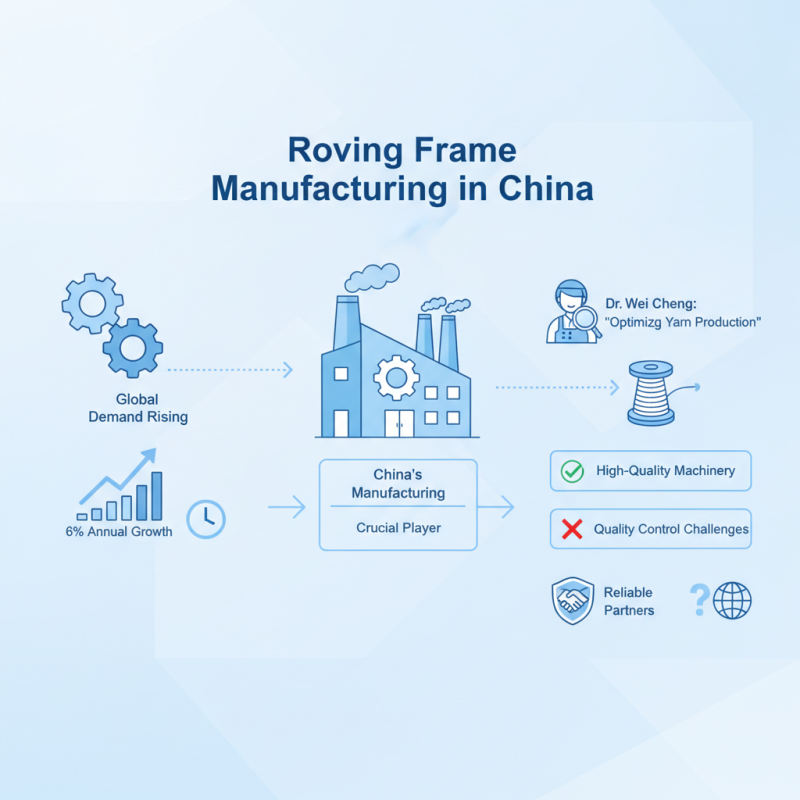
The demand for Roving Frames in the textile industry is rising globally. China's manufacturing capabilities make it a crucial player in this market. According to a recent industry report by Textile World, the Roving Frame market is expected to grow by 6% annually over the next five years. This growth reflects the increasing need for efficient spinning technologies.
Expert Dr. Wei Cheng, a leading figure in textile machinery innovation, states, “Roving Frames are essential for optimizing yarn production.” His insight highlights the importance of investing in high-quality machinery. The choice of manufacturer can significantly impact production rates and yarn quality.
Despite the impressive growth, challenges persist. Many manufacturers struggle to maintain quality control amid rising production demands. Buyers must research and select manufacturers wisely. There is a pressing need for reliable partners who can deliver consistent performance. This landscape makes it vital for global buyers to identify top Roving Frame manufacturers in China.
Overview of Roving Frames and Their Applications in the Textile Industry
Roving frames play a critical role in the textile industry. They are used to create roving, which is essential for spinning yarns. The production process involves drawing out and twisting fibers into a continuous strand. This is crucial for producing high-quality textiles. Roving frames can enhance efficiency and quality in yarn production.
Tips: Focus on selecting the right roving frame. Consider the type of fibers you will use. Fiber compatibility can influence the quality of the finished product.
The versatility of roving frames allows for various applications. They can process both natural and synthetic fibers. Each type of fiber presents unique challenges. A deeper understanding of these fibers can lead to better production outcomes.
Tips: Regular maintenance of your roving frame is vital. A well-maintained machine can prevent costly downtime. Always follow best practices for care and operation to maximize efficiency. It's essential to reflect on any efficiency gaps during production and adjust accordingly.
Criteria for Evaluating Roving Frame Manufacturers in China
When evaluating roving frame manufacturers in China, several key criteria emerge. First, the quality of machinery is paramount. Industry reports indicate that advanced technology in manufacturing improves efficiency by up to 30%. Reliable companies invest in state-of-the-art equipment, ensuring consistent output. Metrics such as defect rates and production capacity are crucial indicators of a manufacturer’s quality.
Next, the level of customer support plays a significant role. Manufacturers should offer responsive communication and technical assistance. According to a study, 70% of buyers prioritize post-purchase support when selecting a supplier. This emphasizes the importance of ongoing relationships in the textile industry. A supplier with effective sharing of knowledge can enhance operational efficiency significantly.
Additionally, one should consider sustainability practices. The global textile market is shifting towards eco-friendly solutions. Reports show that manufacturers adopting sustainable practices see a 20% increase in demand. Evaluating a company's approach to environmental impact can provide insight into their long-term viability. Deciding on the right partner requires a careful balance of these factors, aiming for quality, support, and sustainability. Each potential partner presents unique challenges to reflect on.
Top Roving Frame Manufacturers and Their Key Products
China has emerged as a hub for roving frame manufacturing, meeting the growing global demand for quality textile production equipment. The country produces a significant percentage of the world's roving frames, driven by advanced technology and skilled labor. A recent industry report indicated that Chinese manufacturers captured approximately 40% of the global market share in 2022. This trend is expected to continue as the sector innovates and improves manufacturing processes.
Key products from top manufacturers include automatic roving frames and high-speed models. These machines are designed to enhance efficiency while maintaining fiber quality. Reports show that automated designs can increase production rates by up to 30%. However, challenges remain. Some manufacturers struggle with integration and the maintenance of high equipment standards. This inconsistency can affect the reputation of the industry as a whole.
Data also highlights that while the technology improves, sustainability practices are lagging. Many manufacturers are yet to fully adopt eco-friendly practices. A push for greener production methods is essential. Responding to environmental concerns can elevate brand reliability and gain consumer trust. Continuous investment in both innovation and sustainability will be crucial for staying competitive in the global market.
Top Roving Frame Manufacturers in China - Production Capacity Comparison
Market Trends and Innovations in Roving Frame Technology
The roving frame technology is evolving rapidly, with significant market trends shaping its landscape. A report by Research and Markets indicates a projected annual growth rate of 5.3% in the global textile machinery market, which includes roving frames. This growth is driven by the increasing demand for high-quality yarn in various sectors, such as fashion and home textiles.
Innovations in automation and eco-friendly materials are at the forefront of this evolution. Manufacturers are integrating advanced software and IoT capabilities into their roving frames. This innovation allows for better monitoring and optimization of production processes. Reports suggest that the adoption of smart machinery can boost productivity by up to 20%. However, concerns about the high initial investment and the need for skilled labor persist, highlighting a potential skills gap in the industry.
Moreover, sustainability is a key focus. Many producers are exploring alternatives to conventional fibers, aiming to reduce environmental impact. The Global Recycling Foundation has noted a rise in recycled fiber usage, which is projected to reach 25% of the global textile market by 2025. While these trends show promise, the industry's shift still requires careful consideration of resource management and supply chain robustness.
Global Buying Considerations for Sourcing Roving Frames from China
When sourcing roving frames from China, global buyers must consider several factors. The textile machinery industry in China has grown significantly. In 2022, China accounted for over 25% of global textile machinery manufacturing. This growth signals a competitive market. Quality and technology advancements are key aspects for buyers to evaluate.
Buyers should prioritize manufacturers with extensive experience in the industry. While many companies claim expertise, not all have the same level of reliability. It is crucial to request certifications and production data. Additionally, visiting factories can provide insights into their operational standards. A study from the China Textile Machinery Association noted that over 40% of manufacturers have upgraded facilities in recent years. This detail is vital for assessing production efficiency.
Communication is another important consideration. Language barriers and business practices in China can complicate negotiations. Establishing clear expectations is essential. Reports indicate that about 30% of sourcing challenges stem from miscommunication. Buyers should use professional translation services where needed. Evaluating a manufacturer's after-sales support is also critical. A strong support system can enhance the overall purchasing experience.
Top Roving Frame Manufacturers in China for Global Buyers
| Manufacturer Location | Production Capacity (Units/Month) | Export Experience (Years) | Certifications | Key Markets |
| Zhejiang | 5000 | 10 | ISO 9001, CE | Europe, Asia |
| Shandong | 8000 | 15 | ISO 14001, RoHS | North America, Middle East |
| Guangdong | 10000 | 8 | ISO 9001, CE | Oceania, South America |
| Jiangsu | 7000 | 12 | ISO 9001, OHSAS | Asia, Africa |