Top 10 Food Bagging Machines for Efficient Packaging Solutions?
In the fast-paced world of food production, efficiency is key. A reliable food bagging machine can streamline packaging processes. These machines play a crucial role in maintaining product quality and reducing labor costs. Choosing the right food bagging machine is essential for success in the industry.
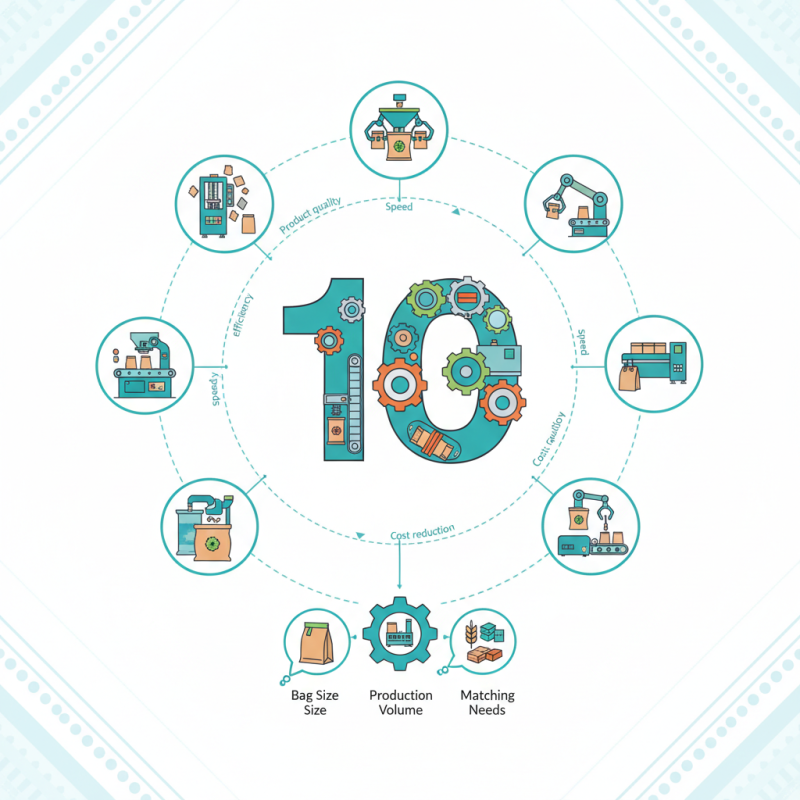
However, not all machines are created equal. Some may excel in speed, while others focus on precision. Understanding the specific needs of your operation is vital. Consider factors like bag size, production volume, and food type when selecting the right machine.
The market offers various options, each with unique features. Some models may come with high-tech features that promise improved efficiency. Yet, the overall effectiveness lies in matching the machine to your specific requirements. As you explore your choices, reflect on what truly matters for your operations. The ideal food bagging machine should enhance your workflow while ensuring product integrity.
Top Features to Consider in Food Bagging Machines
When choosing food bagging machines, several key features stand out. The efficiency of these machines greatly impacts production lines. According to the Food and Beverage Packaging market report by Mordor Intelligence, the industry is expected to grow by over 5% annually until 2026. This growth emphasizes the need for reliable and advanced bagging solutions.
One critical feature is the speed of the machine. Many modern food baggers operate at impressive rates, often exceeding 60 bags per minute. This speed ensures that businesses can meet increasing demand without sacrificing quality. Precision in weighing is another vital consideration. Machines should offer error rates as low as 0.5 grams, enhancing product consistency. Automated systems can also reduce labor costs, streamlining operations significantly.
Moreover, flexibility is essential in today's market. Machines that adapt to various bag sizes and materials can help manufacturers respond to consumer trends quickly. A report from Smithers Pira highlights that sustainability is becoming crucial. Machines that use eco-friendly materials can attract more customers. Thus, considering these features is key to selecting a bagging machine that provides efficiency and meets market demands. Adjustments and adaptations may be necessary, as no machine will fit every need perfectly.
Top 10 Food Bagging Machines for Efficient Packaging Solutions
| Model |
Speed (bags/min) |
Weight (lbs) |
Bag Size Range (inches) |
Key Feature |
| Model A |
40 |
150 |
6 - 12 |
User-friendly interface |
| Model B |
55 |
175 |
4 - 10 |
High-speed operation |
| Model C |
30 |
160 |
5 - 11 |
Automatic sealing |
| Model D |
50 |
180 |
3 - 8 |
Compact design |
| Model E |
45 |
200 |
6 - 14 |
Versatile applications |
| Model F |
35 |
155 |
5 - 10 |
Energy-efficient |
| Model G |
60 |
170 |
4 - 12 |
Multi-function capability |
| Model H |
48 |
190 |
6 - 15 |
Intuitive controls |
| Model I |
41 |
165 |
3 - 11 |
Durable construction |
| Model J |
49 |
200 |
5 - 13 |
Automatic adjustment |
Types of Food Bagging Machines Available in the Market
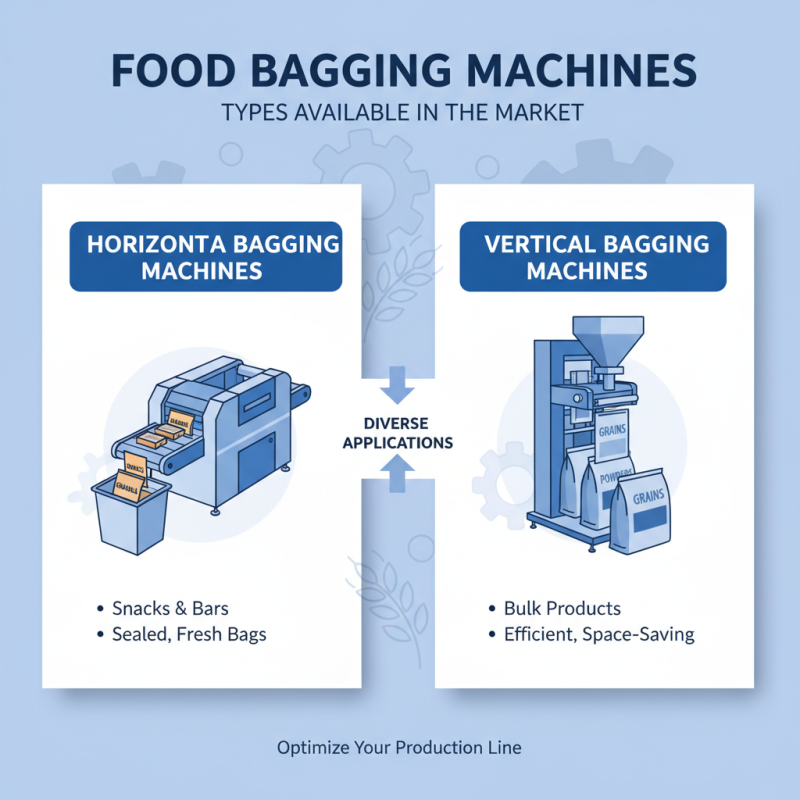
When exploring the types of food bagging machines available on the market, it’s essential to recognize their diverse applications. These machines vary in design and function, catering to different food products. For instance, horizontal bagging machines excel in packaging items like snacks or granola bars. They create seamless, neat bags that maintain product freshness. Vertical bagging machines, on the other hand, are well-suited for bulk products, including grains or powders. They allow for efficient use of space and materials, optimizing the production line.
Automatic food bagging machines are gaining popularity for their speed and precision. These systems can handle large volumes while minimizing human error. However, the initial investment can be a concern for smaller businesses. Semi-automatic machines offer a balance between efficiency and cost. They require some manual input but enhance productivity compared to hand packaging. It's crucial to assess each option's long-term benefits and potential drawbacks, as the right choice can significantly impact operational efficiency and product quality.
Benefits of Using Food Bagging Machines for Packaging
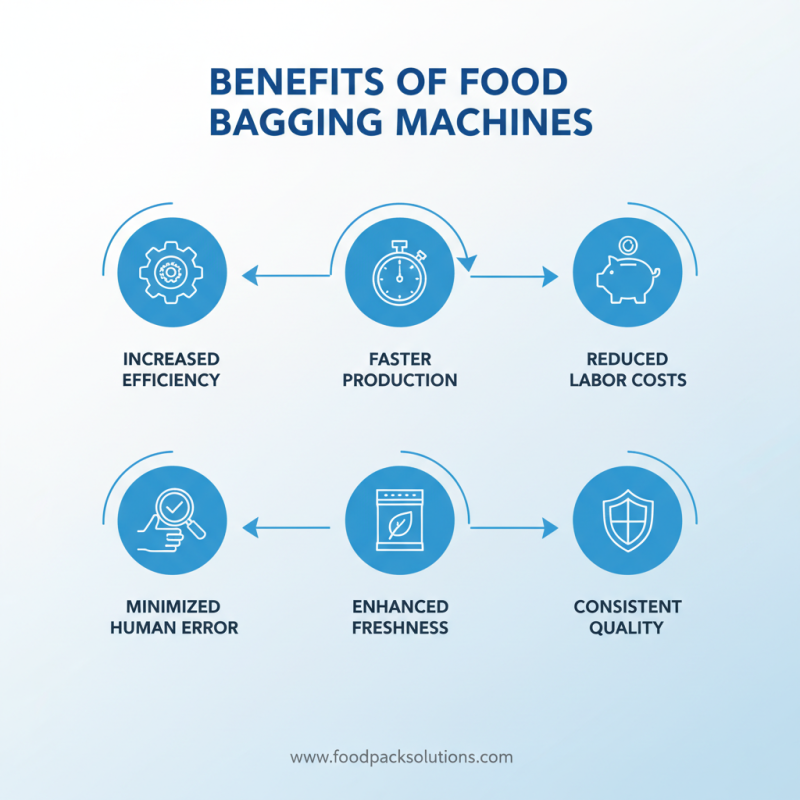
Using food bagging machines offers numerous advantages in packaging processes. These machines enhance efficiency by automating the bagging workflow. They significantly speed up production, allowing businesses to pack larger quantities in less time. This efficiency not only reduces labor costs but also minimizes human error during packaging. Each bag can be sealed precisely, ensuring freshness and quality.
The precision in bag sizes helps reduce waste, a common issue in manual packaging. When bags are uniform, the distribution becomes more predictable. This consistency is essential for both inventory management and consumer trust. Customers prefer products that maintain high-quality standards. Yet, it's important to select machines that fit specific packaging needs, as some may require alterations or adjustments that could complicate use.
Additionally, adopting these machines also allows for flexibility. Different bagging options cater to various products, whether solids or powders. However, the initial investment could be daunting for smaller operations. Over time, the savings generated from reduced labor and material waste can offset this cost. Continuous improvement in machine technology is crucial for ensuring they meet evolving industry standards.
Comparison of Leading Food Bagging Machine Brands
Food bagging machines vary widely in design, efficiency, and ease of use. When comparing top models, focus on sealing quality, speed, and adaptability to different bag types. Some machines perform exceptionally well with granular products, while others handle liquids or powders better. Precise control systems enhance consistency but may increase complexity. Operators often face a trade-off between automation level and maintenance needs.
Durability is another crucial factor. Machines built with stainless steel parts tend to resist corrosion and last longer in demanding food environments. However, heavier models might require more frequent calibration and pose challenges in small production spaces. User-friendly interfaces help reduce training time, though some advanced technology can be intimidating at first. It’s common to discover that an ideal bagging machine in theory doesn’t fit perfectly with specific production lines without minor tweaks.
Energy consumption and noise levels vary too. In some plants, quieter machines are necessary to maintain workplace comfort. Energy-efficient designs save costs but might compromise throughput speed under heavy loads. These practical considerations reveal that no single machine is perfect for every scenario. Continuous evaluation and adjustments are essential to find the right balance between speed, accuracy, and user convenience.
Maintenance Tips for Optimal Performance of Food Bagging Machines
Maintaining food bagging machines is crucial for ensuring optimal performance. Regular maintenance helps prevent breakdowns and prolongs the lifespan of the equipment. A thorough cleaning routine should be established. Over time, dust and food residue can accumulate, leading to operational inefficiencies. Cleaning the machine’s components, especially the sealing area, prevents contamination and enhances productivity.
Check the mechanical parts frequently. Look for wear and tear on belts and gears. Any signs of damage can indicate the need for immediate attention. Lubricating moving parts is also essential to reduce friction. This simple step can prevent overheating and prolong the machine's operation. When components wear out, replacing them promptly ensures that the machine runs smoothly and reliably.
Calibration is another critical factor that should not be overlooked. Regularly calibrating your bagging machine ensures accurate labeling and weighing. Incorrect settings can lead to wasted materials and increased production costs. Training staff on best practices is vital. They should understand how to operate and care for the machine effectively. Simple adjustments can make a significant difference in performance over time.
Top 10 Food Bagging Machines for Efficient Packaging Solutions