The Duravant family of operating companies serve the food processing, packaging and material handling segments.

China is a major manufacturing base for 430 Stainless Steel Strips, but low price alone proves very little. Buyers need evidence.
The World Stainless 2023 production report recorded approximately 58.4 million tonnes of global stainless-steel crude production. This scale reflects strong demand, yet it also increases quality differences between mills. ASTM A240/A240M identifies Type 430 as a ferritic stainless steel, typically containing 16–18% chromium. It offers magnetic behavior, useful oxidation resistance, and practical performance in appliance panels, kitchen equipment, trim, and industrial components.
Harold M. Cobb, a metallurgist and author of The History of Stainless Steel, wrote, “Stainless steel is not a single material, but a family of materials.” That distinction matters when comparing Chinese suppliers. A reliable producer should provide heat numbers, chemical reports, mechanical results, surface specifications, and dimensional tolerances. Ask for them before ordering.
Strip quality becomes visible on the shop floor. A clean slit edge should show minimal burrs. Coils should unwind evenly, without telescoping or severe camber. Surface 2B, BA, or brushed finishes must match approved samples. These details affect stamping, bending, welding, and final appearance.
Supplier rankings can mislead. Some websites publish impressive claims without independent verification. This article therefore examines China’s leading 430 Stainless Steel Strips suppliers through standards, production experience, export records, testing capacity, and customer support. The comparison is not perfect. Public data can be incomplete, and factory capabilities may change.
A thoughtful buyer should verify current certificates, inspect samples, and clarify tolerances in writing. The best supplier is not always the largest. Consistency is harder to advertise, but easier to measure.
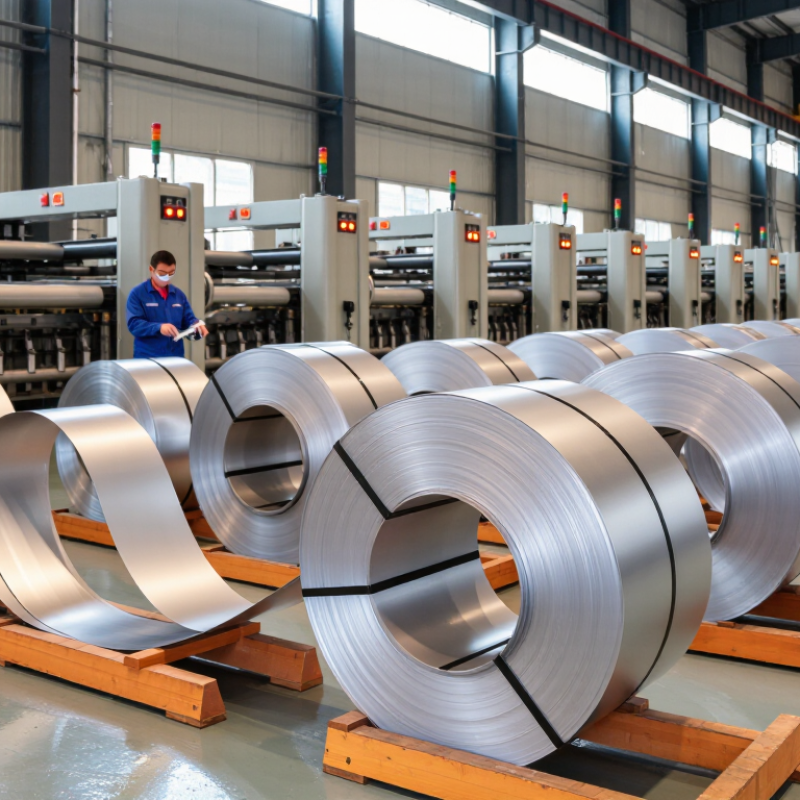
430 stainless steel strip is a thin, continuously rolled ferritic stainless steel product. It usually contains about 16–18% chromium, with low carbon and limited nickel. This structure gives the strip useful resistance to oxidation, a bright metallic appearance, and magnetic behavior at room temperature. It is not an austenitic grade.
The strip is commonly supplied in coils, with controlled thickness, width, hardness, and surface finish. Typical finishes include cold-rolled bright surfaces and brushed surfaces. You may see it in appliance panels, kitchen equipment, decorative trim, automotive components, and heat-resistant parts. However, 430 is less formable than many 300-series grades. Deep drawing can create cracks if the design ignores its forming limits.
Material selection requires practical checking. ASTM specifications, chemical analysis, tensile results, hardness, flatness, and edge condition should match the order. Slit edges need attention. Burrs can affect assembly and worker safety. Surface appearance also depends on cleaning, rolling, and storage, so “bright” should be defined clearly.
It is corrosion resistant, not corrosion proof. Chlorides, moisture, and harsh cleaners may still stain the surface. Food-contact use depends on the application and local requirements. A reliable supplier should provide coil identification, inspection records, and traceability. In my experience, buyers sometimes focus only on price. That assumption needs checking. Consistent thickness often saves more than a cheaper coil.
430 stainless steel is a ferritic grade containing approximately 16–18% chromium. Its structure is magnetic, unlike many austenitic stainless steels. This property helps manufacturers identify it during material inspection. The alloy offers useful resistance to atmospheric moisture, mild chemicals, and oxidation at moderate temperatures. It also provides a clean metallic surface after polishing or brushing.
Its limits matter.
430 strip is commonly used for appliance panels, kitchen equipment, automotive trim, exhaust components, architectural interiors, and industrial covers. Its low thermal expansion supports dimensional stability near heat sources. It also conducts heat better than many nickel-bearing grades. In production, operators often choose thin strip for stamped parts, decorative profiles, and formed brackets. However, deep drawing can be more difficult than expected. Sharp bends may create cracking if tooling, annealing, or grain direction is poorly controlled.
Chloride-rich environments require caution. Salt spray, stagnant water, and harsh cleaning chemicals can cause staining or localized corrosion. Welding also needs process control because the heat-affected area may lose toughness. A practical supplier should verify thickness, hardness, surface finish, chemical composition, and mechanical performance through documented testing. Coil edges deserve inspection too. Small burrs can disrupt slitting and assembly. Selecting 430 only for its lower cost can become an expensive mistake when the application demands stronger corrosion resistance.
China’s 430 stainless steel strip production follows a controlled, multi-stage process. The route usually begins with electric arc melting and argon-oxygen decarburization. The molten steel is continuously cast into slabs. Each slab is inspected for surface cracks, segregation, and thickness variation.
World Stainless reported 58.4 million tonnes of global crude stainless steel production in 2023. China contributed about 36.7 million tonnes, showing its major manufacturing capacity. However, volume alone does not prove strip quality. A reliable supplier should provide heat numbers, chemical analysis, and mechanical test records for every batch.
The slabs are reheated before hot rolling. After annealing and pickling, the material passes through cold rolling mills. This step controls thickness, flatness, and surface finish. Final annealing restores ductility, while skin-pass rolling improves shape and handling. Slitting machines then cut wide coils into narrow strips, often with carefully measured edges.
430 stainless steel normally contains about 16–18% chromium and has low carbon content. ASTM A240 and ASTM A480 provide useful references for chemistry, dimensions, testing, and surface requirements.
In practice, operators still check burrs, coil tension, and microscopic scratches. The process is not perfectly uniform. Small variations can appear near coil ends, so sampling only the middle section may be a weak inspection habit.
A reliable Chinese 430 stainless steel strip supplier should be evaluated through evidence, not attractive quotations. A low price may hide poor yield or unstable thickness. Ask for the exact grade, such as AISI 430 or EN 1.4016, and confirm the applicable standard.
Review recent mill test certificates with heat numbers, chemical composition, hardness, and tensile results. Check thickness and width tolerances at several points, not only one location. Surface finish matters too. Request clear photographs of 2B or BA strips, slit edges, coil ID, and protective packaging. Small edge cracks can become serious during stamping.
Practical experience is valuable. Request samples from the same production route, then test forming, corrosion resistance, and dimensional stability. A competent supplier should explain its annealing, pickling, slitting, and inspection controls in specific terms. Traceability should connect each coil to a heat, inspection record, and packing list. Independent audits can help, although one factory visit cannot prove every future batch. That limitation deserves attention. Confirm production capacity, lead times, export documents, and response procedures for nonconforming material. The best supplier is not simply the largest one. It is the one that provides consistent strips, transparent records, and technically honest answers when results are imperfect.
This practical procurement model prioritizes product consistency and compliance with recognized stainless steel strip standards. Buyers should verify material grade, chemical composition, dimensional tolerances, surface quality, testing records, production capacity, delivery reliability, and total cost before selecting a supplier.
A reliable China 430 stainless steel strips supplier should prove quality with documents and production evidence. World Stainless reported global stainless crude steel production of about 58.4 million tonnes in 2023. This scale increases the need for traceable material control.
Ask for ASTM A240 or EN 10088-2 compliance. The inspection report should show chemical composition, tensile strength, yield strength, hardness, thickness, and surface condition. An EN 10204 3.1 certificate is useful for batch traceability. Check whether the supplier uses calibrated gauges and independent laboratory testing. ISO 9001 matters, but certification alone is not proof. The ISO Survey 2022 recorded more than 1.2 million ISO 9001 certificates worldwide. That number also shows why verification remains necessary.
Request samples before approving a large coil order. Inspect edge quality, burrs, flatness, and surface marks under consistent lighting. Specify BA, 2B, or No.4 finish clearly. Export support should include moisture-resistant packing, coil labels, packing lists, certificates of origin, and accurate commercial invoices. Confirm HS classification with your customs broker. Ask about Incoterms, loading photos, and pre-shipment inspection. Small mistakes can delay clearance. I have seen attractive test reports fail to match actual coil markings. That weakness deserves attention. A supplier who accepts independent inspection and keeps heat numbers visible is usually easier to trust.
| Evaluation Area | What to Check | Technical or Export Reference | Recommended Supplier Evidence |
|---|---|---|---|
| Material Identity | Confirm the stainless steel grade | Grade 430 is a ferritic stainless steel commonly identified as UNS S43000, EN 1.4016, or X6Cr17. Equivalency must be confirmed against the purchase standard. | Heat number, material test certificate, and standard designation shown on the quotation and packing list. |
| Applicable Standards | Verify the product and dimensional standard | Common references include ASTM A240/A240M for chromium and chromium-nickel stainless steel plate, sheet, and strip; EN 10088-2 for stainless steel flat products; and GB/T 3280 for cold-rolled stainless steel sheet and strip. | The purchase order should state the exact standard, grade, thickness tolerance, width tolerance, surface finish, and delivery condition. |
| Chemical Composition | Check the heat analysis against the ordered standard | Typical ASTM A240 Type 430 limits include: carbon up to 0.12%, manganese up to 1.00%, silicon up to 1.00%, phosphorus up to 0.040%, sulfur up to 0.030%, and chromium approximately 16.0–18.0%. The applicable edition and standard control the final limits. | Certified chemical analysis linked to the heat number. Values should not be accepted solely from a product brochure. |
| Mechanical Properties | Confirm tensile and forming requirements | For annealed Type 430 under ASTM A240, commonly referenced minimum values are approximately 450 MPa tensile strength, 205 MPa yield strength, and 22% elongation. Actual requirements depend on the selected specification and temper. | Mill test report showing tensile test results, test direction, gauge length, and delivery condition. |
| Thickness and Width | Review dimensional capability and tolerance | Commercial stainless steel strip is available in a wide range of thicknesses and widths. Common supply programs may include thin cold-rolled strip below 1.00 mm and slit widths from several millimeters upward, but capability is equipment-specific. | Dimensional inspection report, calibrated measuring equipment record, and a tolerance table based on ASTM, EN, or GB requirements. |
| Surface Finish | Match the finish to the end use | Common cold-rolled finishes include 2B, BA, No. 4, and brushed or polished finishes. Finish terminology and roughness limits should be defined in the contract. | Approved sample, surface roughness specification where applicable, protective film details, and clear photos of the packed material. |
| Flatness and Edge | Control flatness, camber, burrs, and edge condition | Slit strips may be supplied with mill edge, slit edge, deburred edge, or rounded edge. Flatness, camber, and burr limits depend on strip dimensions and the agreed standard. | Edge-condition statement, inspection plan, sample approval, and records from width and burr inspections. |
| Heat Treatment and Temper | Confirm annealed, skin-passed, or hardened condition | Grade 430 is normally supplied in an annealed condition for general forming. Skin passing or other controlled tempering may be used to improve flatness and surface characteristics. | Delivery-condition code on the material certificate and a documented annealing or tempering process record. |
| Corrosion and Service Fit | Assess whether 430 is suitable for the environment | 430 provides useful oxidation and corrosion resistance in many indoor, mildly corrosive, and heat-related applications. It generally offers lower chloride and wet-corrosion resistance than austenitic grades such as 304. | Written application review covering temperature, humidity, chlorides, cleaning chemicals, forming, and welding requirements. |
| Quality Management | Verify the manufacturing quality system | ISO 9001 certification demonstrates that a quality management system has been assessed against the relevant ISO requirements. It does not by itself certify every product or chemical composition. | Valid certificate showing the legal entity, certification scope, issuing body, certificate number, and validity period. |
| Inspection and Testing | Define pre-shipment inspection requirements | Inspection may cover chemistry, tensile properties, dimensions, surface quality, flatness, edge condition, coil weight, and marking. Independent inspection can be added for critical orders. | Inspection and test plan, calibration certificates, sample reports, and agreed acceptance criteria before production. |
| Traceability | Maintain heat-to-coil and coil-to-carton traceability | Each coil or strip bundle should remain traceable to its heat number, production date, size, finish, and inspection record throughout slitting and packing. | Matching heat number on the mill certificate, coil label, packing list, and outer packaging. |
| Packaging | Protect the strip during handling and ocean transport | Suitable export packaging may include moisture-resistant wrapping, edge protection, steel or fiber strapping, pallets or skids, and corrosion-prevention materials where appropriate. | Packaging specification, coil orientation, lifting instructions, gross and net weights, and loading photographs. |
| Export Documentation | Check the document package before shipment | A typical export file may include commercial invoice, packing list, bill of lading or airway bill, certificate of origin when required, material test certificate, and insurance documents when applicable. | Sample document set with consistent product descriptions, HS classification support, quantities, weights, and consignee information. |
| Trade Terms and Lead Time | Clarify quotation and delivery responsibilities | The quotation should identify currency, minimum order quantity, production lead time, port of loading, and the agreed Incoterm such as EXW, FOB, CFR, or CIF. | Formal quotation, production schedule, shipment cut-off date, and written explanation of any surcharge or alloy-price adjustment. |
| Pre-Shipment Approval | Use a documented final acceptance process | Approval should be based on the signed specification, approved surface sample, dimensional report, certificate review, packaging inspection, and quantity verification. | Final inspection report, approved sample reference, photographic record, and release authorization before loading. |