China Top 10 Optical Cable Adapters Manufacturers?
Choosing reliable Optical Cable Adapters manufacturers in China requires more than comparing catalog prices. These components support fiber alignment, connector protection, and stable signal transmission in telecom rooms, data centers, and industrial networks. A small mismatch can create insertion loss, loose fitting, or repeated maintenance visits. This guide examines ten notable Chinese manufacturers through practical purchasing criteria, not promotional claims alone. Their product ranges, connector compatibility, manufacturing controls, testing records, export experience, and service responsiveness all matter.
The research considers common adapter types, including SC, LC, FC, ST, MPO, and hybrid configurations. It also looks at materials such as ABS, PC, ceramic sleeves, and metal bodies. Details matter. A buyer should verify ferrule alignment, mating durability, operating temperature, flame ratings, and available inspection reports. Factory audits, sample testing, and clear datasheets can reveal differences hidden behind similar photographs. Experience from installation projects is valuable, although it does not replace current technical verification.
China’s supplier landscape changes quickly. Production capacity, certifications, lead times, and quality consistency may differ between factories and trading companies. The list should therefore be treated as a practical starting point, not a permanent verdict. Some information may require direct confirmation. That is worth stating. Readers can use this overview to compare manufacturers carefully, request representative samples, and match each supplier with their network design and risk requirements. Reliable sourcing depends on evidence, communication, and performance after delivery—not on rankings alone.
What Optical Cable Adapters Are and How They Work
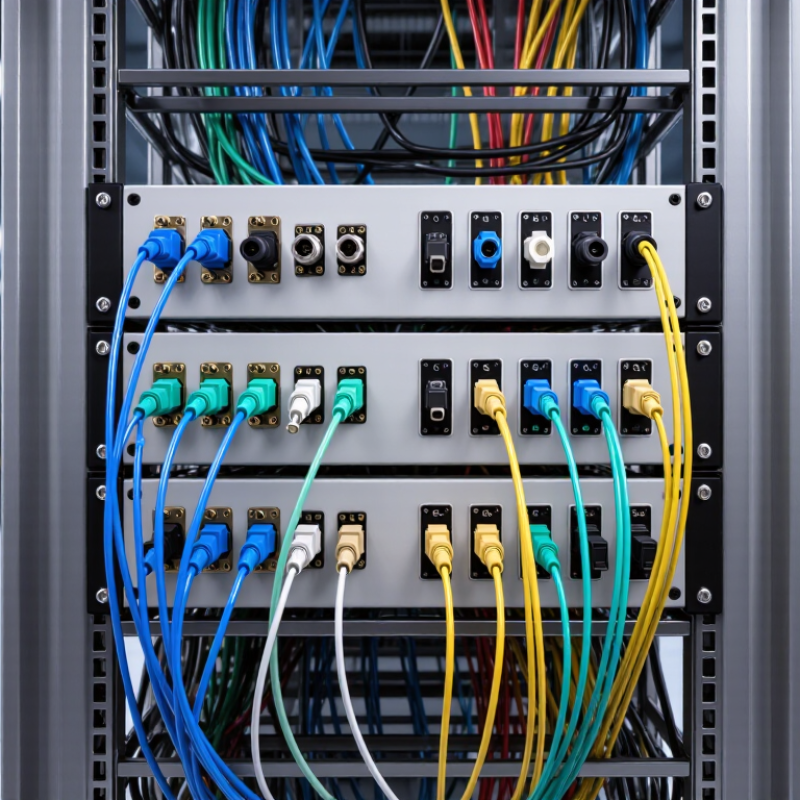
An optical cable adapter is a small alignment device that joins two fiber-optic connectors. It holds their ferrules face to face, so light can pass from one fiber into another with minimal loss. Inside, a precision sleeve keeps the fiber cores centered. Even a tiny offset can weaken the signal.
Adapters are often mounted in panels, wall outlets, or equipment ports. Their shape must match the connector ends, while the fiber type also matters. Single-mode and multimode fibers carry light differently, so mismatched parts may perform poorly. The connection itself is passive. No power supply is needed.
Cleanliness matters more than the adapter’s simple appearance suggests. A speck of dust on a connector end can scatter light or cause unstable readings. Inspect and clean both ends before connection, then seat them gently. Never force a fit. Still, cleaning alone cannot fix damaged ferrules or poor alignment. In practice, checking insertion loss with suitable test equipment gives a more reliable picture than judging a link by appearance. That step is sometimes skipped, and it should not be.
China’s Optical Cable Adapter Manufacturing Landscape
China’s optical cable adapter manufacturing landscape includes component workshops, connector specialists, and system-oriented producers. Many supply familiar interfaces such as SC, LC, and FC. Buyers compare polish quality, housing materials, dimensional tolerances, and batch consistency. Small parts matter. A slightly misaligned ferrule can increase insertion loss, even when an adapter looks clean. Reliable evaluation means checking documented inspection methods and sample results across batches, not relying on one favorable measurement. Ask how each result was measured.
Production models vary. Some manufacturers focus on standardized adapters for regular orders; others offer custom housings, color coding, or packaging for equipment makers and installers. Lead time, traceability, and sample-to-production consistency deserve attention alongside price. Details matter. A polished product sheet cannot prove stable output, and buyers may need to investigate further. Request dimensional drawings, test records, and samples from multiple batches when possible. Check fit in the actual panel or enclosure, too. The landscape is capable, but not perfectly uniform; careful qualification can distinguish established practices from promises that have not yet been demonstrated.
Criteria for Ranking the Top Ten Chinese Manufacturers
A credible ranking of Chinese optical cable adapter manufacturers should begin with verifiable production capability, not promotional claims. Check whether the supplier makes the adapter type and connector interface your project requires. Review documented insertion loss, return loss, and dimensional tolerances. Numbers matter. Ask for test records tied to specific product batches, not just a general quality certificate. Clear traceability makes comparisons more dependable.
A useful scorecard should also assess material consistency, inspection procedures, customization, lead times, and after-sales technical support. Samples can reveal practical details: a loose fit, uneven polishing, or caps that come off during handling. Compare samples under the same test conditions. Fit matters. Give stronger weight to repeatable test results than to the breadth of a catalogue. Supplier data may not be equally complete, so mark missing evidence rather than treating it as a passing score. Ranking criteria are never perfectly neutral; buyers should adjust weightings for their own installation environment and volume.
Tips: Request a sample and its test report together. Confirm connector compatibility, packaging, and batch identification before placing a larger order.
Profiles of China’s Top Ten Optical Cable Adapter Manufacturers
China’s optical cable adapter sector includes manufacturers with distinct strengths rather than one universal leader. The profiles below describe ten common supplier types, not a verified ranking. One focuses on standard single-mode adapters for telecom links. Another specializes in multimode parts used in data rooms. A third makes ruggedized adapters for outdoor cabinets. A fourth supplies compact formats for dense patch panels. A fifth emphasizes ceramic alignment sleeves and dimensional control.
A sixth profile centers on custom colors and keying options for installation teams. A seventh supports small production runs and engineering samples. An eighth invests in automated inspection, checking end-face quality and sleeve fit. A ninth serves export orders with documented batch records. A tenth offers broader cable-management components alongside adapters. Details matter. Buyers can compare insertion-loss data, return-loss results, material specifications, and sample consistency before placing larger orders. Ask how measurements are taken, and whether reports match the delivered batch. Some suppliers describe quality broadly; that is not enough evidence by itself. A factory visit or independent sample test can reveal practical strengths, though neither guarantees every future shipment. The profiles are useful starting points, but the categories overlap, and public information may be incomplete.
How to Compare Quality, Compatibility, and Supply Capacity
When comparing China’s leading optical cable adapter manufacturers, inspect measurable quality rather than catalog language. Ask for insertion-loss and return-loss data from recent batches. A connector that looks polished may still misalign under load. Check ferrule geometry, sleeve material, housing tolerance, and end-face cleanliness. Request test methods tied to IEC or TIA requirements. Independent laboratory reports add credibility. Factory visits reveal more than brochures.
Compatibility begins with connector type, fiber mode, polish, and mounting format. Confirm whether the adapter supports OS2, OM3, or OM4 assemblies. UPC and APC interfaces should never be treated as interchangeable. Use sample mating tests with your actual patch cords. Measure loss after repeated mating cycles and temperature changes. Small differences matter. We once saw a low-cost sleeve pass visual inspection but fail after vibration testing. That finding changed the evaluation criteria.
Supply capacity needs evidence. Review production lines, tooling ownership, inspection records, and monthly output. Ask how the factory handles sudden demand without mixing materials or skipping tests. Verify batch traceability from resin and ceramic sleeves to final packing. Compare sample lead time, mass-production lead time, MOQ, and corrective-action speed. A supplier may promise ten thousand units monthly, yet lack surge planning. That weakness is easy to miss. Clear drawings, retained samples, and written acceptance limits reduce disputes. Still, no scorecard is perfect; field conditions can expose assumptions that laboratory data misses.