The Duravant family of operating companies serve the food processing, packaging and material handling segments.

Prefabricated Metal Homes are gaining attention as buyers seek predictable schedules, efficient material use, and designs that can be assembled with less work on site. Yet “prefabricated” covers very different products: a steel-frame shell, a finished modular dwelling, or a custom home shipped in sections. Comparing suppliers therefore means looking beyond glossy renderings. Examine engineering scope, insulation specifications, corrosion protection, transport limits, installation support, and warranty terms. A neat factory photograph cannot answer every question.
Industry-wide figures offer context, not a precise forecast for metal homes. McKinsey’s 2019 report, Modular construction: From projects to products, estimated that broader modular construction could create up to $130 billion in annual market value by 2030 and save $22 billion annually in the United States and Europe. Those estimates cover modular construction generally, not metal housing alone. The distinction matters. Professor Ryan E. Smith, an off-site construction researcher and author of Prefab Architecture, offers a useful expert perspective: his work emphasizes that prefabrication is a coordinated design-and-delivery process, not simply factory production. That is a paraphrase of his published work, not a direct quotation.
This worldwide supplier overview considers practical evidence: published project details, customization options, material specifications, delivery reach, and after-sales service. Buyers should verify claims against project documents and local site conditions. Small details matter. A coastal installation, a narrow access road, and a cold-climate insulation target can change what “best supplier” means. No ranking can replace that review.
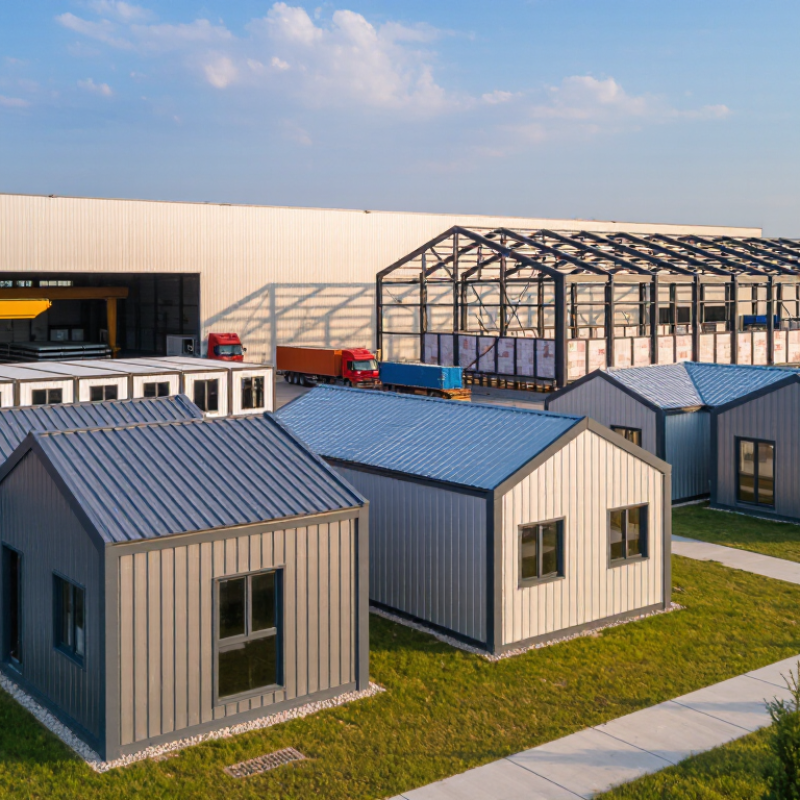
Prefabricated metal homes are assembled from factory-made steel components, then transported to a prepared site. Their main types differ in how much work happens before delivery. Three common formats.
Panelized homes arrive as separate wall, floor, or roof sections. On site, crews connect the panels and finish joints, insulation, and services.
Volumetric modular homes use complete three-dimensional room modules, sometimes with interior finishes already installed.
Steel-building kits use framed, metal-clad structures; they offer flexible layouts but may need more interior construction at the site.
Details matter: insulation, thermal breaks, and careful sealing affect comfort and energy use.
McKinsey & Company’s 2019 report, Modular Construction: From Projects to Products, estimates that modular methods can reduce construction time by 20–50%. This is a broad industry estimate, not a metal-home guarantee.
UNEP’s 2023 Global Status Report says buildings and construction produced 37% of global energy- and process-related CO2 emissions in 2022. That figure describes the sector, not the carbon footprint of any single home.
Still, factory production can improve consistency, while transport distance and design changes can erase some gains. The trade-off deserves attention.
A neat factory finish cannot compensate for a poorly prepared foundation.
A global supplier should be judged by documented performance, not polished renderings. Request drawings, material specifications, and a sample bill of materials. Compare steel grades, coating thickness, insulation values, and connection details across bids. Ask which tests support claimed wind, snow, and seismic ratings. Details matter.
Check production capacity, quality-control records, and the inspection steps used before shipment. A live factory video can help, but it cannot replace independent checks or clear records. Clarify what the quoted price includes: engineering, packing, freight, unloading, and local assembly support. For cross-border delivery, confirm packaging methods and realistic shipping schedules. A low quote may exclude costly site work.
Evaluate technical support as carefully as the structure itself. Ask who answers design questions, how revisions are tracked, and whether installation guidance is available in usable formats. Contact recent customers with comparable climates and project sizes, then ask about delays, damaged components, and response times. A supplier may offer strong value yet have limited experience with your local conditions. That deserves scrutiny. Keep a scorecard for evidence, service, lead time, and total landed cost; revise it when new information appears.
Evaluation context: A country’s steel production is a useful indicator of the wider material-supply environment, but it does not rank prefabricated-home suppliers. When evaluating suppliers, also compare product specifications, certifications, delivery capability, and after-sales support.
Source: World Steel Association, 2023 crude steel production figures. Values are in million metric tons.
Top 10 Prefabricated Metal Homes Suppliers Worldwide
A useful worldwide shortlist should compare engineering capability, not polished renderings. Ten suppliers may look similar online. Not in the factory. Ask for stamped drawings, steel grades, corrosion protection details, and documented quality checks. Confirm whether pricing includes insulation, windows, transport, and installation. A low quote can leave costly gaps.
McKinsey & Company’s 2019 modular-construction analysis found that off-site methods can shorten project schedules by 20–50 percent. That is an industry-wide potential, not a guarantee for metal homes. GlobalABC’s 2023 Global Status Report also attributed about 37 percent of energy- and process-related carbon emissions to buildings and construction in 2022. These figures make production efficiency and material transparency worth checking. Request thermal-bridge details, insulation values, and evidence behind environmental claims.
Compare supplier proposals against the same site conditions: wind exposure, snow load, delivery access, and local foundation requirements. Ask for a sample wall section; inspect the joints, vapor-control layer, and fasteners. Small details matter. Clarify who coordinates design changes and replacement parts after delivery. A supplier may have impressive export numbers but limited local service. That deserves a second look. The shortlist is only as reliable as its documentation, and even good documentation cannot remove every site-specific risk.
A worldwide comparison of prefabricated metal home suppliers should look beyond catalog photos. Some focus on steel frames and insulated wall panels; others offer complete packages with windows, roofing, and interior finishes. These product differences affect what buyers must source separately. Check stated dimensions, insulation details, and finish options against your actual site needs.
Manufacturing capacity matters, but so does support after delivery. Ask how suppliers handle design changes, replacement parts, and assembly guidance. A broad export network may help with shipping, yet it does not guarantee local installation support. Request project references with similar climates and building sizes. Then confirm which services are included in the quoted price. Specifications can look reassuring on paper. Details still need checking.
Tips: Compare written scope, not just headline prices. Ask for drawings, material specifications, and a clear delivery schedule. Check who answers technical questions during assembly. One useful detail: ask how the supplier protects panels from moisture during transit. A polished brochure is not proof of a smooth build. I would also leave room for uncertainty; site conditions often reveal gaps in an otherwise careful plan.
When comparing prefabricated metal home suppliers, look beyond the price per square foot. Ask how the design accounts for your site’s wind, snow, rainfall, and soil conditions. Request steel specifications, coating details, and insulation values in writing. A home near salty air needs different corrosion protection from one inland. Review sample plans for window openings, roof overhangs, and connection details. Small omissions can become expensive after delivery.
Check what the quote includes: engineering, transport, unloading, fasteners, doors, and installation support. Ask for a production schedule and stated tolerances for panels and openings. Speak with recent customers, and request photos of completed homes, not just factory images. Clarify how warranty claims are handled and which documents arrive with the materials. A low bid may still be suitable, but compare matching scopes. A polished catalog is not proof of reliable performance; it is easy to give it too much weight.
Tips: Keep a written comparison sheet. Note exclusions, delivery dates, coating type, and insulation figures. Ask one awkward question: what could delay this project? The answer may reveal gaps—or deserve a second look.
| No. | Selection Factor | What to Check | Useful Evidence to Request | Why It Matters |
|---|---|---|---|---|
| 1 | Building-code compliance | Confirm that the proposed home can be designed for the applicable local building, planning, fire, and energy requirements. | Project-specific code assessment, engineering documents, and details of the design professional responsible for local compliance. | Building requirements vary by country and jurisdiction. A standard model may need engineering changes before approval. |
| 2 | Structural design and loads | Check that the design considers site-specific wind, snow, seismic, and other relevant structural loads. | Structural calculations and drawings identifying the design criteria, materials, connections, and foundation assumptions. | Metal framing and cladding must be designed for the conditions at the actual building site, not just a general climate zone. |
| 3 | Scope of supply | Clarify whether the offer covers a shell, a weather-tight structure, or a completed home, and identify all exclusions. | Itemized scope, inclusions and exclusions, responsibility matrix, and a list of work requiring local contractors. | The term “prefabricated home” can describe different levels of completion, so comparing headline prices alone can be misleading. |
| 4 | Materials and corrosion protection | Review the specified steel grade, coating or corrosion-protection system, fasteners, and suitability for the site environment. | Material specifications, coating data, maintenance guidance, and details for coastal or otherwise corrosive locations where relevant. | Material selection and exposure conditions affect durability and the maintenance a building may require. |
| 5 | Thermal performance and condensation control | Ask how insulation, thermal bridges, air sealing, ventilation, and moisture management are addressed in the proposed assembly. | Wall and roof assembly details, thermal-performance calculations where applicable, and condensation-control specifications. | Metal components conduct heat, so the complete wall and roof design should be assessed rather than insulation thickness alone. |
| 6 | Manufacturing quality control | Understand how components are measured, fabricated, labeled, inspected, and protected before dispatch. | Quality-control procedures, inspection records, component tolerances, and packaging or storage instructions. | Consistent fabrication and clear identification can reduce assembly errors and installation delays. |
| 7 | Shipping and site logistics | Verify shipping terms, packing method, delivery sequence, unloading needs, and access requirements for the site. | A written logistics plan covering transport responsibilities, shipment dimensions, delivery estimates, and damage-reporting procedures. | International transport, customs processes, site access, and unloading equipment can affect both cost and schedule. |
| 8 | Installation support | Determine whether installation is included, locally available, or managed by the buyer, and what technical support is provided. | Installation manual, crew requirements, training or supervision options, and clarification of who coordinates subcontracted work. | Prefabricated components still require correct foundations, connections, sequencing, and weatherproofing on site. |
| 9 | Warranty and after-sales service | Read the warranty terms for covered components, duration, exclusions, claim procedures, and service availability in the project location. | Written warranty documents, maintenance requirements, spare-parts information, and a defined process for reporting defects. | Coverage and remedies depend on the contract. Clear written terms help set expectations after delivery and installation. |
| 10 | Total project cost and schedule | Compare the full delivered and installed cost, payment milestones, production lead time, and dependencies that may affect completion. | Itemized quotation, project schedule, payment terms, change-order process, and stated assumptions about permits, foundations, and utilities. | The purchase price may not include site preparation, foundations, local approvals, utility connections, taxes, or installation. |