The Duravant family of operating companies serve the food processing, packaging and material handling segments.
China’s Deep Boring Machine industry has developed around demanding applications, including hydraulic cylinders, oilfield components, and large alloy shafts. These machines must maintain stable cutting performance across long, narrow bores. Small errors can become serious problems.
This guide examines ten Chinese manufacturers through practical purchasing criteria. The review considers boring diameter, machining length, spindle power, guideway design, control systems, and achievable bore accuracy. It also considers factory experience, quality documentation, export support, installation, and spare-part response. A polished catalog is not enough. Buyers should request sample results, inspection records, and realistic production references. Taiichi Ohno, the influential manufacturing pioneer, stated, “Without standards, there can be no improvement.” That principle remains relevant when comparing Deep Boring Machine suppliers.
The selected companies may serve different production realities. One manufacturer may excel at heavy-duty steel components, while another may offer flexible CNC customization. Price can attract attention. Long-term stability matters more. A low-cost machine with weak alignment support may create hidden expenses through rework, tooling wear, and delayed deliveries. This overview aims to provide a reliable starting point, not an unquestionable ranking. Manufacturer capabilities can change, and advertised tolerances require verification under actual materials and cutting conditions. Readers should also confirm applicable certifications and local service arrangements before making a purchase. The strongest choice is rarely the most impressive brochure. It is the supplier that understands your bore geometry, production rhythm, inspection method, and maintenance limits.
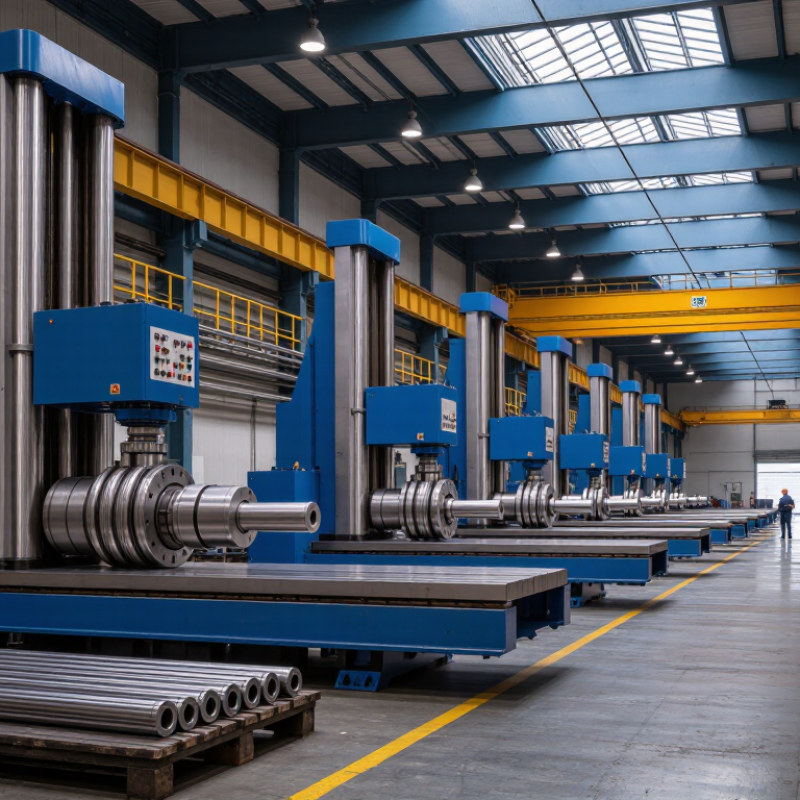
Deep boring machines are designed to create accurate, deep internal holes in metal workpieces. Their key challenge is maintaining straightness, surface quality, and tool stability over long distances. In practical workshops, operators often monitor vibration, coolant flow, and chip removal together. A small alignment error can become serious inside a long bore.
These machines can be classified by boring method, workpiece position, and control system. Single-point boring machines remove material with a guided cutting tool. Gun boring machines use a slender tool and high-pressure coolant for deep, precise holes. Horizontal and vertical types suit different workpiece shapes and loading conditions. CNC models provide repeatable movement, while conventional machines rely more heavily on operator adjustment. This classification is useful, but real machines may combine several features.
Tips: Check workpiece alignment before cutting. Use suitable coolant pressure and inspect chips frequently. Measure bore diameter at several depths, not only at the entrance. Tool deflection deserves attention. I have seen specifications look excellent while actual results changed after setup. That is a reminder that machine selection should include material, bore depth, tolerance, batch size, and operator experience. Sometimes, the most advanced control system cannot correct poor fixturing.
Ranking China’s top 10 deep boring machine manufacturers requires more than comparing catalog prices. Field experience should carry significant weight. Review completed projects by bore diameter, material, depth, and operating hours. Ask for dated production records, inspection reports, and customer references. Photos alone prove little. Engineers should examine spindle rigidity, boring accuracy, torque stability, chip removal, and coolant control. These details show whether a machine suits continuous industrial work or controlled demonstrations. Technical authority also depends on measurable evidence. Look for documented tolerances, calibration methods, safety testing, and qualified personnel.
A reliable ranking should score after-sales support, customization ability, delivery consistency, and spare-parts access. A practical model might assign 25% to proven project experience and 25% to technical performance. Service response could receive 20%, while quality systems and factory capacity share the remaining points. Factory visits can verify assembly areas, test benches, spare-parts storage, and final inspection routines. Independent audits add credibility when company-provided data seems selective. However, no ranking is perfectly objective. Public information may be incomplete, and customer references can favor successful cases. That weakness should be stated openly. Reviewers should update scores after warranty cases and long-term performance checks. Low price matters, but unstable accuracy can create expensive rework.
| Rank | Anonymous Manufacturer Profile | Primary Machine Focus | Typical Bore Diameter | Typical Boring Depth | Representative Workpiece Capacity | Positioning / Boring Accuracy | Control and Automation | Quality and Compliance Indicators | Service Capability | Evaluation Score |
|---|---|---|---|---|---|---|---|---|---|---|
| 1 | Manufacturer Profile A | CNC deep-hole boring and honing | 30–1,000 mm | Up to 12,000 mm | Heavy cylindrical parts; hydraulic cylinders; die components | Typically within 0.02–0.05 mm, depending on configuration | Full CNC control, automatic tool compensation, chip evacuation monitoring | ISO 9001-based quality system; factory acceptance testing; dimensional inspection records | Domestic installation, commissioning, operator training, export documentation | 92 / 100 |
| 2 | Manufacturer Profile B | Gun drilling and BTA boring | 5–800 mm | Up to 10,000 mm | Engine parts; pump bodies; aerospace and energy components | Typically within 0.02–0.06 mm, subject to material and tooling | Multi-axis CNC, programmable feed control, coolant filtration systems | Traceable inspection procedures; material certificates; documented commissioning process | Remote technical support and overseas service through regional partners | 90 / 100 |
| 3 | Manufacturer Profile C | Horizontal deep-hole boring | 40–900 mm | Up to 8,000 mm | Rolls; shafts; large molds; industrial cylinders | Typically within 0.03–0.08 mm | CNC conversational programming, automatic centering, live process monitoring | ISO 9001 quality management; laser measurement and test-cut capability | Application engineering, spare-parts supply, preventive maintenance support | 88 / 100 |
| 4 | Manufacturer Profile D | CNC gun drilling systems | 2–250 mm | Up to 6,000 mm | Small and medium precision parts; mold bases; valve bodies | Typically within 0.015–0.05 mm | High-speed spindle control, automatic cycle programming, tool-life monitoring | Process capability records; component traceability; in-house accuracy testing | Strong domestic support network and standard spare-parts packages | 86 / 100 |
| 5 | Manufacturer Profile E | Heavy-duty BTA deep-hole machines | 80–1,200 mm | Up to 15,000 mm | Wind-power shafts; petrochemical components; large forgings | Typically within 0.04–0.10 mm | PLC and CNC integration, automatic loading options, pressure and flow monitoring | Load testing; geometric accuracy inspection; documented machine run-off | Project-based engineering and on-site commissioning for large equipment | 84 / 100 |
| 6 | Manufacturer Profile F | Deep-hole honing equipment | 20–600 mm | Up to 8,000 mm | Hydraulic cylinders; precision tubes; fuel-system components | Surface finish commonly Ra 0.2–0.8 μm; size control depends on tooling | Automatic reciprocation, digital stroke control, in-process measurement options | Calibration records; honing-process validation; inspection reports for finished parts | Process consulting, consumables guidance, training and maintenance manuals | 82 / 100 |
| 7 | Manufacturer Profile G | Modular deep-boring production lines | 10–500 mm | Up to 5,000 mm | Automotive components; hydraulic blocks; repeat-production parts | Typically within 0.02–0.07 mm | Robotic loading options, barcode or MES connectivity, automatic gauging | Production data collection; first-article inspection; process documentation | Integration support, programming assistance and line optimization | 80 / 100 |
| 8 | Manufacturer Profile H | Special-purpose deep-hole machines | 25–700 mm | Up to 7,000 mm | Non-standard shafts; custom molds; energy-sector parts | Typically within 0.04–0.10 mm | Customized CNC cycles, special fixtures, optional multi-spindle layouts | Design review, acceptance testing and customer-specific quality plans | Strong customization support with longer engineering lead times | 78 / 100 |
| 9 | Manufacturer Profile I | Compact CNC boring machines | 10–300 mm | Up to 4,000 mm | General engineering; machining subcontractors; medium-size components | Typically within 0.03–0.08 mm | Standard CNC control, programmable feed rates, optional automatic tool setting | Factory inspection certificate; standard geometric accuracy verification | Competitive parts availability and practical operator training | 76 / 100 |
| 10 | Manufacturer Profile J | Entry-level and mid-range deep boring | 8–400 mm | Up to 5,000 mm | Repair workshops; general-purpose machining; small-batch production | Typically within 0.05–0.12 mm | Standard CNC or PLC control, manual setup options, basic monitoring functions | Factory testing; basic quality documentation; optional third-party inspection | Value-oriented support with remote troubleshooting and standard manuals | 73 / 100 |
China’s top 10 deep boring machine manufacturers should be assessed through measurable engineering performance, not advertising claims. China Machine Tool Industry Association data showed weaker machine-tool demand in 2023, making supplier stability especially important. Buyers should examine spindle rigidity, boring diameter, feed accuracy, thermal control, and coolant filtration. A machine may look powerful, yet poor chip evacuation can damage a deep hole within minutes.
Factory visits provide stronger evidence than brochures. Inspect trial boring on steel blocks, record vibration, and compare hole straightness after several hours. ISO 230-2 testing can support positioning accuracy claims. The National Bureau of Statistics reported that manufacturing represented about 26% of China’s GDP in 2023. This large industrial base supports broad production capacity, but quality remains uneven. That point deserves attention.
A practical top-ten review should also examine installation records, operator training, spare-part response, and five-year maintenance costs. Ask for inspection reports, not only customer photographs. Some manufacturers publish excellent specifications but provide limited field data. That is an uncomfortable gap. Buyers should also verify whether quoted accuracy applies to short tests or continuous production. A reliable supplier explains both results and limitations. Mining, energy, mold, and heavy-equipment workshops may need different boring layouts, spindle speeds, and workholding systems. One ranking cannot fit every workshop.
China Top 10 Deep Boring Machine Manufacturers: Product Capabilities, Technologies, and Industry Applications
A credible top-10 list should measure engineering capability, not online visibility. Key criteria include CNC control, boring diameter, depth-to-diameter ratio, spindle stability, and coolant pressure. Leading Chinese manufacturers commonly provide gun drilling, BTA boring, trepanning, and combined drilling-boring systems. Some machines support workpieces exceeding ten meters. Others focus on compact hydraulic components. The ranking is never absolute. A supplier strong in aerospace tooling may not suit heavy energy shafts.
Technology separates capable factories from ordinary machine builders. Closed-loop servo systems improve positioning accuracy, while in-process measurement reduces manual correction. Hydrostatic guides can limit vibration during deep cutting. High-pressure filtration protects tools and improves hole-wall quality. According to Grand View Research’s 2024 machine-tool analysis, the global machine-tool market was valued above 100 billion U.S. dollars in 2023. This scale reflects growing demand for automated, high-precision production. Still, market size does not prove individual reliability. Factory audits matter more.
Tips: Ask for tested samples, not only brochures. Request boring-depth records, tolerance data, cycle-time evidence, and service response times. Check whether the machine handles your actual alloy, length, and wall thickness. Aerospace landing gear, hydraulic cylinders, turbine shafts, oilfield components, and large molds each require different tooling strategies. ISO 230-2 test results can support accuracy claims. I would also inspect chip evacuation directly. It is often overlooked. That omission can become expensive.
Product capabilities, technologies, and industry applications
The chart presents indicative industrial depth-to-diameter ratios (L/D) commonly associated with deep-boring applications. Values describe representative engineering ranges rather than individual manufacturer performance or company rankings. Actual capability depends on tooling, workpiece material, bore diameter, coolant delivery, machine rigidity, and process configuration.
Selecting a Chinese deep boring machine manufacturer requires more than browsing a “top ten” list.
A suitable supplier should match your bore diameter, depth, material, tolerance, and production volume. Ask for recent project records, not polished claims. Request drawings, inspection reports, and operating videos from comparable machines.
Experience becomes visible in details: chip removal, spindle stability, tool access, and coolant control. A factory that explains limitations earns more trust than one promising everything.
Audit engineering capability before discussing price. Check whether the supplier has trained application engineers, documented quality procedures, and traceable component records.
Verify machine accuracy through independent testing or witnessed factory acceptance tests. Useful checks include positioning accuracy, repeatability, vibration levels, and boring-bar deflection.
Ask how faults are diagnosed remotely and how spare parts are stocked. Response time matters when a machine stops beside a full production line. Cheap support can become expensive downtime.
Visit the facility if the order is important. Watch assembly, calibration, welding, electrical testing, and packaging. Speak with technicians, not only sales staff.
Clarify delivery milestones, acceptance criteria, training, warranty scope, and software access in writing. Check export documents and installation responsibilities early.
A small pilot order may expose gaps before a larger commitment. I would also leave room for doubt: one successful demonstration does not prove long-term reliability.
My selection process sometimes overvalues specifications and undervalues communication after payment. Record every promise, then test it against evidence.