How to Implement Packaging Automation in Your Business?

In today's fast-paced market, businesses are increasingly turning to packaging automation. As noted by John Smith, a leading expert in packaging automation, "The right automation can elevate efficiency and reduce costs." Companies that embrace this technology often find it leads to improved workflows and higher productivity. However, implementing packaging automation is not without its challenges.

For many businesses, the initial investment in automation technology can be daunting. Transitioning from manual processes to automated systems requires careful planning. It's not just about purchasing equipment; it's about integrating it into existing workflows. Many organizations struggle with training staff and adapting their operations. This can lead to frustration and errors during the rollout phase.

Despite these challenges, the long-term benefits are significant. Automation can streamline operations and increase output. It’s essential to approach the integration carefully and reflect on ongoing issues that arise. With the right strategies, businesses can effectively navigate the complexities of packaging automation, ultimately enhancing their competitive edge.
How to Implement Packaging Automation in Your Business?

Understanding the Basics of Packaging Automation in Business

Packaging automation is becoming essential for businesses. It streamlines operations and reduces costs. A report from McKinsey states that companies can save 15-30% on packaging costs through automation. Many businesses see reduced labor costs and improved accuracy.

Understanding the basics of packaging automation is crucial. At its core, it involves using machines to handle packaging tasks. This can range from filling cartons to sealing and labeling. Research indicates that more than 70% of manufacturers already employ some form of automation. Yet, companies sometimes overlook the need for proper training. Employees need to adapt to new technology.

**Tips:** Invest in staff training programs. Inadequate training leads to mistakes. Regularly evaluate your automation process. This ensures efficiency. Monitor equipment performance and seek ways to optimize it. Embracing automation isn’t just about machinery; it's about the people who operate it. Reassessing workflow and addressing bottlenecks can be beneficial. Automation can fail without the right foundation. Reflect on your current processes before implementing new solutions.

How to Implement Packaging Automation in Your Business? - Understanding the Basics of Packaging Automation in Business

Dimension Description Estimated Cost ($) Time to Implement (Months) ROI (Return on Investment) (%)
Automated Packaging Machines Machines that automatically pack products into boxes or containers. 50,000 3 30
Labeling Automation Automated systems that apply labels to products and packages. 20,000 2 25
Shrink Wrapping Equipment that wraps products in plastic and shrinks it using heat. 30,000 4 28
Robotic Arms Robotic systems for handling and packing products. 75,000 5 35
Software Integration Integration of packaging machines with software for inventory management. 10,000 1 40

Identifying Key Benefits of Implementing Packaging Automation

Implementing packaging automation can transform your business. It helps reduce labor costs and minimizes errors. According to a report by the Automation World, companies can save up to 30% in operational costs through automation. This efficiency enables better allocation of resources, allowing employees to focus on higher-value tasks.

One key benefit is improved consistency. Automated packaging systems ensure uniform packaging, which enhances brand integrity and customer satisfaction. By standardizing processes, businesses can reduce packaging waste by as much as 20%, as noted in a study by PMMI. This leads to a positive impact on both the environment and bottom line.

Tips: Evaluate current packaging processes to identify bottlenecks. Investing time in a thorough needs analysis is crucial. Also, consider the long-term return on investment. Imperfection in initial stages may arise as teams adapt to new workflows. Embracing change involves trial and error; learning from these experiences can guide more effective automation strategies.

Key Benefits of Implementing Packaging Automation

Evaluating Your Current Packaging Processes for Automation

How to Implement Packaging Automation in Your Business?

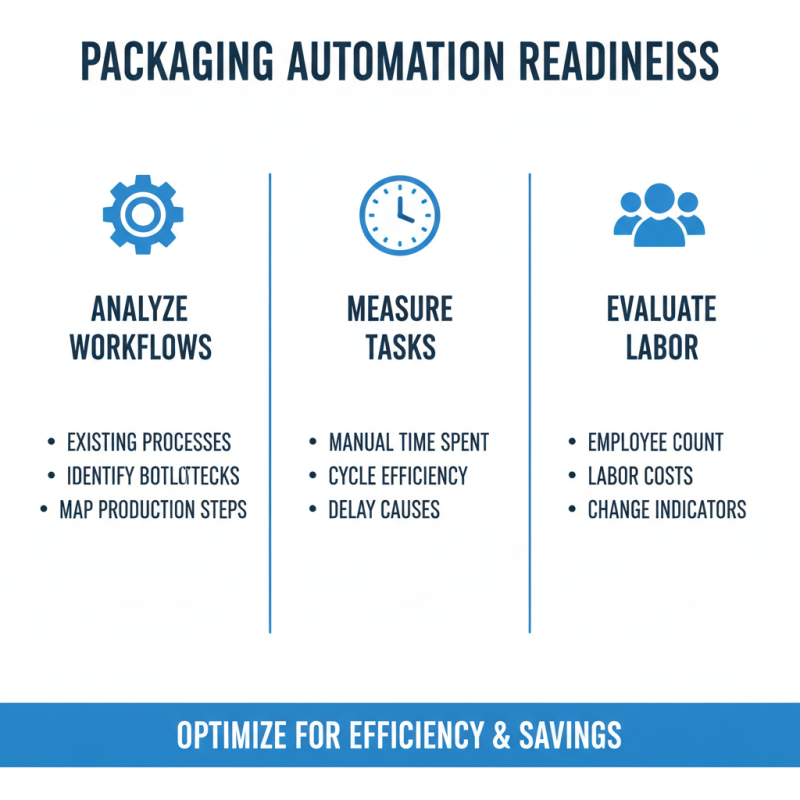
Evaluating your current packaging processes is crucial for effective automation implementation. Start by analyzing your existing workflows. Look for bottlenecks that delay production. Measure the time spent on manual tasks. Consider how many employees are involved. High labor costs can indicate a need for change.

Next, assess your packaging materials. Are they suitable for automation? Materials that complicate processes can negatively impact efficiency. Look at the consistency of your product sizes. Variations can lead to misalignment in automated systems. Gathering data on failures and damages will provide insights into areas needing improvement.

Engage your team in discussions about the current processes. They understand the challenges firsthand. Their input can reveal hidden inefficiencies. Make sure to document recurring issues. This will help you identify patterns and direct your automation efforts effectively. Experiment with small-scale automation solutions to see if they align with your goals. Test and refine these options before full-scale implementation.

Choosing the Right Packaging Automation Technology for Your Needs

Choosing the right packaging automation technology can be a game changer for your business. It's essential to assess your specific packaging needs before diving into options. Consider factors like the size of your products, production volume, and existing workflow. Each company has unique requirements, and a one-size-fits-all approach rarely works.

Tip: When evaluating technology, create a list of must-have features. Examine speed, precision, and adaptability. Don't ignore future scalability. Will the technology grow with your business? Reflect on your current pain points. Are there manual tasks that slow you down?

Keep in mind, implementation isn't always seamless. You may encounter some hiccups along the way. Training staff on new systems can be challenging. Sometimes the chosen technology may not align perfectly with your processes. This trial and error can lead to valuable insights, though. Adapt and refine your approach based on real-world feedback.

Tip: Engage with your team throughout the process. Their insights can help you select the technology that best fits your operational flow. Don't shy away from asking for their input. It might highlight needs you hadn't considered before.

Steps to Successfully Integrate Automation into Your Packaging Workflow

How to Implement Packaging Automation in Your Business?

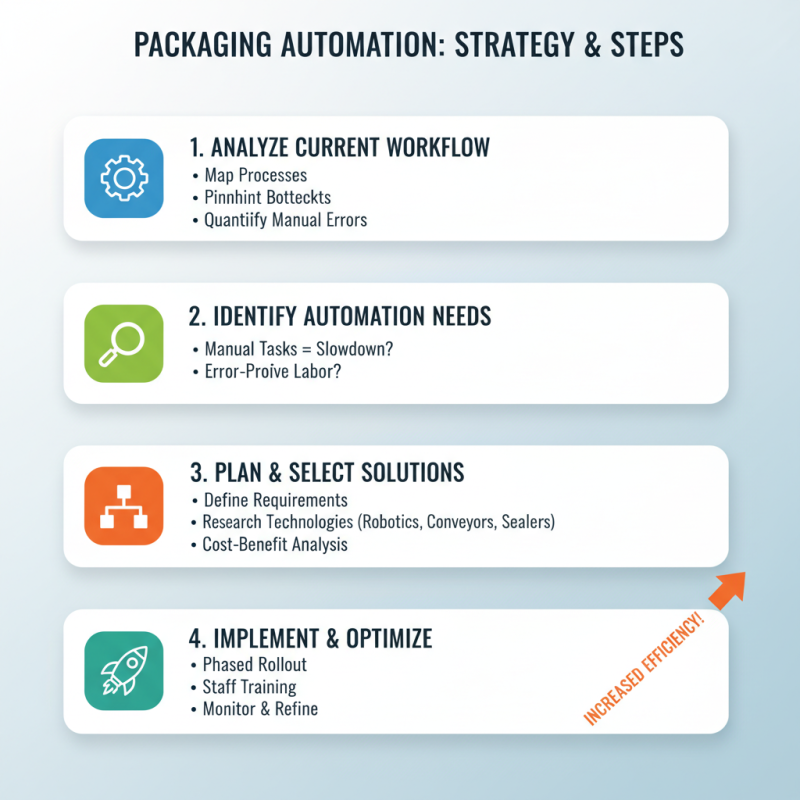
Implementing packaging automation requires careful planning. Begin by analyzing your current workflow. Identify bottlenecks that slow down production. Perhaps manual processes take too long or lead to errors. These issues need addressing before automation can help.

Once you pinpoint problem areas, look for automation solutions that fit. Consider using automated conveyors or robotic arms. Each component should enhance efficiency. However, be cautious. Sometimes, introducing equipment can complicate existing processes. Training staff to operate new systems is essential. They might resist change. Listen to their concerns and provide support for a smoother transition.

Pilot testing is crucial. Start small and evaluate the results. Are the outcomes meeting expectations? Gather employee feedback. They may notice issues that management overlooks. This phase is about refining the process. Take your time. Rushing can lead to mistakes and increased frustration. Each step should align with your overall goals, ensuring a successful integration into your packaging workflow.