The Duravant family of operating companies serve the food processing, packaging and material handling segments.

Choosing a Safety Lockout Box in 2026 requires more than comparing prices and product photos. The right box must support clear, controlled energy isolation during maintenance, repairs, and shutdown work. It should fit your team’s procedures, equipment, and working environment.
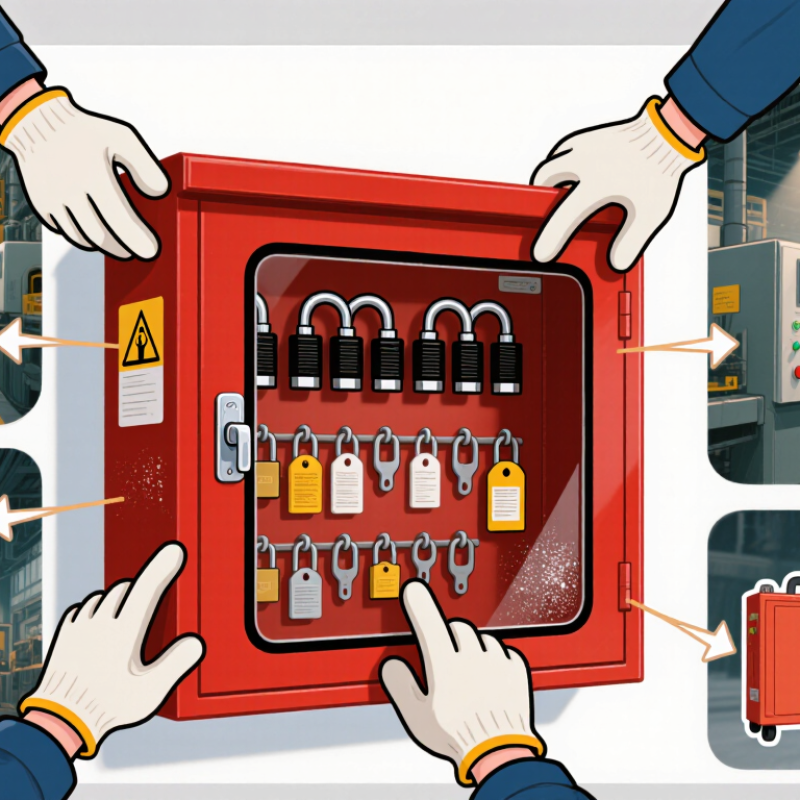
In a busy plant, a box may be opened dozens of times each week. Its latch must remain reliable after repeated use. Its labels should stay readable near oil, dust, and low lighting. A transparent panel can help workers confirm contents quickly. Internal space also matters. It should hold the required locks, tags, hasps, and written instructions without becoming crowded.
Think about real work conditions.
Experienced safety managers often begin with a documented risk assessment. They review the types of hazardous energy present, the number of authorized employees, and the locations requiring access. Manufacturer specifications should confirm material strength, mounting options, lock capacity, and resistance to corrosion. Independent testing or recognized safety guidance can add confidence, but no box replaces proper training and site-specific procedures.
A practical choice also considers emergency access, inspection routines, and recordkeeping. Some teams prefer wall-mounted boxes near control panels, while others need portable units for field maintenance. I have seen well-designed systems fail because the box was installed too far from the work area. That mistake is easy to overlook. It deserves honest review.
This guide explores how to choose a Safety Lockout Box for 2026. It focuses on usability, durability, visibility, capacity, and responsible selection. The best option is not always the largest or most advanced. It is the one workers can identify, access, and use correctly under pressure.
How to Choose a Safety Lockout Box in 2026?
A safety lockout box keeps isolation keys controlled during maintenance. It prevents one worker from restoring power too early. OSHA estimates that effective hazardous-energy control could prevent 120 deaths and 50,000 injuries each year. That figure explains the box’s purpose. It is not just a storage cabinet.
Choose the type around your worksite. A portable group lockout box suits shutdowns across several areas. A wall-mounted box works better near fixed machinery. A personal box supports one authorized worker and limited equipment. Larger group boxes hold multiple isolation keys and personal padlocks. Some sites also need compartments for electrical, hydraulic, pneumatic, or thermal isolation devices. The wrong size creates clutter. Clutter causes hesitation.
Tips: Count workers, isolation points, and energy sources before buying. Check corrosion resistance for wet or dusty areas. Use clear labeling and a simple key-control procedure. OSHA’s Control of Hazardous Energy guidance supports documented procedures, training, and periodic inspections. In practical audits, teams often focus on the box but overlook spare-key control. That weakness deserves review. A lockout box should remain visible, durable, and easy to inspect, even when gloves are wet and the shutdown is urgent.
Select the box type according to the number of authorized employees, the work location, and whether the lockout process is portable or permanently installed. The chart compares common safety lockout box types by their typical functional characteristics.
How to read the chart: A value of 1 indicates that the characteristic is generally associated with that lockout box type, while 0 indicates that it is not the primary use case. Group lockout boxes are designed to retain keys and allow multiple authorized employees to apply personal locks. Portable boxes support temporary or mobile work, while wall-mounted boxes are suited to fixed work areas.
Choosing a lockout box should begin with the hazards, not its color or price. Walk through the work area with maintenance staff and operators. Watch for electrical panels, compressed air lines, hydraulic pressure, steam, heat, and stored mechanical energy. A conveyor may look idle while its belt still holds dangerous tension. That detail is easy to miss.
Record each energy source and identify its isolation point. Check whether the workplace needs individual lockout, group lockout, or both. A group lockout box should hold every authorized worker’s personal lock. It also needs clear identification, durable construction, and enough space for tags and keys. If several crews work across shifts, the box should support controlled key access and shift handovers. Local regulations and site procedures must guide the final requirements.
Inspect the box before choosing it. Can workers read the labels through dust, oil, or poor lighting? Can the latch resist accidental opening? Are the mounting points suitable for a wall, cart, or service vehicle? I have seen teams choose compact boxes that became overcrowded within weeks. That was a planning mistake. Leave room for expansion. A practical review with the people performing isolation can reveal weak assumptions, especially when equipment changes faster than written procedures. Keep inspection records, train authorized employees, and revise the lockout process after incidents, near misses, or equipment modifications.
Choosing a safety lockout box in 2026 requires more than selecting the largest container. Materials, capacity, security, and visibility directly affect daily lockout performance. OSHA estimates that effective hazardous-energy control prevents about 120 fatalities and 50,000 injuries annually in the United States. That figure makes enclosure quality a practical safety decision, not a purchasing detail.
Powder-coated steel suits workshops exposed to impact, heat, and frequent handling. Stainless steel performs better in humid or corrosive areas, while polycarbonate reduces weight and allows quick visual checks. I would inspect hinges, edges, and mounting points before approving any model. Small weaknesses become obvious after repeated use. Capacity should cover every authorized worker’s personal lock, plus group hasps, tags, and spare devices. A 20–30% reserve is sensible, although actual demand often grows faster than expected.
Security depends on a rigid body, a tamper-resistant latch, and enough locking points for simultaneous users. OSHA’s Control of Hazardous Energy requirements emphasize preventing unexpected machine energization, so a crowded box can undermine the procedure. Visibility matters too. High-contrast colors, readable labels, and an inspection window help workers identify the correct box under poor lighting. The Bureau of Labor Statistics recorded 5,283 fatal work injuries in 2023; that broader figure does not measure lockout failures, but it reinforces the need for disciplined controls. Bright is helpful. Clear is better.
| Lockout Box Type | Typical Material and Construction | Typical Body Thickness | Padlock Capacity | Group Lockout Capacity | Security Level | Visibility | Corrosion Resistance | Approximate Empty Weight | Recommended Environment | Main Limitation |
|---|---|---|---|---|---|---|---|---|---|---|
| Powder-Coated Carbon Steel | Formed or welded steel with a baked powder-coat finish | Approximately 1.0–1.5 mm | 6–12 standard safety padlocks | Suitable for approximately 10–15 workers, depending on lock size | High Strong resistance to impact and forced entry | Medium Contents are not visible without opening | Moderate Requires intact coating and dry storage | Approximately 1.5–3.5 kg | Factories, workshops, utilities, and general indoor maintenance areas | May rust if the coating is scratched or exposed to persistent moisture |
| Stainless Steel | Corrosion-resistant stainless steel sheet, commonly with folded or welded seams | Approximately 0.8–1.5 mm | 6–12 standard safety padlocks | Suitable for approximately 10–15 workers, depending on lock size | Very High Rigid construction with strong tamper resistance | Medium Opaque body protects stored items from view | Very High Suitable for wet, washdown, and many outdoor environments | Approximately 2.0–4.0 kg | Food processing, chemical handling areas, marine locations, and outdoor service points | Higher purchase cost and weight than most polymer alternatives |
| Polycarbonate | Impact-resistant engineering plastic, often supplied with a transparent or translucent cover | Approximately 2.5–4.0 mm wall thickness | 6–12 standard safety padlocks | Suitable for approximately 10–15 workers, depending on lock size | High Good impact resistance with no conductive metal body | High Contents can often be checked without opening | High Does not rust and resists many common chemicals | Approximately 0.7–1.8 kg | Electrical maintenance, wet areas, laboratories, and sites requiring visual status checks | Can be scratched, and prolonged ultraviolet exposure may reduce appearance or service life |
| ABS Plastic | Rigid molded thermoplastic, normally opaque or fitted with a separate clear panel | Approximately 2.0–3.5 mm wall thickness | 4–8 standard safety padlocks | Suitable for approximately 6–10 workers, depending on lock size | Medium Good for routine control but less impact-resistant than steel | Medium Depends on cover design and label placement | High Rust-free with generally good indoor chemical resistance | Approximately 0.4–1.2 kg | Indoor facilities, offices, light industrial areas, and portable maintenance kits | Less suitable for severe impact, high heat, or prolonged outdoor exposure |
| Aluminum | Lightweight formed aluminum with anodized, painted, or powder-coated surfaces | Approximately 1.0–2.0 mm | 6–10 standard safety padlocks | Suitable for approximately 8–12 workers, depending on lock size | High Rigid and difficult to deform under normal use | Medium Usually opaque unless fitted with a viewing panel | High Good resistance to atmospheric corrosion | Approximately 0.8–2.0 kg | Portable maintenance teams, outdoor service work, and locations where low weight matters | Can dent more easily than steel and may be affected by certain alkaline chemicals |
Selection note: Capacities and weights are typical industry ranges rather than universal specifications. Confirm the box dimensions, padlock shackle clearance, temperature rating, chemical compatibility, UV resistance, and required group-lockout procedure before purchase.
Compliance starts with the procedure, not the box. Check whether the design supports your hazardous-energy control program and documented responsibilities. OSHA’s 29 CFR 1910.147 requires authorized employees to isolate, lock, and verify energy sources. A box should support every step without encouraging shortcuts.
The International Labour Organization estimated 2.93 million work-related deaths and 395 million nonfatal injuries annually in its 2023 findings. Lockout equipment cannot prevent every incident, but poor control can increase exposure.
Compatibility needs a physical inspection. Count the locks, tags, hasps, and keys used during group isolation. Check whether the box accepts different lock shackle sizes and remains secure when fully loaded. Confirm that labels remain readable under dust, oil, moisture, and low light.
A box that holds six locks may fail during a shutdown involving twelve workers. Small detail. Big consequence.
Ease of use matters during stressful maintenance. Choose visible identification areas, durable hinges, and a layout workers can understand quickly. Test the box with gloves, because bare-hand trials can be misleading. Review access control, spare-key handling, and inspection records.
ISO 45001 emphasizes operational control, worker participation, and continual improvement. Still, a tidy box can conceal a weak procedure. Recheck the setup after real drills, not only during purchase reviews.
Some teams may discover that their “easy” system creates delays. That discomfort is useful.
Selecting the best safety lockout box for 2026 operations requires more than checking its price. The box should match your machinery, workforce, and emergency procedures.
OSHA estimates that lockout/tagout controls prevent about 120 deaths and 50,000 injuries each year. That figure gives the equipment a serious purpose.
Start with capacity and visibility. A maintenance team of eight workers needs enough lock points for eight personal locks, not four. Choose a box with clear labeling, corrosion-resistant materials, and a strong latch. In outdoor areas, test it against dust, rain, gloves, and poor lighting.
Small details matter. A missing key slot can delay isolation. An unclear label can create hesitation.
The Liberty Mutual Workplace Safety Index 2024 reported $58.5 billion in direct workers’ compensation costs from the ten leading serious injury causes, using 2021 data. This supports evaluating total operational risk, not only purchase cost.
Ask whether the box supports group isolation, shift handovers, and documented inspections. A digital inventory feature may help, but it should not replace physical verification. I would also test the box during a real shutdown, because catalog specifications rarely show awkward access or crowded work areas. That practical step is often missed.