The Duravant family of operating companies serve the food processing, packaging and material handling segments.

Choosing a China-based supplier for a Marble Cutting Disc requires more than comparing prices. The disc must match the stone, machine, cutting speed, and job conditions. Marble is softer than granite, yet it can chip, stain, or crack when the bond is poorly designed. Real project experience matters here.
Industry reports support this demand. The U.S. Geological Survey’s Mineral Commodity Summaries 2024 identifies dimension stone as an important construction and architectural material. Grand View Research’s diamond tools market analysis also links demand with construction, renovation, and infrastructure development. These reports do not prove that every supplier offers equal quality. They show why reliable cutting performance remains commercially important.
A capable Chinese supplier should explain diamond concentration, segment height, bond hardness, blade diameter, arbor size, and maximum RPM. Ask for test records, batch traceability, and product samples. Factory audits can reveal more than attractive photographs. Look for ISO 9001 procedures, clear quality inspection steps, and safety information aligned with recognized abrasive-tool requirements, such as EN 13236 where applicable.
Performance evidence is essential. A professional supplier should report cutting speed, blade life, material type, and cooling conditions. For example, a 350-millimeter blade cutting a six-centimeter marble slab should not be judged only by its first cut. Measure edge chipping, noise, vibration, and total meters cut.
Price still matters. It should not lead.
No supplier is perfect. Even experienced exporters may provide inconsistent results between batches. That is why trial orders, written specifications, and independent verification deserve attention. The best Marble Cutting Disc supplier combines engineering knowledge, stable production, responsive communication, and transparent documentation. This guide explains how to evaluate those factors before signing a long-term purchasing agreement.
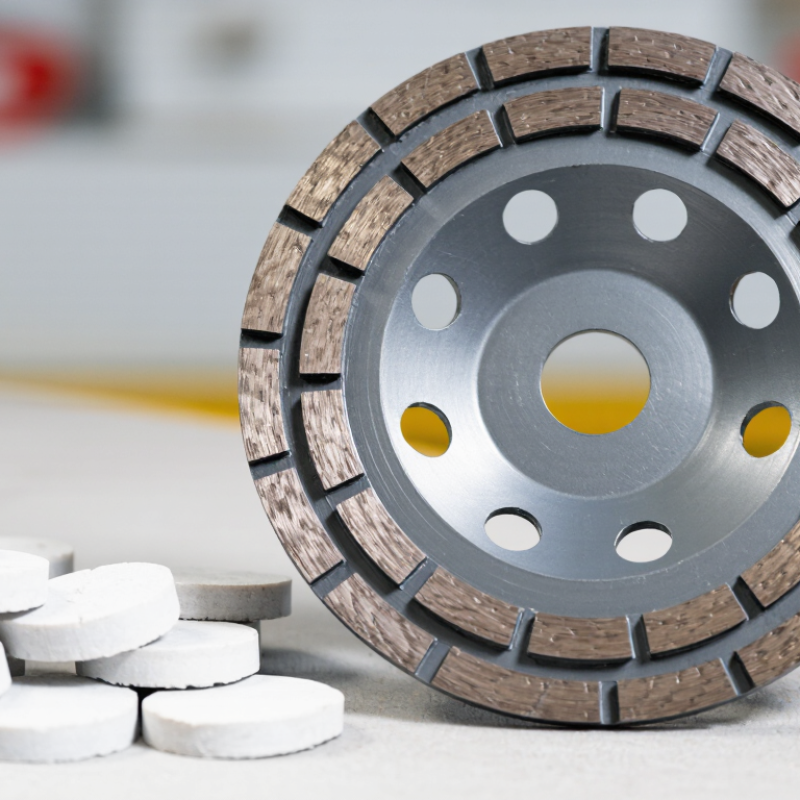
A marble cutting disc is an abrasive tool designed to cut marble slabs, tiles, and decorative stone. It usually contains diamond segments or a continuous diamond rim. These cutting edges grind through stone instead of tearing it. The disc attaches to an angle grinder, tile saw, or bridge saw, depending on its diameter and bore size.
In practical workshops, marble cutting discs are used for kitchen counters, bathroom walls, flooring, stair edges, and monument details. A continuous rim often produces cleaner cuts on polished marble.
Segmented designs may remove material faster, but they can leave rougher edges. Water cooling helps control heat and dust during heavy cutting. Dry cutting is convenient, yet overheating can damage both the disc and the marble.
Small details matter.
Match the disc to the machine speed, cutting depth, and stone thickness. Check for vibration, uneven segments, or visible cracks before use.
A reliable supplier should provide clear specifications, safety guidance, and consistent batch quality. Ask about diamond concentration and recommended applications, not only the price.
No disc performs perfectly in every condition. I have seen operators blame the tool when excessive pressure caused the real problem. The cutting method may need improvement too.
China Top Marble Cutting Disc Supplier: How to Choose?
A high-quality marble cutting disc starts with a stable diamond layer. The segment should cut evenly, without sudden chipping or burning. Diamond concentration, grain size, and bond hardness must match marble’s density. Softer marble usually needs a sharper, faster-wearing bond. Dense stone needs stronger retention. This choice is often overlooked.
The cutting core also matters. A low-runout steel body keeps the blade steady during long cuts. Check the manufacturer’s stated tolerance, not only the disc’s appearance. Arbor accuracy, segment height, and slot design affect vibration and cooling. Balance matters. A disc that shakes can leave curved edges and waste expensive slabs. EN 13236 provides safety requirements for bonded abrasive products, while professional suppliers should also verify speed ratings through documented testing.
Dust control deserves equal attention. OSHA’s respirable crystalline silica limit is 50 micrograms per cubic meter over an eight-hour shift. Wet cutting can reduce airborne dust, but water flow must reach the cutting zone continuously. The U.S. Geological Survey’s 2024 mineral summary shows continuing demand for dimension stone, making productivity and material yield important purchasing factors. Still, published data cannot replace a cutting trial. I would test the disc on the actual marble, at the planned feed rate, before placing a large order. A polished label proves little. The edge tells more.
How to Evaluate Chinese Marble Cutting Disc Suppliers
A reliable supplier should show more than a polished catalog. The 2022 ISO Survey recorded over one million ISO 9001 certificates in China, but certification alone cannot prove cutting performance. Ask for the certificate number, production scope, audit date, and issuing body. Then check whether the factory controls diamond concentration, segment height, steel core flatness, and welding temperature. Small variations can create vibration, slow cutting, or uneven kerfs.
Request test reports for the exact disc specification you plan to buy. The report should state marble type, machine power, blade diameter, cutting speed, feed pressure, and service life. The U.S. Geological Survey’s 2024 Mineral Commodity Summaries shows that dimension stone remains a significant global mineral sector, yet stone hardness and abrasiveness vary sharply by deposit. One test on soft white marble is not enough. Test at least two representative stones. Measure cuts per minute and usable cutting length.
Inspect sample discs before placing a large order. Check segment bonding, core tension, bore accuracy, and visible cracks. Ask for batch traceability and retained samples. Suppliers familiar with EN 13236 or equivalent abrasive-product safety requirements should explain their testing process clearly. Do not accept vague claims like “long life.” I would compare three samples under identical conditions. My own judgment can still be wrong, especially when a factory prepares samples more carefully than normal production. That is why repeat testing matters.
Use a weighted evaluation framework instead of comparing price alone. The suggested percentages reflect the main purchasing factors for marble cutting discs and can be adjusted for your application.
Prioritize cutting performance and product consistency, then verify diamond segment quality, safety documentation, production capacity, delivery reliability, pricing, and after-sales support through samples, inspection records, and written specifications.
Choosing a marble cutting disc supplier requires more than checking price or catalog photos. Ask for current ISO 9001 certification, and verify its scope covers abrasive disc manufacturing. For products sold across markets, request documented conformity records, safety testing, and material traceability. A credible supplier should identify the abrasive type, bond, reinforcement, diameter tolerance, and maximum safe speed. These details should match the label and test report. During factory audits, I check whether operators record batch numbers before pressing, curing, and final inspection. Small gaps matter. A polished certificate cannot replace controlled production.
Quality control should include balance testing, dimensional checks, visual inspection, and controlled cutting trials on representative marble. Ask how often samples are tested and who approves failed batches. Test records should show dates, equipment identification, measured results, and corrective actions. Independent laboratory reports add confidence, especially when claims involve safety or cutting performance. Still, paperwork can be incomplete. I once found a supplier with excellent reports but inconsistent disc thickness in a small sample. That experience changed my inspection practice: inspect production samples, not only documents.
Tips: Request a certificate copy and verification number. Compare the disc label with its test report. Measure several samples with a caliper. Watch a cutting trial for vibration, edge chipping, and unusual heat. Ask for retention samples and complaint response times. If answers stay vague, pause the order. A lower price is not quality evidence.
| Evaluation Area | Certification, Standard or Control | Priority | What to Verify | Reliable Evidence | Why It Matters for Marble Cutting |
|---|---|---|---|---|---|
| Quality management system | ISO 9001:2015 | Recommended | Confirm that the certificate is valid, issued by an accredited certification body, and covers the manufacturing site and relevant abrasive products. | Current certificate, certificate number, scope, issue date, expiry date, and certification-body verification link. | Indicates that documented procedures exist for purchasing, production, inspection, corrective action, and customer complaints. |
| Product safety | EN 12413 for bonded abrasive products | Required for EN-market supply | Check whether the specific cutting disc type, dimensions, maximum operating speed, and intended application are covered by the supplier’s technical documentation. | Declaration of conformity, product marking, technical file, safety instructions, and test reports linked to the product specification. | Addresses key safety requirements for resin-bonded cutting-off wheels, including operating speed and mechanical integrity. |
| Chinese market compliance | Applicable Chinese GB/T product requirements | Recommended | Identify the current Chinese standard applicable to the product category and verify that the factory’s inspection plan follows the relevant clauses. | Standard reference shown on technical documents, internal inspection procedures, and laboratory or third-party test records. | Helps ensure that products sold in China are evaluated against the correct national product and safety requirements. |
| Environmental management | ISO 14001:2015 | Optional | Verify the scope and site covered by the certificate rather than accepting an unrelated corporate certificate. | Valid certificate from an accredited certification body and documented controls for waste, emissions, chemicals, and energy use. | Useful for buyers with environmental policies or supplier sustainability requirements; it does not replace product safety testing. |
| Worker health and safety | ISO 45001:2018 | Optional | Check whether the certification applies to the actual production facility and includes abrasive-wheel manufacturing activities. | Valid certificate, audit scope, workplace risk assessments, training records, and incident-correction records. | Shows that the supplier has a structured approach to workplace hazards associated with resin, abrasive materials, dust, machinery, and high-speed testing. |
| Raw-material control | Abrasive grain, resin, fiberglass reinforcement, fillers, and packaging inspection | Required | Confirm incoming inspection, supplier approval, lot identification, storage conditions, and shelf-life control for resin and reinforcement materials. | Approved-supplier list, incoming inspection records, material certificates, lot numbers, and storage-temperature or humidity records where applicable. | Inconsistent grain, resin, or reinforcement can reduce cutting speed, shorten disc life, or increase the risk of breakage. |
| Disc dimensions | Diameter, thickness, bore size, and dimensional tolerances | Required | Compare measured values with the approved drawing or purchase specification. Check the bore and disc thickness using calibrated instruments. | First-article inspection report, in-process inspection records, calibrated vernier calipers, micrometers, and bore gauges. | Correct dimensions are necessary for compatibility with the angle grinder or cutting machine and for stable cutting performance. |
| Mechanical safety testing | Rotational or burst-speed testing according to the applicable product standard | Required | Ensure that the test speed is related to the marked maximum operating speed and that the test method is documented and repeatable. | Batch test records, equipment calibration certificates, test-machine maintenance logs, and samples retained by production lot. | Confirms that the wheel can withstand forces generated during operation at its specified speed. |
| Reinforcement and bond quality | Fiberglass layer placement, resin distribution, pressing, curing, and adhesion control | Required | Check reinforcement position, visible defects, curing parameters, pressing pressure, and bond consistency against the approved process specification. | Process-control sheets, curing-temperature records, press records, visual inspection standards, and destructive test results. | Uniform reinforcement and complete curing help prevent delamination, edge damage, excessive vibration, and premature disc failure. |
| Balance and run-out | Disc flatness, side run-out, and dynamic or static balance checks | Recommended | Use a documented sampling plan and calibrated gauges. Set numerical limits in the purchase specification because limits vary by disc design and diameter. | Inspection reports showing measured run-out or balance values, sampling frequency, instrument calibration, and corrective actions. | Excessive run-out can cause vibration, uneven cutting, poor operator comfort, and irregular wear. |
| Cutting performance | Standardized cutting test using a defined marble grade and machine setup | Required | Compare cutting speed, number of cuts, kerf behavior, disc wear, edge chipping, and surface finish under the same machine speed, feed pressure, and material conditions. | Pre-shipment test report, test-piece photographs, machine parameters, material description, operator instructions, and retained samples. | Performance depends on marble hardness, aggregate, moisture, machine power, and operator technique; standardized testing makes supplier comparisons meaningful. |
| Marking and traceability | Product label, batch code, dimensions, maximum speed, application, expiry or storage information, and manufacturer identification | Required | Check that the marking is durable, legible, consistent with the technical file, and traceable to raw materials and production records. | Approved artwork, carton and disc labels, batch-number system, production records, and complaint-traceability procedure. | Clear marking reduces misuse and allows defective batches to be isolated quickly if a quality issue occurs. |
| Packaging and storage | Moisture protection, edge protection, carton strength, and stock rotation | Recommended | Verify that discs are stored flat in dry conditions, protected from impact, and managed using a documented first-in-first-out or shelf-life system. | Packaging specification, warehouse inspection records, storage-condition logs, and transport-damage inspection records. | Humidity, impact, and long-term unsuitable storage can affect resin-bonded disc strength and product condition. |
| Pre-shipment inspection | Final inspection and agreed AQL or sampling plan | Required | Agree in writing on sample size, critical defects, major defects, minor defects, dimensional checks, label checks, and performance tests before production. | Signed inspection plan, final inspection report, packing list, photographs, retained samples, and independent inspection report when required. | A written acceptance plan prevents disagreements about defects and provides objective evidence before goods leave the factory. |
| Supplier verification | Factory audit and independent certification validation | Required | Confirm the legal manufacturing address, production equipment, laboratory capability, actual process flow, certificate authenticity, and consistency between samples and mass production. | Factory-audit report, certification-body database record, production-line photographs or video audit, corrective-action report, and reference samples. | Reduces the risk of expired certificates, trading-company documentation, subcontracted production, or samples that do not represent normal output. |
Price comparison should begin with cost per effective cutting meter, not unit price. Grand View Research’s 2024 Diamond Tools Market report forecasts annual growth above 6% through 2030. Demand is expanding, but cheaper discs are not always economical. Request test data for cutting speed, service life, kerf width, and waste rate. A simple trial on the same marble block is more reliable than a polished quotation. Check segment height, diamond concentration, arbor size, and recommended RPM. These details often explain price differences.
Customization should be technical, not cosmetic. Ask whether the supplier can adjust segment bond, thickness, tooth design, and drilling diameter. MarketsandMarkets’ 2024 diamond tools analysis identifies construction and stone processing as major application areas. That supports application-specific purchasing. Delivery needs measurable terms. Confirm production lead time, inspection time, packaging, shipping method, and replacement policy. A written tolerance for diameter and segment height can prevent unpleasant surprises. Fast delivery is useful only when quality remains stable.
After-sales support deserves equal weight. Request batch inspection records, cutting recommendations, and a response timeline for complaints. Photos, test videos, and sample reports help, but they cannot replace a controlled trial. One weakness in many purchasing decisions is trusting the first successful sample too quickly. Marble hardness, moisture, and machine vibration can change results. Compare at least two batches before signing a larger order. Practical evidence should outweigh confident promises.