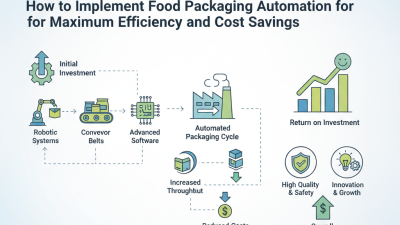
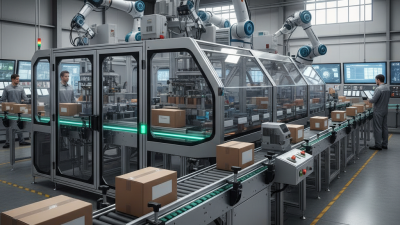
The Duravant family of operating companies serve the food processing, packaging and material handling segments.

In the rapidly evolving food industry, effective food packaging automation is becoming increasingly critical. According to a recent report by the Food Automation Association, the market for automation solutions in food packaging is expected to grow by over 30% by 2025. This surge highlights the need for businesses to streamline their packaging processes to enhance efficiency and reduce costs.
Experts like Dr. Emily Richards, a leading voice in food packaging technology, emphasize, “Automation not only speeds up the process but also ensures consistency in quality.” However, many companies still struggle with implementing these strategies effectively. Common pitfalls include underestimating initial costs and overlooking workforce training. As automation technology advances, the challenge lies in balancing speed with adaptability.
Ultimately, the success of food packaging automation depends on understanding specific needs and integrating suitable technologies. Companies must reflect on their current practices and remain open to innovation. The journey towards effective automation may not always be smooth, but the potential rewards make it worthwhile.
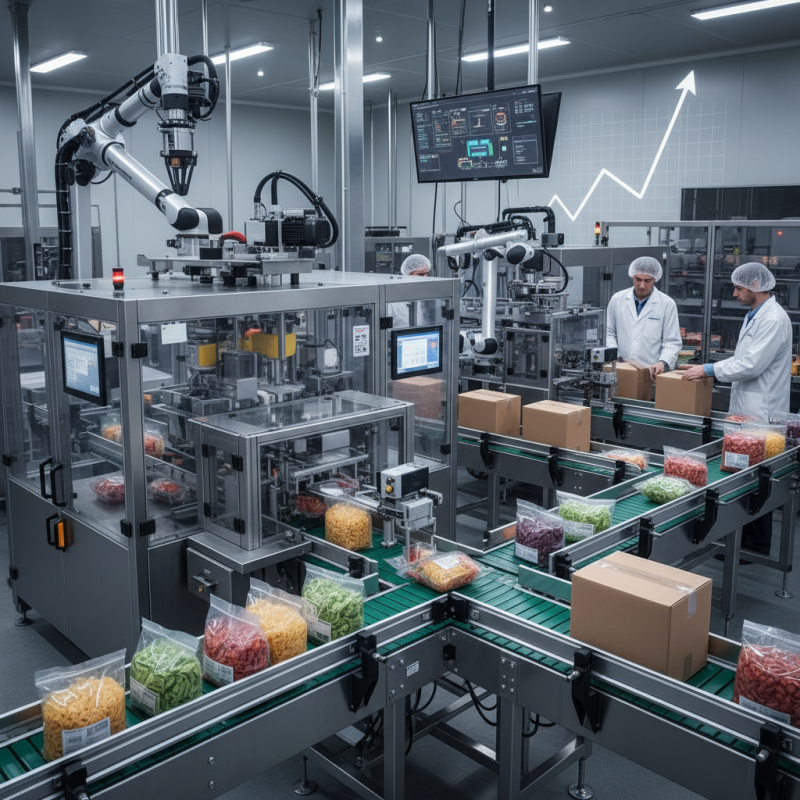
Food packaging automation offers significant benefits in terms of efficiency and safety. Recent industry reports indicate that companies implementing automated packaging solutions can reduce labor costs by up to 30%. Automation streamlines processes, reducing human error and ensuring consistent quality. Standardized packaging minimizes contamination risks, which is crucial in food safety. In a world where food safety breaches can lead to serious health issues, automation becomes indispensable.
Furthermore, automated systems can enhance speed significantly. For instance, a study from the Food and Beverage Industry Association found that automated lines operate at speeds 50% faster than manual ones. This increase in speed allows companies to meet rising consumer demands without sacrificing quality. However, transitioning to automated systems is not without challenges. Companies may face initial high setup costs and the need for staff retraining. Reflecting on these issues is essential in developing a comprehensive automation strategy.
Despite these obstacles, the long-term gains in efficiency and profit margins often outweigh the drawbacks. Continuous improvements in technology are making automation more accessible for small and mid-sized enterprises. Now is the time for businesses to rethink their packaging strategies to embrace the future of efficiency and safety.
Food packaging automation is evolving rapidly. New technologies enhance efficiency and precision. Companies now focus on sustainability and reducing waste. Key innovations include robotics, smart sensors, and AI-driven systems.
Robotics streamline repetitive tasks. They can handle varying package sizes. This flexibility is crucial for meeting diverse consumer demands. Implementing intelligent sensors improves quality control. These devices detect defects early in the process. It minimizes waste but also requires constant calibration and updates.
Consider these tips: Assess your existing workflows. Identify bottlenecks to enhance productivity. Train staff consistently on new technologies. Ensure they understand how automation impacts their roles. Continuous improvement is vital. Automation is not a set-it-and-forget-it solution; it requires regular reflection and adjustment.
| Tip | Description | Key Technologies | Benefits |
|---|---|---|---|
| 1. Assess Current Processes | Evaluate existing packaging workflows and identify bottlenecks. | Process Mapping Software | Improved efficiency, reduced downtime. |
| 2. Invest in Automation Technologies | Integrate robotic systems for packing and palletizing. | Robotic Arm, Vision Systems | Higher speed, consistent quality. |
| 3. Choose Right Packaging Materials | Select materials that enhance shelf life and reduce waste. | Biodegradable Materials, Vacuum Packaging | Sustainability, cost savings. |
| 4. Train Your Staff | Regular training on new systems and safety protocols. | Interactive Training Platforms | Enhanced productivity, safer work environment. |
| 5. Monitor and Analyze Data | Use data analytics to track performance and identify areas for improvement. | Data Analytics Tools | Informed decision-making, continuous improvement. |
| 6. Implement Quality Control Mechanisms | Set up automated inspection systems to ensure product quality. | Vision Inspection Machine | Reduced defects, increased customer satisfaction. |
| 7. Optimize Supply Chain | Collaborate with suppliers for materials and logistics. | Supply Chain Management Software | Cost efficiency, improved timelines. |
| 8. Ensure Compliance with Regulations | Stay updated with food safety and packaging regulations. | Regulatory Compliance Software | Avoid penalties, enhance brand trust. |
| 9. Embrace Innovation and Trends | Stay ahead by adopting the latest packaging technologies and trends. | Smart Packaging, IoT Devices | Greater engagement, market competitiveness. |
| 10. Evaluate and Iterate | Regularly assess automation strategies and make necessary adjustments. | Performance Review Tools | Sustained improvement, adaptability. |
Regulatory compliance is crucial in automated food packaging systems. These systems must adhere to strict safety and quality standards. For instance, materials used in packaging should be food-safe and non-toxic. Clear labeling is also essential. Consumers need accurate information on ingredients.
Training staff on these regulations is a must. They should understand the importance of compliance. Mistakes can lead to serious consequences. Regular audits can help catch issues before they escalate. However, some companies overlook the training aspect. This can lead to gaps in knowledge.
Technology can assist in maintaining compliance. Automated systems can be programmed to check packaging materials against regulations. Yet, these solutions are not foolproof. There is always a risk of malfunction. Continuous monitoring and updates are necessary to mitigate risks. It’s a complex landscape, requiring constant vigilance.
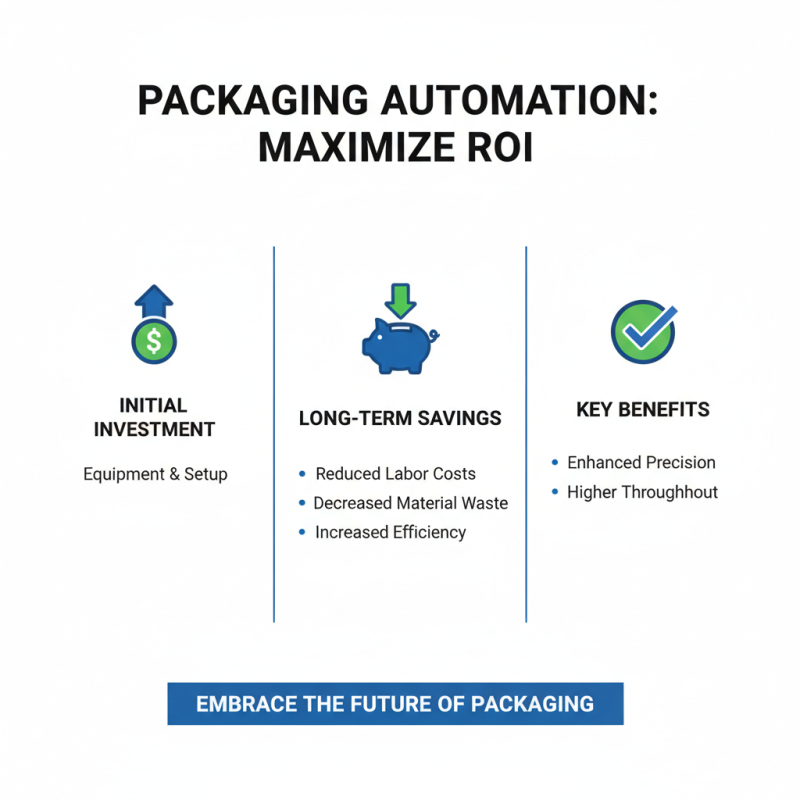
In today's competitive market, businesses must embrace packaging automation to enhance their efficiency. Understanding the cost implications is crucial for maximizing ROI. Investing in automation technology does require initial funding. However, the long-term savings can be substantial. For instance, reducing labor costs can lead to significant savings over time. Companies can see a decrease in material waste as well. Streamlined processes often result in more precise packaging.
It's important to assess the overall cost-effectiveness of these technologies. Sometimes, the cheapest option may not yield the best results. Organizations should consider the total cost of ownership. Regular maintenance and potential upgrades can add to expenses. Tracking these costs meticulously is vital for a successful strategy. Moreover, employee training plays a significant role. A well-trained workforce can minimize errors, reducing wasted resources.
Some businesses overlook the importance of continuous evaluation. After automation implementation, it's crucial to regularly revisit processes. Are your machines running efficiently? Is the return on your investment what you anticipated? Companies need to be prepared for ongoing adjustments. This strategy requires a willingness to adapt and learn from experience. Engaging with employees can provide valuable insights, leading to further improvements.
In the evolving landscape of food packaging automation, sustainability has become a focal point. According to the latest report by Smithers Pira, over 60% of consumers prefer brands that use eco-friendly packaging. This shift drives companies to rethink their strategies. Automated systems now emphasize biodegradable materials. The target is to decrease plastic use and enhance recycling efforts.
Consumer demand also shapes future trends. A study from Nielsen reveals that 73% of millennials are willing to pay more for sustainably packaged products. This statistic underscores the connection between automation and consumer preferences. Companies that fail to adapt may fall behind. Yet, many still struggle with the transition to greener solutions. Challenges include finding the right materials and ensuring cost-effectiveness.
Despite growing awareness, some gaps remain. The technology for fully automated, sustainable packaging is still in development. Moreover, not all packaging solutions are universally applicable. This variability can lead to inefficiencies in the supply chain. Brands need to address these challenges through innovation while staying responsive to consumer expectations. The journey toward fully sustainable food packaging is complex, but necessary for future growth.