The Duravant family of operating companies serve the food processing, packaging and material handling segments.

Choosing the right Pallet Banding Kit is more than selecting the lowest-priced option. It requires a practical review of load weight, pallet dimensions, banding material, and working conditions. A kit that secures small cartons may fail around dense machinery or uneven loads. The wrong tension can crush packaging, while weak seals may loosen during handling.
Reliable selection begins with the shipment itself. Measure the pallet, inspect its edges, and identify movement risks during storage or transport. Polyester banding suits many general applications because it is flexible and resistant to rust. Steel banding may provide greater strength for heavy, rigid loads, but it requires careful handling and compatible tools. Consider tensioners, sealers, buckles, dispensers, and replacement parts as one working system.
Small details matter. A smooth dispenser can reduce banding twists. A comfortable tensioner can limit operator fatigue during repeated work. Check published load ratings, product instructions, and supplier support before purchasing. Independent testing or clear technical specifications add confidence, although specifications do not replace real-world trials. Test the kit on a typical pallet, including sharp corners and imperfect stacking. One trial may expose problems that a product page hides.
A perfect kit does not exist. Budget, speed, safety, and durability often compete. The best choice fits the actual workflow, not an idealized warehouse. Reviewing past failures can be uncomfortable, but it often reveals the most useful requirements. With careful comparison and practical testing, a Pallet Banding Kit can improve load stability and reduce avoidable handling damage.
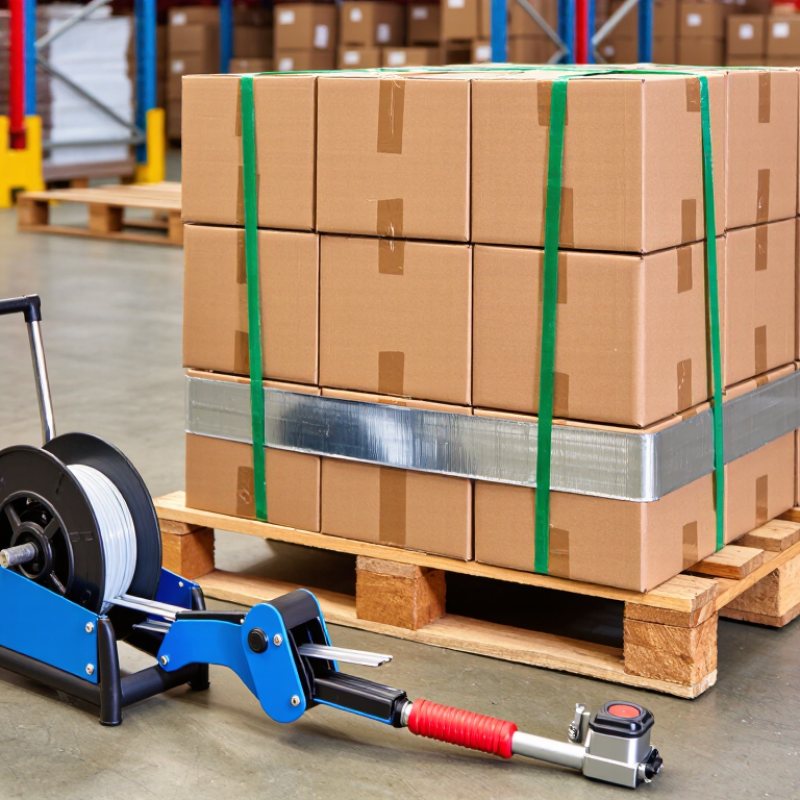
A pallet banding kit is a group of tools and materials used to secure goods on a pallet. It commonly includes banding strap, a tensioning tool, seals or buckles, and edge protectors. The strap wraps around the load and pallet, creating pressure that limits movement during handling. A stable load matters.
In practical use, the operator places the strap around the cartons and feeds both ends through a seal. The tensioner then pulls the strap tight. A sealer locks the joint, while edge protectors spread pressure across sharp carton corners. Some kits use manual tools, while others use battery-powered equipment. Manual systems suit occasional shipments. Powered systems reduce effort when workers band many pallets daily.
Choosing the right kit starts with the load itself. Lightweight boxes may need polypropylene strap, while dense or heavy materials often require stronger polyester or steel strap. Measure the pallet height, inspect exposed edges, and consider storage conditions. Outdoor exposure can weaken unsuitable materials. The strap width must also match the tool and seal.
In my experience, the first setup is rarely perfect. Over-tensioning can crush cartons, while loose banding allows shifting. A simple trial with one wrapped pallet can reveal pressure marks, gaps, or unstable corners. Check the finished load by applying gentle hand pressure from several sides. It should feel firm, not distorted. Worker training also matters, because a quality kit cannot correct careless placement or damaged straps.
How to Choose the Right Pallet Banding Kit?
Before choosing a pallet banding kit, assess the load, not just the pallet size. Record the product weight, height, carton strength, and center of gravity. A tall load with uneven cartons may need more vertical bands or corner protection. A dense, stable load may need fewer bands but higher tension. Check how the pallet moves, too. Forklift handling, vibration, and long-distance transport can loosen poorly applied bands.
The 2024 MHI Annual Industry Report found that 55% of supply chain professionals still view labor shortages as a major challenge. This makes ergonomic tools and simple procedures important. Choose a kit that workers can use consistently, even during busy shifts. Measure the required band width and material against the load’s edges. Test tension carefully; excessive force can crush cartons or damage products. That mistake is easy to miss. For fragile loads, use protective corners and a lower, controlled tension setting. For heavy or shifting loads, perform a basic transport simulation before full deployment. ISTA testing guidance supports evaluating packages under realistic distribution hazards, including vibration, shock, and compression.
Tips: Photograph each test load before and after banding. Check for leaning, broken corners, and loose seals after movement. Record the band count, tension setting, and failure point. A small trial often reveals more than a supplier specification sheet. Review the results with warehouse staff; they may notice handling problems engineers miss. Not every load needs the strongest kit. Sometimes, stronger banding hides weak stacking.
These are common nominal pallet footprints: US GMA (48 × 40 in), EUR (120 × 80 cm), and ISO (120 × 100 cm). Measure the loaded pallet’s footprint and height, weigh it, and consider its stability and edges before selecting strap length, strap material, tensioning capacity, and any corner protection. Footprint alone does not determine the right kit.
Choosing pallet banding materials starts with the load, not the tool. Lightweight cartons often work well with polypropylene banding. It is flexible, economical, and less likely to damage soft packaging. Polyester banding offers stronger tension for dense boxes, timber cases, and mixed loads. Steel banding handles severe loads, but it needs careful handling and suitable protective equipment.
The banding tool must match the material. A manual tensioner suits occasional packing and lower shipment volumes. For regular warehouse work, a battery-powered tensioner can improve speed and tension consistency. You may also need a sealer, seals, a cutter, and corner protectors. Corner protectors are easy to overlook. They prevent bands from cutting into cardboard edges during tightening.
Measure the pallet before choosing the kit. A tall, unstable load may need vertical and horizontal bands. Smooth surfaces can reduce grip, especially during vibration or long transport. I have seen tightly banded cartons shift because the pallet was uneven. More tension did not solve the problem. Better stacking did. Test the banding on one finished pallet, then inspect crushed corners, loose bands, and movement. A practical kit should protect the load without forcing workers to fight the equipment. Some packing choices still require review when weather, storage time, or repeated handling changes.
How to Choose the Right Pallet Banding Kit?
A pallet banding kit should fit your daily workflow, not simply look complete. Start by measuring typical loads, including pallet width, package height, and load weight. A warehouse handling ten pallets daily may value portability. A busy dispatch line needs faster tensioning and sealing.
Match the tool to the strap material and package surface. Polypropylene strap suits lighter cartons and frequent changes. Polyester strap offers stronger restraint for dense or heavier loads. For uneven products, choose a tensioner with controlled adjustment. Excessive tension can crush cartons or damage corners. Measure the load. Protect the edges.
Your workflow also determines the best sealing method. Buckles support quick manual adjustments, while seals can provide a firmer closure. Check whether workers can operate the kit while wearing gloves. The tool should feel balanced during repeated use. Keep spare seals, cutters, and straps near the packing station. That matters.
I have found that small trials reveal problems that product sheets miss. Test a few pallets during normal production, then inspect strap movement after handling. A kit may perform well on square boxes but struggle with irregular loads. It is easy to overlook storage space, noise, or operator fatigue. A perfect kit rarely exists. Choose the one that creates fewer interruptions, safer handling, and consistent tension across your actual packaging routine.
| Packaging Workflow | Suggested Kit Configuration | Typical Strap Choice | Tensioning and Sealing | Features to Check | Why It Fits |
|---|---|---|---|---|---|
| Occasional shipments or low daily pallet volume | Manual kit with a tensioner, sealer, seals, dispenser, and a starter coil of strapping | Polypropylene (PP) strap for light-to-medium loads; select width and thickness to match the load and tool | Manual tensioner with separate metal seals or buckles, depending on the kit | Tool compatibility with strap width and thickness; seal type; dispenser mobility; availability of replacement seals | Simple equipment and no power source are needed, making it practical for intermittent use and changing work locations. |
| Regular shipping with moderate daily volume | Battery-powered combination tool kit with charger, battery, dispenser, and compatible strap | PP for many general-purpose applications; polyester (PET) when greater strength or better retained tension is needed | One tool tensions, seals, and cuts compatible strapping; confirm whether it uses friction-weld sealing | Battery runtime and charging time; tool weight; supported strap specifications; access to spare batteries and wear parts | Combines several banding steps in one tool and can reduce repetitive manual effort compared with separate hand tools. |
| High-volume or repetitive palletizing at a fixed station | Pneumatic combination tool kit with a suitable air supply, regulator, hose, and dispenser | PET is commonly selected for demanding unit loads; PP may suit lighter loads if its strength and tension retention are adequate | Pneumatic tensioning and sealing; the required air pressure and consumption depend on the tool | Available air pressure and flow; hose reach; tool cycle rate; operator training; maintenance and noise requirements | Can support frequent, repetitive banding where a reliable compressed-air supply and appropriate maintenance are available. |
| Heavy or dense loads that need strong load containment | Heavy-duty manual, battery-powered, or pneumatic kit rated for the selected PET strap | PET strap sized for the application; compare strap strength, elongation, and tool compatibility rather than relying on width alone | Use the tensioning and joint method specified for the strap and tool; verify seal or weld performance | Working tension and tool rating; joint strength; load stability; edge protection; safe handling requirements | Appropriate strap and verified joints help restrain loads, but banding should be tested on the actual palletized product. |
| Loads with sharp corners or delicate packaging | Kit with a compatible dispenser and suitable corner protectors or edge boards | PP or PET selected for the load; avoid excessive tension that could damage cartons or compress products | Choose a tensioning method that allows controlled application and consistent operator technique | Corner protection compatibility; strap placement; tension control; carton compression and product-damage checks | Protectors distribute strap pressure and help reduce cutting or crushing at contact points. |
| Work across multiple stations or changing pallet sizes | Portable manual or battery-powered kit with a mobile dispenser and readily replaceable consumables | Keep strap material and specifications consistent across stations where possible | Choose a tool that can be safely carried and used at the required stations | Tool weight; dispenser portability; coil size; charging or air-supply access; clear setup instructions | A portable setup reduces the need to move pallets to a single banding point. |
Selection note: Confirm that the tensioner, sealer, seals or weld system, and dispenser all match the strap material, width, and thickness. Test the completed load under actual handling and transport conditions, and follow the equipment manufacturer's operating and safety instructions.
Choosing a pallet banding kit starts with the load, but safe application matters just as much. Select bands that match the pallet’s weight, shape, and surface. Rigid cartons may need firm tension, while fragile boxes can deform under pressure. A reliable kit should include a suitable tensioner, seals, cutters, and corner protectors. These small parts prevent crushed edges and uneven pressure.
Before banding, place the pallet on a stable, level surface. Center the load and remove loose wrapping or damaged cartons. Feed the band around the pallet without twisting it. Keep your hands away from the tensioning tool’s moving parts. Apply steady tension until the load feels secure, not compressed. I have seen workers overtighten bands, believing extra force always improves stability. It does not. The pallet may look neat while hidden damage develops inside.
Tips: Wear cut-resistant gloves and eye protection. Check every seal by hand. Inspect the band for cuts, sharp edges, or slack sections. Press the cartons lightly and watch for shifting. If the load moves, release the tension carefully and correct the arrangement. Do not reuse stretched or visibly damaged bands. Inspection is often rushed, especially during busy loading periods. That is where mistakes begin. Record recurring failures, because the kit may not be the real problem. The pallet pattern, band position, or operator technique may need review.