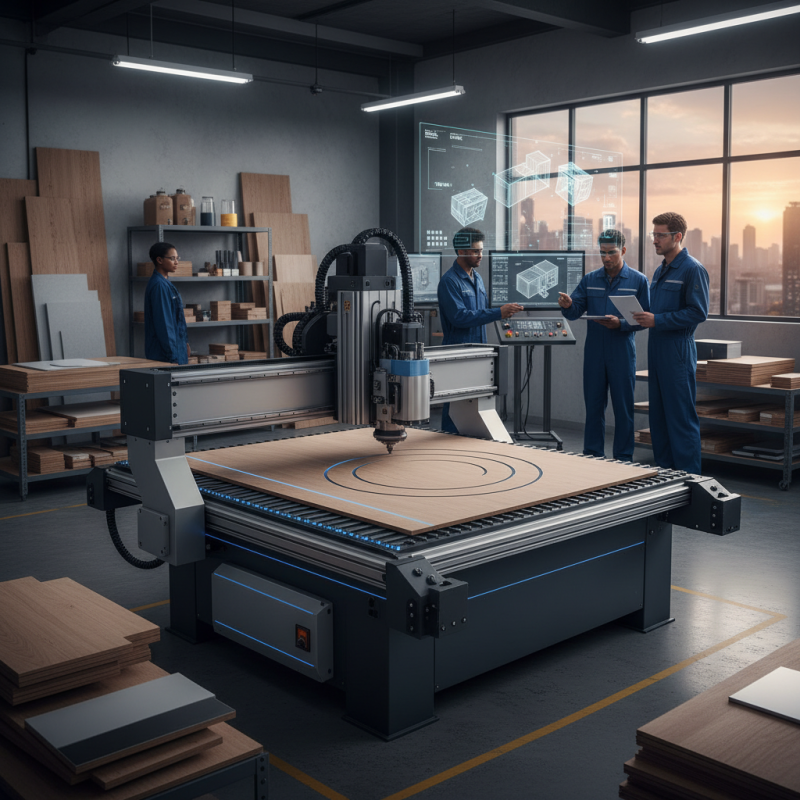
How to Choose the Best CNC Router for Your Business Needs?
Choosing the right CNC Router is crucial for any business. This machine can significantly impact production capabilities and quality. Bob Smith, a CNC industry expert, states, "The right router can enhance efficiency and reduce costs." His words highlight the importance of making an informed choice.
In the ever-evolving manufacturing landscape, a CNC Router can either elevate your business or hold it back. Selecting the proper model requires careful consideration. Factors like material type and production volume play a significant role. A common mistake is underestimating the router's capacity for specific tasks.
Investing time in research is essential. Many businesses overlook the training needed for effective use. Lack of expertise can lead to operational setbacks. Understanding your business needs helps in identifying the ideal CNC Router. Making a wise choice can transform production processes and boost profitability.
Understanding CNC Routers: Types and Functions
CNC routers are essential for precision manufacturing. In the industry, understanding their types and functions can enhance operational efficiency. Generally, CNC routers fall into categories like entry-level, mid-grade, and industrial machines. Entry-level routers are ideal for hobbyists and small businesses. They commonly handle softer materials like foam and wood.
Mid-grade models often offer more versatility. They can work with a range of materials, from plastic to thicker wood. Industrial CNC routers are advanced machines that typically allow for high-speed operations and complex designs. They are crucial for large-scale manufacturing and can manage intricate cuts with ease.
According to a survey by MarketsandMarkets, the global CNC machine market is projected to reach approximately $100 billion by 2025. Despite these advancements, not all CNC routers are tailored for every business. Assessing specific needs can be challenging, as various operations demand distinct features. For instance, some businesses may prioritize speed, while others may require precision over rapid output. Balancing these factors is fundamental for making a sound investment.
Assessing Your Business Requirements for CNC Routing
Assessing your business requirements for CNC routing is crucial for optimal results. Begin by evaluating your production volume needs. Understanding the scale of your operations can help determine the size and power of the router you need. A small-scale shop may require a compact model, while a larger operation might benefit from an industrial-sized machine.
Consider the materials you plan to rout. Different materials require specific cutting capabilities. Wood, plastics, and metals each have their unique characteristics. Assessing how often you will switch between materials is also important. A versatile CNC router may save you time when working on diverse projects.
Think about the complexity of the designs you will produce. Simple shapes may need less advanced technology, while intricate designs require higher precision. It's important to weigh your current capabilities against the future growth of your business. Will your chosen router meet evolving demands? Make sure to reflect on these aspects thoroughly before making a decision.
Key Features to Consider in a CNC Router
Choosing the right CNC router involves understanding its key features. Precision and reliability are paramount. A quality CNC router should achieve a minimum accuracy of ±0.01mm. This precision is crucial for industries like manufacturing and woodworking. According to a report by IBISWorld, businesses can lose up to 20% efficiency with outdated machines.
Motor power is another essential consideration. Look for routers with a minimum of 2 HP. This power allows for cutting through various materials effectively. Many users overlook the spindle speed, which typically ranges from 12,000 to 24,000 RPM. Higher speeds can enhance cutting efficiency, but not all materials respond well to fast rates. Balancing speed and material type is an art.
Tool compatibility also matters. A router that accommodates multiple tool sizes provides versatility. This is especially important for businesses expanding service offerings. According to a survey by the U.S. Bureau of Labor Statistics, companies that offer diverse services see a 15% increase in revenue. Finally, consider the software integration capabilities. Modern routers often require compatible software for optimal operation. Not addressing this can lead to frustrating downtime, impacting productivity.
Comparing Costs: Budgeting for Your CNC Router
Budgeting for a CNC router involves assessing multiple factors. The initial cost is just one aspect. You must consider additional expenses, such as installation and maintenance. It’s vital to understand the total cost of ownership. Cheap machines can lead to unforeseen repairs, impacting your budget.
Evaluating financing options is also important. Some businesses might choose leases to manage cash flow effectively. Others may prefer buying outright. Each option carries its pros and cons, which should be clearly evaluated. Calculating your return on investment is crucial. A higher-quality router might demand a larger initial expenditure, but it can increase efficiency and reduce long-term costs.
Consider the materials you'll be working with. Different routers handle various materials, affecting their price tags. Lower-priced routers often struggle with more demanding tasks. A deeper understanding of your specific needs helps refine your budget. Reflect on whether you are ready for the commitment of a larger purchase. Balancing your aspirations with realistic budgeting can prevent future financial stress.
Cost Comparison of CNC Routers by Type
Evaluating Manufacturers and Customer Support Options
When selecting a CNC router, examining manufacturers and their customer support is vital. Reliable manufacturers offer extensive warranties on their machines. They provide not just equipment, but assurance of quality and support. Communication is key. A manufacturer that responds quickly can make a difference in downtime. Look for reviews that highlight customer experiences.
Consider the availability of technical support. Machines may have hiccups or require maintenance. Strong support can save time and money. Online resources, tutorials, and user forums can also help address common issues. Not all manufacturers provide these tools. So, it's essential to assess which companies invest in ongoing customer education.
While evaluating these options, reflect on their service quality. If response times are slow, your operations could suffer. A good manufacturer acts like a partner. It's crucial to find one that values long-term relationships. Seek out those who prioritize feedback and continuously improve their services. Your business deserves nothing less than attentive support.