How to Choose Direct Thermal Roll Labels in 2026?
Choosing Direct Thermal Roll Labels in 2026 requires more than comparing prices or selecting the widest roll. The right label must match the printer, application, storage conditions, and expected lifespan. A warehouse shipping label faces different demands from a retail receipt, product sticker, or mobile delivery tag.
Start with printer compatibility. Check the core size, roll width, outer diameter, winding direction, and maximum media capacity. A small desktop printer may accept a three-inch core, while an industrial model may require a different specification. Label gaps, black marks, and perforations also affect calibration. A minor mismatch can cause skewed printing, frequent jams, or wasted labels.
Material quality matters just as much. Standard thermal paper suits short-term indoor use, but synthetic labels perform better around moisture, abrasion, or repeated handling. Test adhesive strength on cardboard, plastic, glass, or recycled packaging. It should bond firmly without leaving excessive residue. Not every “permanent” adhesive performs equally well in cold storage.
Think about the printed image, too. Direct thermal labels do not use ink or toner, which simplifies maintenance. However, heat, sunlight, friction, and plasticizers can darken or fade the image. Store unused rolls in a cool, dry, shaded area. Avoid relying on assumptions.
A practical evaluation should include a real-world trial. Print several hundred labels, apply them to the target surfaces, and inspect readability after transport, stacking, and handling. Some specifications may look suitable on paper but fail during daily operation. Cost per roll is useful, yet cost per usable label is more accurate. In 2026, responsible selection means balancing printer efficiency, label durability, sustainability claims, and dependable supplier support. There is no perfect roll. Only a better-tested choice.
What Are Direct Thermal Roll Labels?
How to Choose Direct Thermal Roll Labels in 2026?
What Are Direct Thermal Roll Labels?
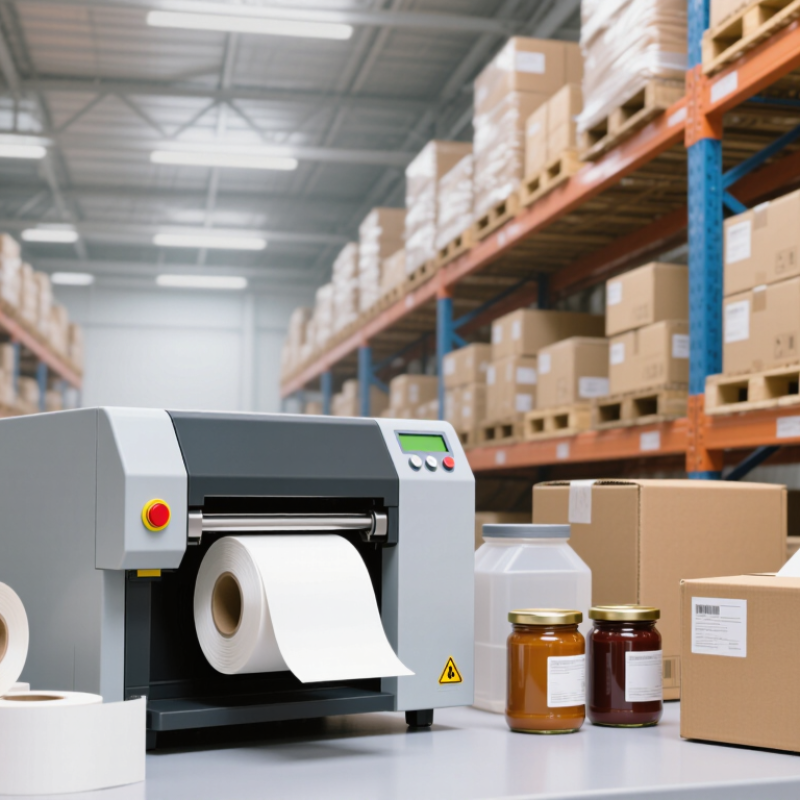
Direct thermal roll labels are pressure-sensitive labels coated with heat-reactive material. A compatible printer creates images by heating selected points on the label surface. No ink cartridge or ribbon is required. The printed area usually appears black, making these labels practical for shipping, receipts, stock tags, and short-term identification.
The labels arrive wound around a core, which supports fast, continuous printing. Their surface can be smooth, semi-gloss, or designed for rough handling. Paper versions suit indoor applications, while synthetic versions offer better resistance to moisture and tearing. During warehouse checks, I have found that core size, roll width, and printer calibration affect results more than many buyers expect. A small mismatch can cause slipping, skewed labels, or wasted material.
Direct thermal printing has an important limitation. Heat, sunlight, friction, and some chemicals can gradually fade the image. It is not ideal for permanent outdoor records or long-term archiving. I once underestimated storage conditions and saw readable labels become pale near a warm loading area. That mistake changed how I evaluate label durability. Check the printer’s supported dimensions, adhesive performance, coating quality, and expected storage period before ordering. The cheapest roll may create higher costs through reprints and interruptions.
How Direct Thermal Printing Works
Direct thermal printing creates an image through controlled heat, not ink. A thermal printhead contains tiny heating elements that touch the label surface. Each activated element darkens a heat-sensitive coating, forming text, barcodes, or simple graphics. The process is fast and clean. There is no ribbon to replace.
Industry estimates show why this method remains important. A 2024 report from Grand View Research valued the global direct thermal printing market at approximately USD 4.3 billion in 2023. It also projected steady growth through 2030, driven by logistics, retail, and healthcare identification. These figures suggest practical demand, not just technical interest. Still, market forecasts can change quickly.
Direct thermal rolls need careful selection. Heat, sunlight, moisture, and friction can gradually fade the image. A 2023 report from Smithers identified durability as a central challenge for short-life digital labels. In daily use, a parcel label may face a hot delivery van, a wet warehouse floor, or repeated handling. Choose the coating for its real environment. Test the barcode after storage and abrasion. A label that prints sharply today may fail later. That is the part I still question most. The cheapest roll often looks efficient until reprinting, scanning delays, or damaged goods raise the actual cost. (182 words)
Which Label Materials and Sizes Should You Choose?
Choosing direct thermal roll labels in 2026 starts with the material, not the lowest price. Standard thermal paper suits indoor shipping, shelf tags, and short-term inventory. It is economical, but heat, sunlight, oil, and moisture can darken or weaken it. For refrigerated storage, outdoor handling, or frequent rubbing, use a synthetic thermal facestock with a stronger adhesive. Test condensation first. Labels that stick well on dry cardboard may fail on cold plastic.
The 2024 State of Logistics Report valued United States logistics costs at 2.58 trillion dollars in 2023, equal to 8.8% of GDP. The 2024 Parcel Shipping Index also reported about 161.8 billion parcels worldwide in 2022. These figures make readable labels a practical control point, not a minor supply expense.
For common parcel workflows, a 4 × 6-inch roll provides space for the address, barcode, routing data, and required quiet zones. Smaller 2 × 1-inch labels work better for bins or product identification.
Measure the printer’s maximum print width, roll core, outside diameter, and sensor position before ordering. GS1 specifications and ISO/IEC 15416 both stress barcode contrast, dimensions, and quiet zones. A label can look sharp while scanning poorly. Test before scaling. I would also print through a full roll cycle, because adhesive buildup and fading often appear later. A universal “best size” does not really exist; handling conditions decide more than the catalog page.
How to Match Labels with Printers and Applications
How to Choose Direct Thermal Roll Labels in 2026?
Choosing direct thermal roll labels begins with the printer, not the label design. Check the printer’s maximum web width, core diameter, roll outside diameter, and sensor position. A 4-inch printer may accept a 4-inch roll, but not every core or winding direction. Measure twice.
For shipping, select labels with a smooth, bright face stock and strong permanent adhesive. This helps barcodes remain readable on corrugated cartons, even after handling. For shelves, bins, or short-term tickets, a lighter adhesive may be enough. It can also reduce difficult removal. According to Grand View Research, the global labels market was valued at about USD 49.5 billion in 2023, showing how many applications compete for suitable materials. The report also forecasts continued growth through 2030.
Match the label’s coating and size to its environment. Direct thermal material is sensitive to heat, sunlight, friction, and plasticizer migration. Avoid it for long outdoor exposure unless testing proves adequate durability. GS1 guidance emphasizes proper quiet zones and barcode contrast; a crowded label can fail despite using a good printer. Keep at least a small clear margin around the code. Test real samples on the actual cartons, shelves, or bags. Laboratory results can mislead. A label that performs well for one week may fade after repeated rubbing. That mistake is easy to make.