The Duravant family of operating companies serve the food processing, packaging and material handling segments.

Choosing an Aluminum Bidirectional Gear Pump is not simply a matter of matching port size or selecting the lightest unit. The pump must suit the circuit, fluid, operating pressure, and direction of rotation. A compact aluminum housing can reduce equipment weight and help dissipate heat, but it does not make every model appropriate for every duty. Check the manufacturer’s rated pressure, speed range, fluid compatibility, and temperature limits before comparing prices.
Bidirectional operation needs particular attention. Some pumps can reverse flow when the drive reverses; others require specific porting, seals, or internal features to operate reliably in both directions. Confirm the required shaft rotation and flow direction against the manufacturer’s diagram. A hose connection that looks obvious on a workbench may behave differently once installed. Small details matter.
Consider the fluid’s viscosity, the system’s peak pressure, and how often the pump will reverse. Also inspect shaft dimensions, mounting pattern, inlet conditions, and seal materials. These checks help prevent avoidable noise, leakage, overheating, or premature wear. If the application uses unusual fluid or frequent reversals, ask the supplier for written confirmation rather than relying on a product title alone. That extra step can feel slow. It is often worthwhile. A careful selection balances performance, service life, and ease of maintenance, while recognizing that catalog specifications cannot replace testing under the actual operating conditions.
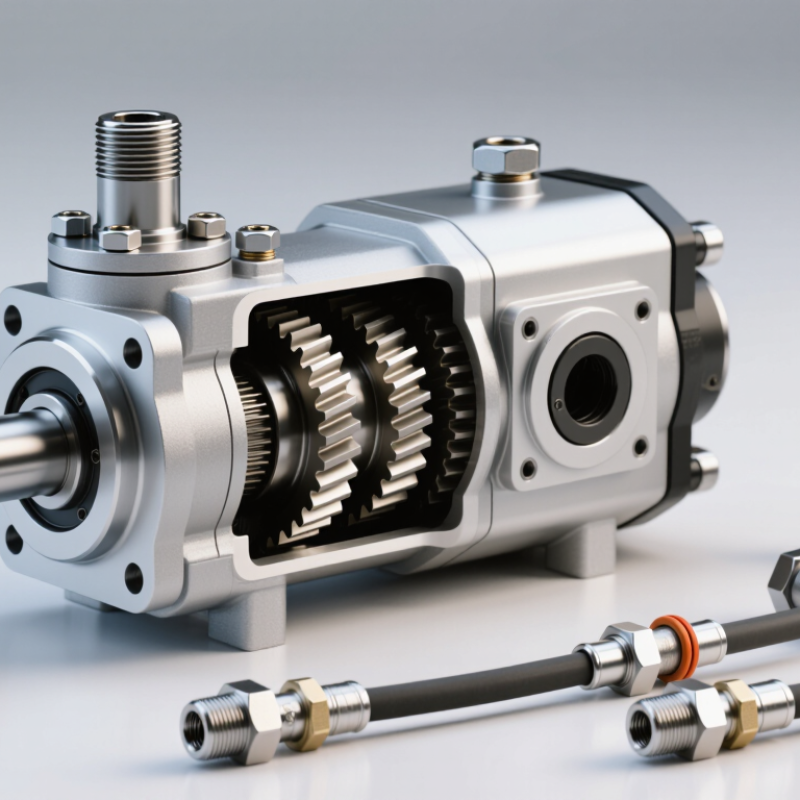
Identify the hydraulic system’s actual duty before comparing aluminum bidirectional gear pumps. Record the required flow in both directions, operating speed, and pressure range. Flow depends on displacement and shaft speed, but internal leakage can reduce delivered flow, especially as oil warms. Measure both directions. Check whether the pump must run continuously, intermittently, or through frequent reversals.
Pressure and temperature matter just as much. Note normal pressure, peak pressure, and how long peaks last; do not size the pump from a brief maximum alone. Confirm the specified fluid, its viscosity across cold starts and hot operation, and the system’s filtration level. These details affect wear and reliable operation. Also check motor power, reservoir capacity, hose and port sizes, and the relief-valve arrangement. A bidirectional pump needs compatible porting and protection in either direction. Paper calculations can look tidy; real installations rarely are. Leave a sensible operating margin, then compare calculations with measured system data before selecting the pump.
For an aluminum bidirectional gear pump, match displacement to the flow your actuator needs. Estimate flow with: displacement × speed × volumetric efficiency. For example, an 8 cm³/rev pump at 1,500 rpm and 90% efficiency delivers about 10.8 L/min. Check the manufacturer’s performance curve at your actual oil viscosity and operating temperature; efficiency can fall as the oil thins. Confirm that rated speed and pressure apply in both directions.
Tips: Size for peak demand, not a guessed average. Check the motor’s available power, relief-valve setting, and return-line capacity. Reversing flow should not mean exceeding the pump’s pressure rating.
The U.S. Department of Energy’s Improving Pumping System Performance: A Sourcebook for Industry (2nd ed., 2006) reports that pumping systems use nearly 20% of global electricity. That figure covers pumping broadly, not hydraulic gear pumps alone, but it supports careful sizing. A tidy calculation can still miss cold starts, pressure spikes, or unequal performance between rotation directions. Verify the selection with operating data, then leave a sensible margin without oversizing.
When choosing an aluminum bidirectional gear pump, check the exact hydraulic-fluid formulation against the pump’s aluminum alloy. “Mineral oil” or “biodegradable” on a label is not enough; additive packages and water contamination can change corrosion behavior. Ask for written compatibility data covering the fluid, alloy, operating temperature, and seals. Look for aluminum-coupon results, not just a general claim that the fluid suits hydraulic systems. A clean-looking sample proves little.
ASTM D2619 provides a useful reference point: its hydrolytic-stability test exposes fluid and metal specimens to water for 48 hours at 93°C. However, the method focuses on copper and steel, so passing it alone does not establish aluminum compatibility. Request a separate aluminum immersion or corrosion test under conditions close to your application. Check for mass change, pitting, discoloration, and deposits after exposure. Also review the fluid’s technical data sheet for water limits and service-temperature guidance. If the test conditions differ sharply from your system’s heat or moisture levels, treat the result cautiously. That gap is easy to overlook.
How to Choose an Aluminum Bidirectional Gear Pump
Confirm that “bidirectional” describes the pump’s approved operation, not just a reversible motor. Check the technical drawing and rating sheet for flow direction, pressure limits, and performance in both rotations. Some pumps can rotate either way but still require specific port connections or external valves. Identify the pressure and return ports for each direction before connecting hoses. A mislabeled port can cause poor flow or damage. This check is easy to rush.
Match the shaft to the drive. Note its diameter, length, keyway or spline, and rotation viewed from the shaft end. Compare these details with the motor coupling and pump mounting dimensions. Check allowable torque and alignment, too; a shaft that fits can still wear quickly if the drive is misaligned. Verify seal suitability for both rotation directions. It is a small detail, but one that deserves another look.
Tips: Mark both ports and rotation directions on your installation sketch. Confirm them against the supplier’s documentation before startup. Measure twice. Run the pump briefly at low load, then check for leaks, unusual noise, and stable flow in each direction.
Verify bidirectional operation, port behavior, and shaft compatibility before installation. The chart shows representative sample bench readings—not a pump specification. Confirm acceptable flow, pressure, and speed ranges with the pump manufacturer.
Selection checks: Confirm the pump is designed for bidirectional operation; identify how the inlet and outlet ports behave when rotation reverses; and match the shaft type, dimensions, and rotation requirements to the drive and coupling.
How to Choose an Aluminum Bidirectional Gear Pump
Compare Installation Needs, Durability, and Maintenance Access
Choosing a pump starts with the installation, not just the flow rating. Check the mounting footprint, shaft alignment, port orientation, and available space for hoses. A bidirectional model must be designed for flow reversal; reversing the drive alone may not be suitable for every pump. Confirm the intended operating pressure, fluid compatibility, and rotation requirements in the technical documentation. Small mismatches can mean extra fittings or awkward pipe runs.
Tips: Leave room to reach the ports, fasteners, and seals. Keep suction lines short and avoid sharp bends where practical. Verify whether the unit needs separate relief protection. Easy access matters later.
Aluminum housings are relatively light and can help reduce equipment weight, but durability depends on the fluid, pressure, temperature, and operating conditions. Consider the environment, too: moisture or corrosive fluids may affect material suitability. Check service intervals and whether common wear components can be inspected without removing nearby equipment. A pump that fits tightly today may be frustrating to maintain tomorrow. I would still double-check clearance against the actual machine layout; drawings do not always show every obstruction. Choose a configuration that meets the system requirements and leaves practical room for inspection.
| Selection Factor | Installation Needs | Durability Considerations | Maintenance Access | What to Verify Before Selection |
|---|---|---|---|---|
| Rotation and flow direction | Confirm that the pump is designed for the required reversible operation and that the drive arrangement supports the intended shaft rotation. | Operating in the wrong direction can interfere with lubrication or pressure-relief arrangements, depending on the pump design. | Provide room to inspect shaft rotation markings and safely access the drive coupling during service. | Check the manufacturer’s rotation instructions, porting diagram, and any limits on reversing under load. |
| Mounting position and support | Match the mounting flange, shaft alignment, and available space to the machine. Support the pump and connected pipework without imposing excessive loads on the housing. | Misalignment and vibration can accelerate wear on bearings, seals, and the drive connection. | Leave clearance for removing fasteners, disconnecting the coupling, and lifting the pump out of its mount. | Confirm mounting dimensions, shaft details, allowable loads, and any restrictions on mounting orientation. |
| Port layout and connections | Choose port positions and connection types that suit the existing circuit and allow direct, uncomplicated hose or pipe routing. | Inadequate inlet sizing, air leaks, or excessive restrictions can contribute to noise, poor filling, and accelerated wear. | Position connections so fittings can be reached with standard tools and lines can be disconnected without removing nearby equipment. | Verify port sizes, thread or flange standard, inlet conditions, fluid compatibility, and the circuit’s pressure requirements. |
| Aluminum housing and operating environment | Check that the surrounding structure and mounting hardware are compatible with the pump’s housing and operating environment. | Aluminum helps reduce component weight, but suitability depends on pressure, fluid, temperature, contamination, and corrosion exposure. | Keep the housing visible enough for leak checks and routine inspection; avoid trapping it behind guards that are difficult to remove. | Review the pump’s rated operating limits and confirm fluid and environmental compatibility with its materials. |
| Pressure, speed, and duty cycle | Ensure the drive can supply the required speed and torque across the intended operating range. | Repeated operation near or beyond rated limits can shorten service life. Pressure spikes and frequent reversals should be considered. | Install pressure gauges or test points where technicians can safely check system performance. | Compare the pump’s published pressure, speed, displacement, temperature, and duty-cycle ratings with actual system conditions. |
| Filtration and fluid condition | Plan the inlet and return layout around the filtration system and follow the pump maker’s recommendations for fluid cleanliness. | Abrasive particles and unsuitable fluid can damage gear surfaces and other internal components. | Locate filters and sampling points where elements can be changed and fluid condition checked without dismantling the pump installation. | Confirm fluid type, viscosity range, filtration requirements, and any cleanliness guidance in the technical documentation. |
| Seal and coupling service | Allow for proper shaft alignment and use a coupling suited to the drive and operating conditions. | Excessive shaft load, misalignment, or incompatible fluid can contribute to seal leakage and premature wear. | Provide access to the shaft end and coupling so inspection or replacement does not require extensive machine disassembly. | Check shaft dimensions, seal material compatibility, coupling requirements, and the recommended service procedure. |
| Service documentation and spare parts | Record the pump configuration and installation details for future replacement or troubleshooting. | Using suitable parts and following the specified service procedure helps preserve performance and reliability. | Keep identification details and service information accessible to maintenance personnel. | Confirm availability of technical documentation, compatible replacement parts, and qualified service support. |