How to Choose the Right Stainless Steel Wire Mesh Filter?
Choosing the right Stainless Steel Wire Mesh Filter begins with the job it must do. A screen that catches visible flakes may fail to retain fine sediment. A finer mesh can also slow flow, raise pressure drop, and clog sooner. The right choice balances particle retention, throughput, operating temperature, and cleaning needs. Small details matter: the fluid’s chemistry, the housing’s dimensions, and the shape of the particles all affect performance.
One practical design principle is often expressed this way: “Choose the mesh for the particle you need to retain, then check that the flow can live with it.” This is proposed editorial wording, not a verified quotation. A named industry expert and a sourced quotation should be added before publication; inventing an attribution would undermine trust. That point is easy to overlook.
This guide outlines how to compare mesh opening, wire diameter, weave, alloy grade, and filter construction. It also explains why a mesh count alone cannot tell the whole story. Two screens with similar counts may behave differently because their openings and wires differ. Ask suppliers for specifications, test samples under realistic conditions, and confirm cleaning requirements before ordering. A bench test helps. So does a second look at the assumptions: the first mesh selected is not always the best one.
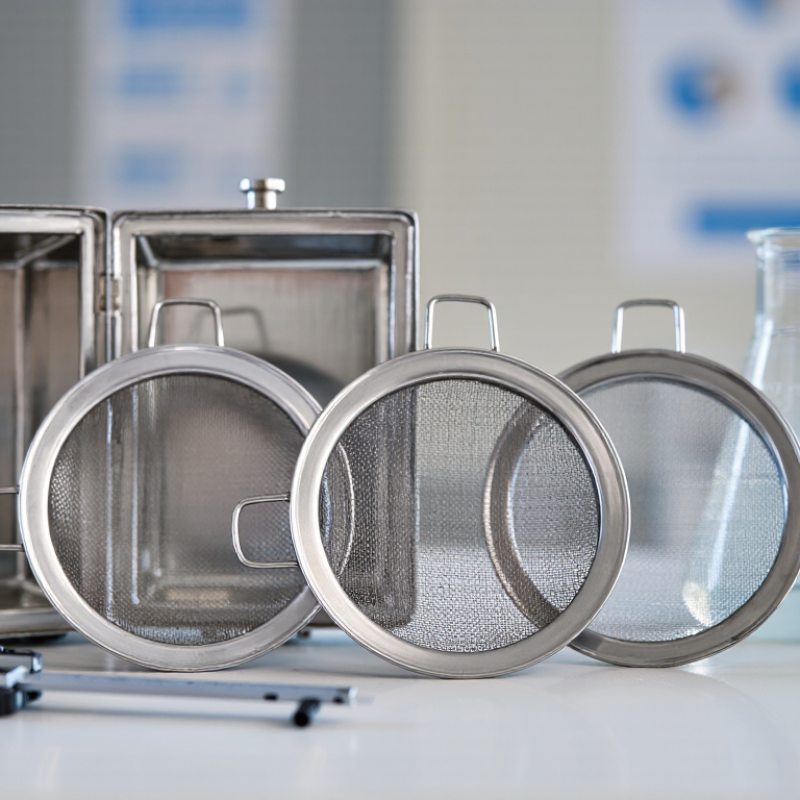
Identify the Filtration Requirements and Operating Conditions
Start with the fluid, not the mesh number. Define the smallest particle that must be retained, the flow rate, and the acceptable pressure drop. Record operating temperature, pressure peaks, and whether the fluid carries sticky or abrasive solids. These details change how an aperture performs in service. Not by mesh alone.
ISO 9044:2016 specifies technical requirements and testing for industrial woven wire cloth, including aperture and wire-related characteristics. Use its framework to compare supplier data, but confirm the actual opening size and tolerances for the chosen cloth. For hydraulic applications, ISO 16889:2022 uses a multi-pass test and a beta ratio to describe particle capture. A beta ratio of 200 corresponds to 99.5% removal at the stated particle size under that test. It is a useful benchmark, not a universal promise for every mesh or process.
Match the material to the fluid chemistry and temperature, then check pressure-drop data at your real flow rate. Ask for test conditions, not just a nominal micron rating. A fine weave may trap more particles, yet clog sooner and demand more frequent cleaning. Fit matters. I would still question any selection based only on a clean-fluid test; real contaminant loading can change the result.
Choose the Mesh Opening and Wire Diameter
A filter’s mesh opening should match the particles you need to retain, not just a mesh-count label. Mesh count describes openings per inch, but wire thickness also changes the clear space between wires. Two screens with the same count can therefore have different openings. Check the stated aperture in microns or millimeters, and compare it with the smallest particles that must be captured.
Leave a practical margin. If the opening is too large, fine particles may pass through; if it is too small, the screen can clog quickly and restrict flow. Wire diameter matters, too. Thicker wire generally improves strength, which helps when the filter faces vibration or frequent cleaning. But it also reduces open area.
Measure twice. For example, a coarse screen used before a pump may need more flow capacity, while a finer screen downstream may protect a small nozzle. I would not choose from a chart alone: actual fluid, pressure, and debris shape can change performance. A short trial with the real material can reveal a mismatch that calculations miss. That is not a perfect method, but it is useful.
Select the Stainless Steel Grade and Weave Pattern
Stainless steel grade and weave pattern determine whether a filter handles the fluid, temperature, and particle load reliably. Grade 304 suits many indoor water and food-processing applications with mild conditions. Grade 316 offers better resistance to chlorides and many corrosive fluids. Neither grade is universal. Check the actual fluid chemistry, operating temperature, and cleaning method before specifying a mesh. A mismatch may show up as staining, pitting, or premature failure.
Weave controls both particle retention and flow. Plain weave has a straightforward over-under structure and works well for many general filtration tasks. Twill weave can use finer wires in a sturdy construction, though its openings may be less obvious to inspect. Dutch weave uses tightly packed wires and often supports fine filtration under pressure. Compare the stated opening size and wire diameter, not just the weave name. Small differences matter. It is easy to overvalue a micron figure without checking how the mesh is made.
Tips: Ask for a sample or technical data sheet. Confirm the grade, opening size, wire diameter, and test method. If possible, test the mesh with your actual fluid; lab conditions may not match daily operation. One detail is often missed: a finer mesh can reduce flow and clog sooner. Don’t assume finer is always better.
Assess Flow Rate, Particle Retention, and Pressure Drop
How to Choose the Right Stainless Steel Wire Mesh Filter?
Flow rate, particle retention, and pressure drop must be considered together. A finer mesh may capture smaller particles, but it can also restrict flow, especially as debris builds up. Check the required operating flow, fluid viscosity, and expected contaminant load. Then compare pressure-drop data at that flow—not just a clean-filter rating. A micron number alone can be misleading. Mesh opening, wire diameter, and weave also affect open area and retention.
ISO 16889:2022 defines a multipass test for hydraulic filter elements. Its beta ratio compares particle counts upstream and downstream: a beta ratio of 200 indicates 99.5% retention at the specified particle size. This is a useful benchmark, not automatic proof of performance for every woven mesh. The U.S. Department of Energy’s Improving Compressed Air System Performance sourcebook recommends keeping total pressure drop between the compressor and point of use below 10% of compressor discharge pressure. That guidance concerns compressed-air systems, but it illustrates why pressure losses matter. Ask for test conditions, including flow and fluid, and compare clean and loaded-filter results. Real systems are messier than a lab curve. A filter that meets the particle target may still need more cleaning than expected.
How to Choose a Stainless Steel Wire Mesh Filter
Compare the flow–pressure trade-off for three nominal mesh openings. Finer openings can retain smaller particles, but typically create a higher pressure drop at the same flow rate.
Illustrative clean-water comparison at 20°C using a 100 cm² filter area. Values are representative estimates, not universal test results; actual performance depends on wire diameter, weave, filter geometry, fluid properties, and particle loading. Nominal opening indicates the mesh aperture, not guaranteed particle-removal efficiency.
Compare Cleaning Needs, Durability, and Installation Options
Cleaning needs should guide mesh selection as much as particle size does. A finer opening can capture smaller debris, but it may clog sooner and need more frequent attention. Think about what the filter will collect: dry powder, sticky residue, or fibers behave differently during cleaning. Can the element be removed for soaking, or must it be cleaned in place? Small details matter. Choose a cleaning method that will not bend the weave or leave detergent trapped between wires. A simple inspection under good light can reveal blocked openings or damaged edges. Still, cleaning frequency is not always easy to predict; actual process conditions may differ from a test run.
Durability depends on the fluid, temperature, pressure, and mechanical handling. Stainless steel resists corrosion well in many settings, but exposure to salts or harsh chemicals can change that. Check material compatibility rather than assuming every stainless grade performs the same. Installation matters, too. Match the filter’s dimensions to the housing, and check that the gasket sits evenly around the rim. A loose fit can let unfiltered fluid bypass the mesh. Support the element properly if flow or vibration is strong. It is tempting to focus only on mesh size, but maintenance access and a secure seal often determine whether the filter works reliably day after day.