The Duravant family of operating companies serve the food processing, packaging and material handling segments.
Choosing a reliable China supplier requires more than comparing prices on a spreadsheet. A capable Festo Pneumatic Cylinder supplier should understand bore size, stroke length, mounting style, operating pressure, and application speed. These details affect machine stability, air consumption, and service life. A serious supplier will ask for drawings, working conditions, and expected duty cycles before recommending a model.
Look for suppliers with documented manufacturing experience, transparent company information, and responsive technical support. Request product samples, dimensional drawings, material details, and test records. Check whether the supplier can provide authentic Festo products through an authorized distribution channel, rather than assuming every listing is genuine. Verify current certifications independently. ISO 9001 may indicate controlled processes, but it does not guarantee every shipment will be perfect.
Ask practical questions. How are seals stored? Can replacement parts be supplied? What happens when a cylinder arrives with incorrect threads or damaged packaging? Clear answers reveal more than polished catalog photographs. Packaging should protect ports from dust, while labels should match the purchase order. Small details matter.
Price still matters. It should not lead the decision. A very low quotation may exclude inspection, customized fittings, or reliable after-sales support. This guide compares supplier capability, product authenticity, quality controls, communication, lead times, and export experience. It also recognizes an uncomfortable point: online evidence can be incomplete, and supplier performance may change over time. Buyers should confirm critical facts with samples, contracts, and independent checks before placing a large order. Reliable sourcing is not effortless. It is a process of verification.
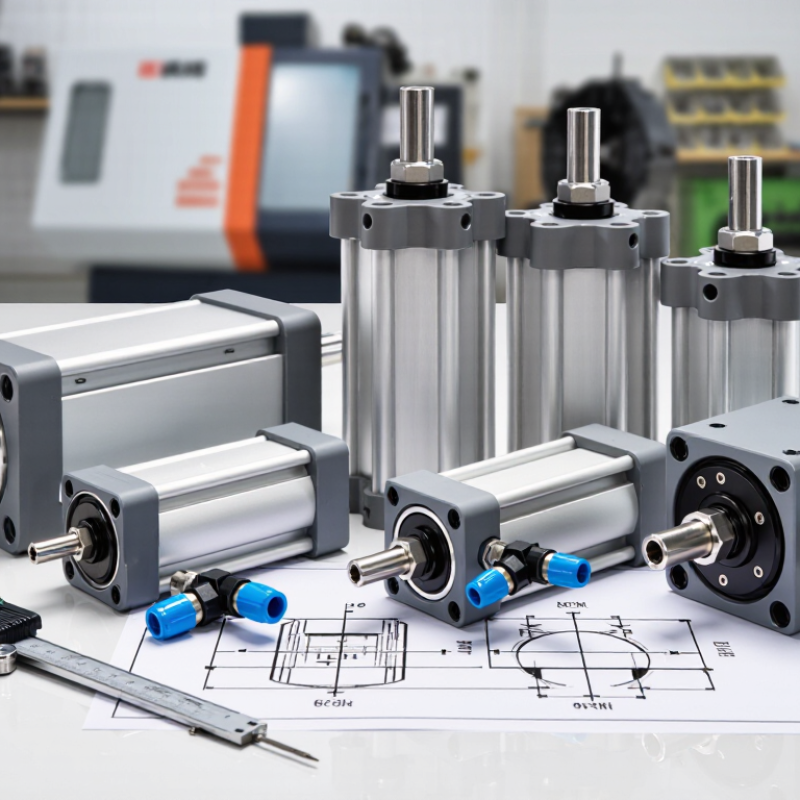
Pneumatic cylinders convert compressed air into controlled linear motion. In industrial equipment, they often move, clamp, press, lift, or position components. A typical cylinder contains a barrel, piston, rod, seals, and mounting hardware. Air entering one chamber pushes the piston forward. Exhaust air leaves through the opposite port. Double-acting designs provide motion in both directions, while single-acting designs use a spring for return movement. Small details matter here.
On packaging lines, cylinders guide cartons, stop conveyors, and operate folding mechanisms. In metalworking machines, they can clamp workpieces before cutting or drilling. Assembly systems use them to insert parts with repeatable force. Their clean operation suits areas where hydraulic oil could create contamination concerns. However, compressed air is not automatically efficient. Leaks, excessive pressure, and poor piping can increase energy use and slow movement.
Selecting a cylinder requires more than matching bore size. Engineers should check load weight, stroke length, operating pressure, speed, side loads, and mounting direction. A cushion mechanism can reduce impact near the stroke end. Rod alignment also deserves attention. I have seen premature seal wear caused by slight misalignment, not by defective materials. That experience is easy to overlook. Regular inspection should include air leaks, loose fittings, rod damage, and uneven motion. A practical test under real production conditions may reveal problems that calculations miss.
Before choosing a China-based pneumatic cylinder supplier, define the working conditions clearly. A cylinder is not selected by bore size alone. Record the required force, stroke length, operating pressure, cycle rate, and movement speed. Include the load direction and mounting position. A vertical application may need different guidance than a horizontal one. Small details matter.
Describe the environment around the cylinder. Note dust, moisture, temperature changes, cleaning chemicals, and outdoor exposure. Specify port threads, rod material, seal type, cushioning, and sensor requirements. If the cylinder operates near food, medicine, or sensitive equipment, state the required cleanliness level. A practical specification sheet should also show dimensions and acceptable tolerances. Do not rely on a product photo.
Ask suppliers for drawings, test records, material information, and traceability details. Confirm whether each unit is checked for leakage, stroke accuracy, and pressure performance. Request a sample under conditions close to your real machine. It may reveal slow retraction, unexpected noise, or weak cushioning. A neat quotation can still hide missing information. I would rather delay selection than approve an unsuitable cylinder for production. Suppliers should explain their inspection process, replacement policy, and expected delivery range in plain language. Forecasts are never perfect, so leave room for specification changes.
Selecting the right pneumatic cylinder starts with measurable requirements. The chart compares the theoretical extension force of common cylinder bore sizes at 6 bar operating pressure, helping buyers establish a practical specification before evaluating suppliers.
Calculated using F = P × A, where pressure is 6 bar and piston area is based on the listed bore diameter. Actual usable force will be lower because of friction, seals, load direction, pressure variation, and operating conditions.
Finding qualified pneumatic cylinder suppliers in China requires more than comparing online prices.
The International Federation of Robotics reported 276,288 industrial robot installations in China during 2023. This scale reflects strong automation capacity, but it does not prove cylinder quality. A polished website proves little.
Request ISO 9001 certification, material certificates, dimensional inspection records, and batch traceability. Check whether the supplier can control bore diameter, rod straightness, port accuracy, and seal compatibility. Ask for samples with your actual stroke, load, pressure, and operating temperature.
A capable factory should provide drawings, test results, and a clear nonconformity process. Visit the production line if possible.
Look for clean assembly benches, calibrated gauges, and labeled parts bins.
Use ISO 15552 or another applicable standard when dimensions must match existing equipment. The ISO Survey 2023 recorded more than 1.2 million ISO 9001 certificates in China, so certification alone cannot distinguish every supplier. This is easy to overlook.
Review certificate scope and issuing-body validity. Request a short endurance test, such as repeated cycles under working load, before approving bulk production. Confirm lead time, spare-seal availability, packaging, and warranty terms in writing.
I would also compare two suppliers using the same technical specification; otherwise, the cheaper quotation may simply exclude testing, surface treatment, or inspection. No checklist is perfect. A factory audit still needs technical judgment.
Choosing a top pneumatic cylinder supplier in China requires more than comparing prices. Product authenticity must be checked through traceable model numbers, clear labels, and consistent packaging. Ask for current technical drawings, material details, and inspection records. A dependable supplier should explain its factory location, production capacity, export history, and quality management process without hesitation. Vague answers deserve caution.
Quality becomes visible in small details. Check rod alignment, surface finish, seal installation, and port accuracy. Request dimensional reports and pressure-test records for the exact production batch. Independent inspection can verify performance before shipment. During factory visits, observe storage conditions, calibration labels, and worker procedures. I have found that clean assembly areas often reveal stronger process control, but appearance alone proves little. That assumption can fail.
Tips: Confirm certificates directly with the issuing organization. Match samples against approved drawings. Test several units, not only one. Record every request in writing. Ask how complaints are handled after delivery. A supplier may provide excellent samples yet struggle with repeat production. Allow time for a second audit, even when the first visit feels convincing. Supplier credibility is built through evidence, consistent communication, and measurable results.
Selecting a pneumatic cylinder supplier requires more than comparing catalog prices. A practical review examines pricing, customization, delivery, and after-sales support together. Begin with a written specification covering bore size, stroke, pressure, mounting style, seals, and working environment. Request itemized quotations, not one unexplained total. This reveals costs for fittings, testing, packaging, and replacement parts. The cheapest offer may become expensive when a small seal fails.
Customization should be measured against production evidence. Request a drawing, tolerance range, material details, and a sample inspection report. A capable supplier can explain why a corrosion-resistant rod or special port position is necessary. Avoid paying for unnecessary modifications. They add complexity. Check whether engineering changes receive revision control. This simple step prevents an outdated drawing from reaching the factory floor.
Delivery performance depends on more than the promised date. Confirm production time, inspection time, shipping method, and buffer stock. Ask how delays are communicated and documented. After-sales support should include troubleshooting procedures, spare-part availability, warranty terms, and response targets. Test this service before ordering by sending technical questions. Slow answers are useful evidence. No scorecard is perfect; suppliers can still miss deadlines or misunderstand drawings. A quarterly review of defect rates, response times, and delivered cost keeps decisions grounded in records rather than sales promises.
| Comparison Dimension | Standard Stock Supplier | OEM/ODM Supplier | Custom Engineering Supplier | Export-Focused Supplier |
|---|---|---|---|---|
| Typical product scope | Common ISO, mini, compact, and tie-rod cylinders using standard bore and stroke combinations. | Standard cylinders with private labeling, packaging, and selected dimensional changes. | Application-specific cylinders requiring special materials, mounting, sealing, or sensing arrangements. | Standard and customized cylinders supported by established export documentation and logistics processes. |
| Indicative unit price* | Approximately US$8–25 for common small and medium pneumatic cylinders. | Approximately US$10–35, depending on quantity, labeling, packaging, and specifications. | Approximately US$25–120 or more when special materials, coatings, or engineering work are required. | Approximately US$12–45, generally reflecting inspection, packaging, and export-service requirements. |
| Minimum order quantity | Often 1–20 pieces for available stock items. | Commonly 50–300 pieces for customized packaging or private-label orders. | Usually 10–100 pieces, subject to engineering and material requirements. | Often 20–200 pieces, with lower quantities possible for stocked specifications. |
| Customization capability | Limited to available bore, stroke, port, mounting, and sensor options. | Can normally adjust logos, labels, packaging, ports, stroke lengths, and selected mounting details. | Can support drawings, prototypes, non-standard dimensions, high-temperature seals, corrosion-resistant parts, and special rod finishes. | Provides customization with formal drawings, sample approval, inspection records, and export packaging controls. |
| Sample and prototype lead time | Typically 2–7 working days when the required model is in stock. | Typically 7–20 working days for modified or labeled samples. | Typically 15–45 working days, depending on design review, tooling, and testing. | Typically 5–20 working days, including documentation and pre-shipment checks. |
| Typical mass-production lead time | Approximately 7–15 working days for stocked or routinely produced items. | Approximately 15–30 working days after approval of drawings and samples. | Approximately 25–60 working days, depending on complexity and component availability. | Approximately 15–35 working days, excluding international transportation. |
| Quality-control documentation | Basic dimensional and functional inspection may be available on request. | Usually includes inspection standards agreed during the purchase order process. | More likely to provide drawings, material certificates, test reports, and traceability records. | Commonly provides packing lists, commercial invoices, inspection reports, and shipment photographs. |
| Warranty practice | Commonly 6–12 months against manufacturing defects. | Commonly 12 months, subject to correct installation and operating conditions. | Often 12–24 months when the application, maintenance, and operating limits are documented. | Commonly 12 months with a defined claim process and replacement-part arrangement. |
| After-sales response | Email-based support for product selection and basic troubleshooting. | Order-specific support, replacement coordination, and assistance with labeling or repeat orders. | Technical troubleshooting, failure analysis, drawing updates, and application consultation. | Dedicated export communication, claim handling, spare-parts coordination, and shipping support. |
| Best suited for | Urgent replacement purchases, maintenance orders, and low-volume testing. | Recurring private-label orders and distributors needing moderate customization. | Industrial automation projects with non-standard performance or installation requirements. | Overseas buyers prioritizing documentation, predictable delivery, and coordinated logistics. |
| Key verification points | Confirm actual stock, bore and stroke accuracy, seal material, port thread, and return terms. | Confirm approved drawings, sample consistency, minimum order quantity, and packaging specifications. | Confirm load calculations, cycle-life testing, pressure rating, environmental limits, and engineering-change control. | Confirm trade terms, export documents, packaging method, inspection scope, and delivery responsibility. |
*Price and lead-time figures are indicative China-market benchmarks for commonly specified pneumatic cylinders. Final quotations depend on bore, stroke, operating pressure, materials, seals, mounting configuration, order quantity, inspection requirements, shipping terms, and exchange rates. Confirm technical compatibility and commercial terms with each shortlisted supplier before ordering.