The Duravant family of operating companies serve the food processing, packaging and material handling segments.

Disposable Food Storage Containers are more than simple takeaway boxes. They help protect meals, manage portions, and keep sauces from leaking during delivery. For restaurant buyers, the challenge is choosing suppliers that can balance consistent quality, practical design, and dependable lead times.
The market is substantial. Grand View Research estimated the global disposable food service packaging market at USD 58.6 billion in 2023, with projected growth through 2030. This figure covers a broader category, not containers alone, so it should be treated as context rather than a direct measure of container demand. Still, it signals why supplier selection matters. A lid that fits poorly can spill soup across a delivery bag. A container that softens under heat can undermine an otherwise careful meal.
This guide examines China’s leading suppliers through product range, material options, customization, quality controls, and export experience. Small details count. Ask for samples, test lids with real foods, and confirm how suppliers handle repeat orders. A polished catalog is useful, but it is not proof of production consistency.
An expert quotation should be verified before publication. No source articles or attributable quotation were provided here, so assigning a statement to a named Disposable Food Storage Containers expert would risk inventing evidence. That gap matters. Buyers deserve clear sourcing, not confident-sounding claims.
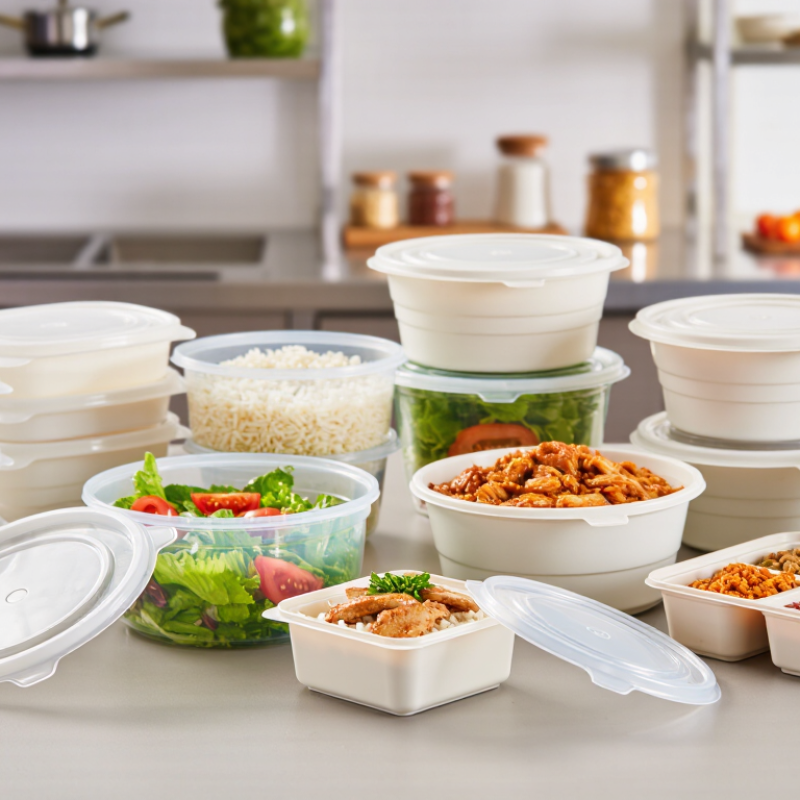
Disposable food storage containers are single-use vessels designed to hold, protect, and transport prepared food. Common options include paperboard, molded fiber, plastic, and aluminum. Each material suits different tasks. A lidded paper bowl may work for a dry lunch, while a sturdy, leak-resistant container is more practical for soup or sauced noodles. These containers appear in takeaway service, catering, bakeries, and meal preparation.
Convenient, but limited.
A container’s appearance does not confirm that it is suitable for hot, oily, acidic, frozen, or microwave-heated food. Check its product instructions before use, and avoid assuming every disposable container can handle heat. For safer handling, use clean hands, close the lid securely, and leave space rather than filling it to the rim.
A quick tilt over a sink can reveal a poor seal before transport. One detail is easy to overlook: packaging helps contain food, but it does not replace prompt refrigeration or careful temperature control.
Disposable containers also vary in strength, so a thin base may bend under a heavy meal. That small failure can make a lunch messy.
China’s disposable food storage suppliers commonly offer polypropylene (PP), polyethylene terephthalate (PET), paper, molded fiber, and aluminum containers. PP tubs are lightweight and often used for hot meals or takeaway portions. PET is clear, so salads and chilled foods remain visible on a shelf. Material choice should match the food’s temperature, oil content, and storage time.
Common formats include hinged clamshell boxes, rectangular meal trays, round deli tubs, soup bowls, and compartment containers. Suppliers often provide matching lids, either flat or raised, with some designs intended for stacking. A sample can reveal details a specification sheet misses: lids may loosen after repeated handling, or a tray may flex when filled. Small tests matter.
Paper and molded-fiber options are often chosen for meals where a natural, matte appearance is preferred. Their performance varies with coatings, moisture, and sauces, so check how a sample behaves with the actual menu. Aluminum trays suit oven-ready portions, while clear PET containers work well for cold display. Not every format fits every food. A practical request to suppliers includes dimensions, material thickness, lid fit, and the intended filling temperature. Be specific. The best-looking container may not be the easiest to stack or seal in daily use.
China’s disposable food container supplier market is organized around several connected roles. Upstream material processors supply paperboard, molded fiber, and food-grade plastics. Converters cut, form, coat, or seal these materials into bowls, trays, clamshells, and lids. Some factories specialize in one process; others operate several production lines.
Regional clusters often bring factories, packaging suppliers, printing shops, and freight services close together. This can shorten sampling and replenishment cycles. Export-oriented trading companies may coordinate mixed orders, documentation, and shipment planning, while manufacturers sometimes handle these tasks directly. The distinction is not always obvious. It can be messy. A supplier’s website may show production, but buyers should confirm which steps happen in-house.
For a practical assessment, request product specifications and samples made through the process intended for your order. Check rim fit, stacking stability, leakage resistance, and performance with the actual food temperature and holding time. Ask how the supplier tracks batch consistency and handles defects. A polished sample is useful, but it does not prove every shipment will match. Capacity, lead time, and customization can vary by material and season, so confirm details in writing before placing a large order.
| Market Dimension | Supplier Segment | Typical Products or Services | Common Buyers | Practical Sourcing Checks |
|---|---|---|---|---|
| Manufacturing role | Direct manufacturers and packaging converters | Forming, molding, cutting, printing, or assembling containers and lids; some suppliers handle several production steps in-house. | Importers, food-service distributors, restaurant groups, and retailers | Confirm which processes are performed in-house, production capacity, quality-control procedures, and whether samples match production specifications. |
| Trading and export services | Exporters and sourcing intermediaries | Product sourcing, consolidated shipments, export documentation, and communication across multiple factories. | Smaller importers and buyers purchasing mixed product ranges | Identify the actual manufacturing site, clarify who controls quality, and verify responsibility for product documents and shipment claims. |
| Plastic materials | Rigid and flexible plastic-container suppliers | Common materials include polypropylene (PP) and polyethylene terephthalate (PET), used for different container and lid designs. | Takeaway operators, meal-prep businesses, supermarkets, and food processors | Check the exact resin and intended use. Microwave suitability depends on the specific product design and labeling; PET containers should not be assumed to be microwave-safe. |
| Paper and molded-fiber materials | Paperboard and molded-fiber packaging suppliers | Paper-based bowls, trays, and boxes; molded-fiber formats may use plant-fiber pulp. Barrier coatings or linings can affect end-of-life options. | Caterers, food-service distributors, takeaway businesses, and retailers | Ask about grease and moisture resistance, coating composition, temperature limits, and whether local recycling or composting facilities accept the finished item. |
| Product format | Standard-stock and custom-format suppliers | Round or rectangular tubs, bowls, trays, hinged boxes, compartment containers, and matching lids. | Restaurants, meal-kit providers, central kitchens, and food retailers | Compare usable capacity, dimensions, lid fit, stacking stability, leak resistance, and compatibility with filling or sealing equipment. |
| Customization and order model | Private-label and made-to-order suppliers | Custom dimensions, colors, printing, packaging, or tooling may be available; requirements vary by material and production method. | Brands, wholesalers, and buyers with established packaging specifications | Request written details for minimum order quantity, tooling charges, sample approval, lead time, artwork proofing, and ownership of custom molds. |
| Sales channel | Factory-direct, export, and domestic distribution channels | Direct production orders, export orders, or smaller-volume purchases through packaging distributors. | Importers, regional wholesalers, food-service operators, and local retailers | Compare total landed cost, order quantity, payment terms, delivery schedule, freight arrangements, and after-sales support—not just unit price. |
| Food-contact documentation | Suppliers serving regulated destination markets | Product specifications, material declarations, and test documentation relevant to the intended food-contact use and destination market. | Importers, retailers, food manufacturers, and institutional buyers | Match documents to the exact product, material, color, and intended use. Confirm applicable destination-market requirements with the importer or qualified compliance professional. |
| Quality and logistics | Suppliers with export packing and shipment coordination | Carton packing, palletization, production inspection, and shipment coordination, depending on the supplier’s capabilities. | Overseas distributors and high-volume buyers | Agree on inspection criteria, tolerances, carton count, protective packing, shipping terms, and procedures for handling defects or shortages. |
Note: Supplier capabilities, minimum order quantities, product performance, and compliance documentation vary by factory and product specification. Verify details against samples and current destination-market requirements before placing an order.
When comparing Chinese disposable food storage container suppliers, begin with the container’s actual use: hot meals, chilled produce, sauces, or takeaway portions. Ask for material specifications, wall thickness, dimensions, lid fit, and temperature limits. A sample filled with soup can reveal leaks that a polished catalogue photo cannot. Small details matter.
Check documentation carefully. Request relevant food-contact test reports and confirm that product names, materials, and dates match the items being quoted. Requirements vary by destination, so buyers should verify documents against their own market’s rules. Compare minimum order quantities, tooling charges, production lead times, carton counts, and shipping terms—not just the unit price. A low quote can become expensive when freight or packaging changes.
Then test consistency. Order samples from more than one production batch when possible, and inspect sealing, stacking, odor, and clarity under normal handling. Ask how defects are recorded and what happens if a shipment misses agreed specifications. A video call or factory visit may help, but it is not proof by itself. I would not pretend every supplier comparison fits a neat scorecard; communication can feel strong before production starts, then falter. Keep written specifications and compare responses against the same checklist.
A practical starting-point weighting for evaluating suppliers. It focuses on food-contact compliance, product performance, quality control, supply capability, and commercial terms—not on any specific company or brand.
How to use it: Score each supplier against the same criteria and adjust the weights to match your product and destination market. These percentages are suggested buyer-set priorities, not survey results or market statistics. Verify applicable food-contact rules and request supporting documentation for the intended material and market.
When comparing China-based disposable food container suppliers, check the exact material, intended food types, and temperature limits. A container tested for cold meals may not suit hot soup or microwave use. Ask for migration-test reports that match the finished product, not just a raw-material sample. Check the laboratory, test date, sample description, and destination-market requirements. For China-made products, review applicable GB 4806 food-contact standards alongside the rules in your sales market. A certificate is not proof that every batch is consistent.
Request batch traceability, material declarations, and a certificate of analysis, then compare them with purchase specifications. Inspect lids, rims, and seams for leaks, sharp edges, odor, and warping. Check every lot. An audit can show factory controls, but it cannot guarantee each shipment is identical. OECD’s 2022 Global Plastics Outlook estimates that packaging accounted for 40% of plastic waste in 2019. That figure makes material composition and clear disposal claims worth verifying, not merely accepting from a catalog. Buyers should retain samples and records, especially after changing colors, additives, or production sites. Small details matter.