The Duravant family of operating companies serve the food processing, packaging and material handling segments.

Choosing among China’s top 10 Stainless Steel Mesh Sheet manufacturers requires more than comparing polished websites. Buyers need dependable evidence, practical experience, and clear technical information. A strong supplier should explain wire diameter, aperture size, mesh count, material grade, surface finish, and production tolerance.
This guide examines manufacturers through measurable factors, including factory capability, quality control, export experience, customization support, and customer communication. It also considers whether suppliers provide material certificates, inspection reports, samples, and traceable production records. These details matter. A 304 stainless steel mesh may suit general filtration, while 316 or 316L can offer better resistance in chloride-rich environments. The correct choice depends on the application.
Real projects reveal more than brochures. A buyer may need a tightly woven sheet for laboratory filtration, a rigid panel for screening, or a cut-to-size piece for industrial equipment. Each use requires different strength, opening accuracy, and finishing standards. Packaging also matters when sheets travel long distances. Bent edges or surface contamination can create avoidable losses.
No ranking can fit every purchasing situation. That is worth remembering. Some manufacturers may excel at large-volume orders, while others respond better to prototypes or unusual specifications. This overview therefore focuses on verifiable strengths rather than exaggerated claims. Readers should still request current quotations, samples, compliance documents, and production photographs before placing an order. Careful comparison is slower, but usually safer. Small details often decide whether a mesh sheet performs reliably after installation.
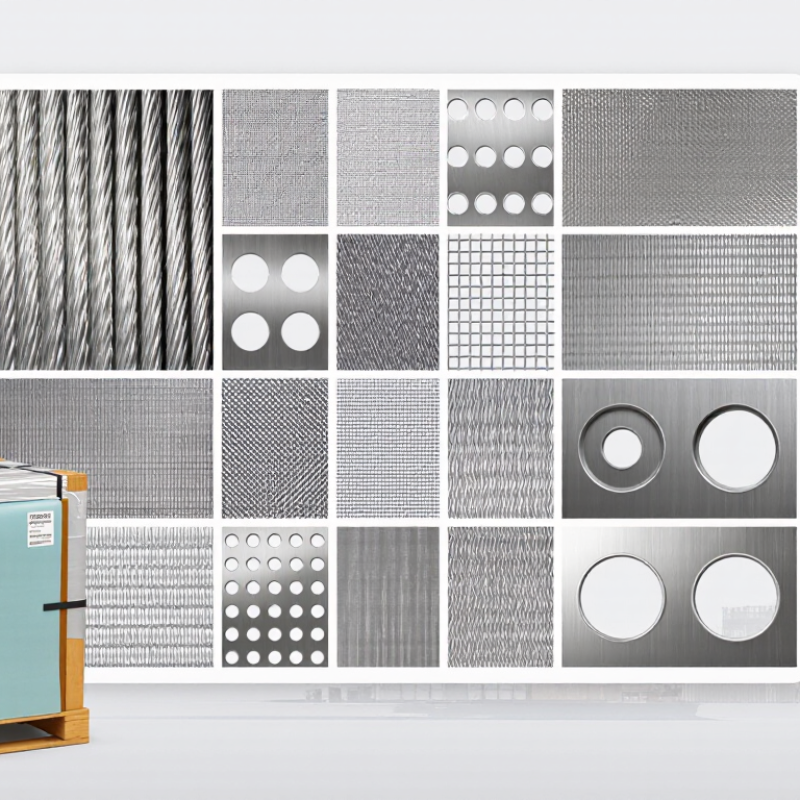
Stainless steel mesh sheet is a flat metal screen made from corrosion-resistant stainless steel wire. Manufacturers produce it through weaving, welding, or perforating, depending on the required opening pattern. Common grades include 304 and 316, while 316 performs better in chloride-rich environments. Wire diameter and aperture size control filtration accuracy, airflow, strength, and weight. Small openings can trap fine particles, but they may reduce flow noticeably.
The World Stainless Association reported global stainless crude steel production at about 58.4 million tonnes in 2023. This scale supports wide mesh applications across filtration, food processing, chemical equipment, mining, construction, and architectural screens. In practice, stainless mesh sheet can appear inside a liquid filter or across a sunshade façade. It also supports machine guards and drying trays. A 2024 industrial filtration market assessment identified water treatment and process industries as important demand areas. Yet selection is not simply about choosing the finest mesh. Salt exposure, temperature, cleaning chemicals, and mechanical load must be checked together. A common mistake is treating 304 and 316 as interchangeable. They are not. Even a well-made sheet can fail when the opening tolerance or edge treatment is ignored. Supplier samples, material certificates, and dimensional inspection remain valuable when comparing Chinese manufacturers.
China’s top 10 stainless steel mesh sheet manufacturers should be evaluated by evidence, not factory size alone. The World Stainless Association reported global crude stainless steel production of about 58.4 million tonnes in 2023. China supplied the largest share. This scale improves material access, but it does not guarantee consistent mesh quality.
A reliable evaluation starts with alloy verification, aperture accuracy, wire diameter, flatness, and surface condition. Buyers should request mill certificates, heat numbers, and independent test results. ISO 9044 defines technical requirements and testing for industrial woven wire cloth. ASTM E2016 also provides guidance for stainless steel wire cloth inspection. These references help compare suppliers using the same language. Practical audits should include sample cutting, microscope measurement, and repeated aperture checks. A manufacturer with stable results across batches deserves more trust than one offering only a low quotation.
Production capacity matters, but traceability matters more. Check whether each sheet links to a material certificate, inspection record, and packing label. Export experience can indicate process maturity, though shipment volume alone is an imperfect measure. I would not rank suppliers from online photos. Images hide warped edges, blocked openings, and uneven welding. Some evaluations also overlook after-sales response, which can delay an entire project.
Tips: Ask for three recent inspection reports, not one. Compare actual test values with ISO 9044 requirements. Visit the facility when tolerance is critical.
This chart presents a practical procurement-weight framework for evaluating stainless steel mesh sheet manufacturers. The criteria reflect common technical, quality-control, compliance, and supply-chain requirements used in industrial sourcing. It does not rank or disclose any company or brand data.
Evaluation weights total 100%. Material compliance and mesh accuracy receive the highest weighting because they directly affect corrosion resistance, filtration performance, dimensional stability, and product reliability.
Who are the top 10 stainless steel mesh sheet manufacturers in China? A dependable answer should rely on factory evidence, not advertising claims. The leading suppliers usually operate their own weaving, welding, cutting, and inspection workshops. They can provide mill certificates for stainless steel grades such as 304, 316, and 316L. Their production records should show wire diameter, aperture tolerance, sheet flatness, and edge quality.
Strong manufacturers also handle different mesh structures. These include woven square mesh, welded mesh, perforated mesh, and expanded metal sheet. Experienced factories can recommend a suitable opening size for filtration, ventilation, screening, or architectural use. They should explain how corrosion exposure changes material selection. A coastal project may need 316L, while a dry indoor application may not.
Ask each candidate for recent samples. Check whether the aperture stays consistent near the sheet edges. Inspect burrs, weld points, surface marks, and protective packaging. Reliable suppliers normally share inspection reports and traceable batch details. They also clarify minimum order quantities, tooling costs, production time, and export packing.
Not every large factory is suitable. Some have impressive equipment but weak communication or inconsistent quality control. That matters. My own assessment would compare at least ten qualified Chinese manufacturers through samples, audits, and reference checks. A ranking should remain flexible because capacity, lead time, and material prices change. One overlooked detail can affect the entire installation.
China’s top stainless steel mesh sheet manufacturers compete through products, standards, and dependable technical service.
World Stainless reported global stainless crude steel production near 60 million tonnes in 2023. That scale supports broad material choices, but volume alone proves little.
Common products include plain-weave, twill-weave, Dutch-weave, welded mesh, and perforated sheets. Grades such as 304, 316L, 310S, and 904L serve filtration, architecture, food equipment, and chemical processing.
ISO 9044:2016 defines requirements for industrial woven wire cloth. ASTM E2016 covers industrial wire cloth specifications.
Serious suppliers should provide material certificates, aperture reports, wire-diameter checks, and batch traceability. Small details matter.
Services often include CAD confirmation, custom widths, edge reinforcement, cutting, forming, surface cleaning, and sample testing. Some factories also offer passivation and independent laboratory inspection.
Grand View Research identifies construction, automotive, and industrial equipment as important stainless steel demand sectors. That explains the need for stable tolerances and repeatable production.
However, a polished certificate is not proof of consistent quality. Buyers should compare actual test results, not attractive brochures.
One weakness remains: published reports rarely show rejection rates or long-term field performance. A careful buyer should request samples, inspect openings under magnification, and verify corrosion resistance for the intended environment.
Performance depends on installation, cleaning, and exposure conditions too. Be specific.
Selecting a reliable Chinese stainless steel mesh sheet manufacturer requires more than comparing prices. Buyers should verify material certificates, mesh count, wire diameter, sheet thickness, and dimensional tolerances. A dependable supplier can explain these details clearly and provide inspection records from production batches.
Request samples before placing a large order. Check the sheet under bright light. Look for uneven openings, loose wires, rough edges, or surface discoloration. Ask how the material is stored, cut, packed, and traced. Stainless steel grades should match the intended environment, especially where moisture, heat, or chemicals are present. Independent testing can confirm chemical composition and tensile performance. It costs more, but it may prevent expensive replacement work.
Tips: Visit the factory online or in person, and ask for a live production walkthrough. Confirm equipment, quality checkpoints, lead times, and corrective procedures. A polished website can still hide weak process control. I have seen buyers focus too heavily on quotations and overlook packaging damage or inconsistent roll tension. Communication matters too. Reliable manufacturers answer technical questions directly and admit limitations. Ask for a written quotation with specifications, tolerances, sample approval terms, and shipment conditions. Do not accept vague promises. Even a careful selection can have small uncertainties, so record every requirement before production begins.
| No. | Selection Dimension | Reliable Manufacturer Benchmark | Documents or Data to Request | Recommended Buyer Verification |
|---|---|---|---|---|
| 1 | Stainless Steel Grade | The manufacturer should clearly identify grades such as 304, 304L, 316, or 316L according to the application, corrosion environment, temperature, and forming requirements. | Material certificate, chemical composition report, heat number, and product marking records. | Compare the certificate grade and heat number with the purchase order and, where necessary, arrange independent alloy verification. |
| 2 | Applicable Wire Cloth Standard | Industrial woven wire cloth should be manufactured and inspected with reference to recognized standards such as ISO 9044 or ASTM E2016. | Quality-control procedure, inspection checklist, and standard referenced in the quotation or technical specification. | Confirm whether the stated standard covers mesh count, aperture, wire diameter, tolerances, and inspection methods. |
| 3 | Mesh Count and Aperture | The supplier should be able to produce commonly requested square, plain-weave, twill-weave, and Dutch-weave specifications with controlled aperture dimensions. | Mesh-count records, aperture measurement results, sample photos, and a dimensional inspection report. | Measure the sample with a calibrated optical instrument or microscope instead of relying only on visual inspection. |
| 4 | Wire Diameter Control | Wire diameter should match the approved specification because it directly affects open area, strength, filtration accuracy, and finished weight. | Wire-diameter range, calibration records, incoming-wire inspection data, and finished-product test results. | Check several positions across the sheet or roll, including the edges, and compare readings with the approved tolerance. |
| 5 | Dimensional Accuracy | The manufacturer should control sheet length, width, flatness, squareness, roll length, and edge condition according to the agreed drawing or purchase specification. | Final inspection report, measuring-tool calibration records, packing list, and approved dimensional drawing. | Use a sampling plan based on order size and inspect both the first article and random production pieces. |
| 6 | Mechanical Integrity | Mesh should have stable weaving, consistent tension, secure selvage, limited broken wires, and no unacceptable deformation during handling. | Visual inspection standard, tensile or strength test data where applicable, and nonconformance records. | Inspect the weave under magnification and perform a handling test on sample sections before approving mass production. |
| 7 | Surface Cleanliness and Corrosion Protection | The surface should be free from oil, loose particles, rust contamination, and serious weaving marks. Passivation or cleaning requirements should be defined when required by the application. | Cleaning procedure, passivation specification if applicable, surface inspection report, and packaging protection method. | State whether the mesh will be used in food processing, chemical service, filtration, or outdoor environments and approve the surface condition accordingly. |
| 8 | Traceability and Quality System | A reliable factory should maintain traceability from stainless steel wire input through weaving, inspection, packing, and shipment. An ISO 9001-based quality system is a useful management indicator. | Quality certificate, batch number, production records, corrective-action procedure, and inspection traceability documents. | Verify that the certificate is valid and that batch records can be linked to the actual shipment rather than only to a company profile. |
| 9 | Sampling, Testing, and Pre-Shipment Inspection | The supplier should accept pre-production samples, first-article approval, agreed acceptance criteria, and independent or buyer-appointed inspection when required. | Approved sample, inspection and test plan, certificate of conformity, inspection report, and sample-retention policy. | Put mesh count, wire diameter, aperture, dimensions, material grade, quantity, and defect limits directly into the purchase contract. |
| 10 | Packaging, Logistics, and Commercial Reliability | Sheets should be protected against bending, moisture, contamination, and impact. Rolls should be securely wrapped and labeled with specification, quantity, batch, and destination details. | Packaging photos, packing specification, shipping marks, lead-time commitment, and records of export documentation. | Request a packaging sample or detailed photos, confirm Incoterms and lead time, and use a written procedure for handling shortages or transit damage. |