China Best Industrial Drone Manufacturers for Global Buyers?
China has become an important source of industrial drones, serving buyers who need platforms for surveying, inspection, mapping, agriculture, and infrastructure work. Yet a polished product page does not prove that a manufacturer can deliver consistent quality. Global buyers need to look beyond advertised flight time and compare payload capacity, battery performance, control systems, spare-part availability, and technical support. Small details matter: a replacement arm shipped quickly can keep a field team working, while unclear maintenance instructions can delay a project.
This guide examines how to assess Chinese Industrial Drone manufacturers and what to verify before requesting a quotation. It considers production experience, product testing, customization, documentation, and after-sales service, while recognizing that capabilities vary between suppliers. Buyers should confirm specifications against current product documents and check that equipment meets requirements in their intended market. That step is easy to overlook. A low price may be attractive, but it cannot tell you how a drone performs in wind, how long repairs take, or whether a supplier responds when operations stop. No single manufacturer suits every use case. The right choice depends on the mission, operating environment, and support the buyer can actually access. Some details remain uncertain until tested firsthand, so a sample evaluation or technical discussion can reveal gaps that a brochure will not.
What Defines an Industrial Drone Manufacturer in China
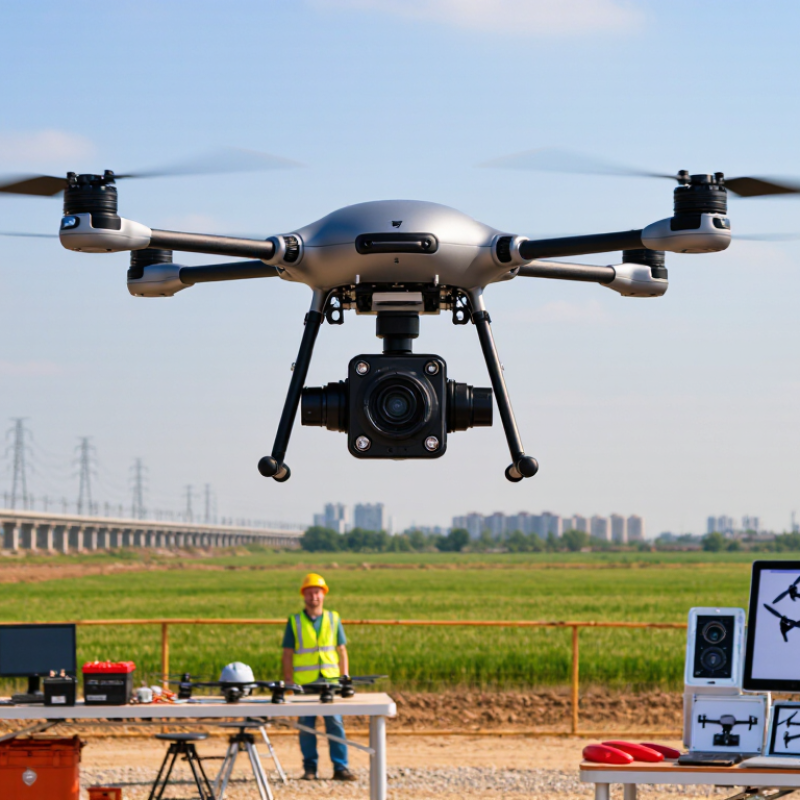
An industrial drone manufacturer in China is more than an aircraft assembler. It designs the airframe, propulsion, flight controls, payload integration, and ground software as a working system. Buyers should ask how performance changes with a real payload, not just an empty aircraft. A camera, thermal sensor, or mapping unit adds weight and shifts flight time. Small details matter.
Manufacturing capability shows in repeatable tests and traceable components. Ask for payload-endurance records, battery-cycle results, environmental test conditions, and maintenance intervals. See the inspection process. A reliable supplier can explain what happens when a motor, battery, or data link fails in the field. Service plans matter too: spare parts, repair times, software updates, and operator training should be clear. A polished demonstration is not proof of dependable production.
The CAAC’s 2023 Statistical Bulletin of Civil Aviation Industry Development recorded 1.267 million registered civil unmanned aircraft in China. It also reported 23.11 million flight hours. These figures cover civil aircraft broadly, not industrial fleets alone, but they show the scale of the operating environment. For global buyers, ask whether the manufacturer can provide consistent documentation and support across shipments. No supplier is flawless. A candid answer about limits may be more useful than a perfect-looking brochure.
Key Industrial Drone Applications Across Global Markets
Across global markets, industrial drones support work that is difficult, repetitive, or costly to inspect on foot. In agriculture, operators can map crop variation and check irrigation lines across large fields. Multispectral images may reveal uneven plant growth, but they still need careful interpretation. Aerial views are useful, not infallible.
Energy and construction teams use drones to inspect solar panels, wind turbines, roofs, and active worksites. A close image can help locate a damaged panel or track site changes without sending a worker onto a difficult surface. In mining, aerial surveys can document terrain and material movement. Results depend on camera quality, flight planning, and consistent data processing. Small details matter.
Emergency services may use drones to assess flood damage or locate blocked access routes, subject to local permissions and operating rules. In remote regions, they can also support time-sensitive delivery of approved medical supplies. Yet battery limits, wind, and poor communications can disrupt a carefully planned flight. That gap matters. Buyers should compare payload, endurance, weather tolerance, data security, and available operator training against the actual task. The best specification on paper may not fit a muddy field, a coastal gust, or a crowded worksite.
How to Evaluate Chinese Industrial Drone Manufacturers
When evaluating Chinese industrial drone manufacturers, look beyond polished product sheets. Ask how the aircraft performs with your actual payload, route, and working conditions. A camera drone tested in a calm field may behave differently near dust, rooftop turbulence, or repeated takeoffs. Request test records with dates, payload weights, flight duration, and environmental conditions. Specific evidence is more useful than broad claims.
Inspect the production process, not only the finished aircraft. Ask how components are tracked, how defects are recorded, and whether each unit receives a documented flight test. Check battery handling, spare-part availability, and repair procedures. Small details matter: Can a technician identify a motor fault quickly? Are replacement parts listed with realistic lead times? A neat brochure can still hide gaps.
Technical support deserves equal scrutiny. Confirm response times, training options, warranty terms, and the language used for manuals and remote assistance. Speak with customers using similar equipment, and ask what failed during their first months of operation. One demonstration is not proof; wind, dust, and operator habits change results. A limited pilot can expose weaknesses, though it may not reveal every issue. Record unanswered questions before comparing suppliers.
How to Evaluate Chinese Industrial Drone Manufacturers
Check enclosure protection claims against the IP code defined by IEC 60529.
The chart shows the highest numeral in each part of the IP code: 6 for protection against solid objects and dust, and 9 for protection against water. These are separate test scales, not directly comparable performance scores. Ask manufacturers for the exact IP rating and supporting test documentation for the complete drone configuration.
Leading Chinese Manufacturers and Their Core Capabilities
Chinese industrial-drone manufacturers vary widely in their strengths. Some focus on multirotor platforms for close-range inspection; others build fixed-wing aircraft for longer surveys. Core capabilities often include flight-control systems, mapping sensors, thermal cameras, and software that turns field data into usable reports. Buyers should ask for evidence of performance in conditions resembling their own sites, not just studio demonstrations.
The Civil Aviation Administration of China reported 1.267 million registered civil unmanned aircraft and 23.11 million flight hours in 2023. This scale points to growing operational experience, but it does not prove every supplier is equally mature. A capable manufacturer should explain payload limits, battery performance in cold or windy conditions, maintenance intervals, and data-security practices. Look for clear test records and responsive technical support. A polished brochure proves little. Even detailed specifications can leave real-world questions unanswered.
Tips: Request a sample inspection report and a supervised demonstration. Check how quickly the supplier provides replacement parts and software updates. Small details matter. Compare the complete operating cost, not only the aircraft price.
Export, Certification, and After-Sales Support for Global Buyers
For global buyers, export readiness starts before the aircraft leaves the factory. Ask for a complete packing list, commercial invoice, serial-number records, and product specifications that match the shipment. Check which conformity documents apply in the destination market; requirements vary by country and intended use. A certificate alone may not cover every configuration. Details matter.
Battery transport deserves special attention. Confirm that the supplier can provide relevant test summaries, packaging information, and carrier-ready documents for the exact battery model. Request lead times for replacement batteries, motors, propellers, and control components, not just the aircraft. Customs delays can turn a small paperwork mismatch into weeks of downtime. Paperwork can lag.
After-sales support should be measurable. Agree on response hours, diagnostic steps, warranty exclusions, and escalation contacts before placing an order. Ask whether remote troubleshooting is available and what technicians need, such as flight logs, error codes, and clear photos. A capable supplier should explain software updates and operator training in plain language. One gap is often overlooked: spare-part availability may differ between the sales promise and local stock. Put availability and repair timelines in writing, then compare them with your operating schedule. This is less elegant, but safer.