Why is Carbon Extrusion Essential for Your Business Needs?
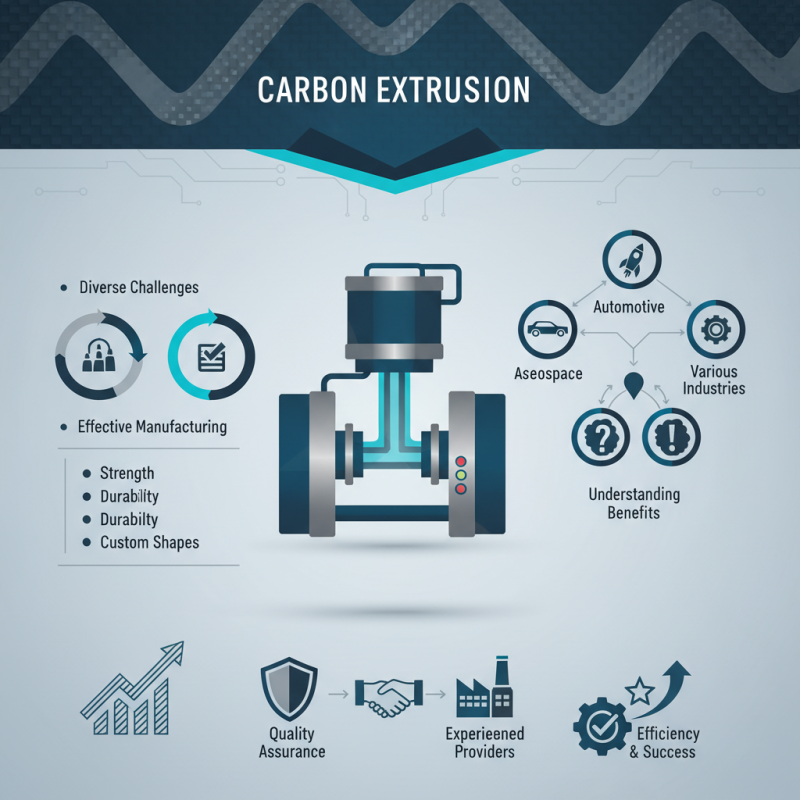
In today’s competitive market, businesses face diverse challenges. Among these, finding effective manufacturing solutions is crucial. Carbon Extrusion offers a valuable answer to many production needs. This process creates custom shapes and profiles with precision. It uses carbon-based materials, which provide strength and durability.
Many industries rely on Carbon Extrusion. From automotive to aerospace, the applications are vast. Manufacturers appreciate the efficiency and quality of extruded products. Not every business understands its benefits, though. This gap can lead to missed opportunities. While Carbon Extrusion is powerful, it requires skilled expertise. Improper application can result in wasted materials and resources.
Investing in Carbon Extrusion is a step toward innovation. It enables businesses to customize products that meet specific demands. Quality assurance is vital in this process. Companies should partner with experienced providers to maximize results. Understanding the intricacies of Carbon Extrusion is essential. Businesses must evaluate their needs carefully. The right choice can drive efficiency and success.
Importance of Carbon Extrusion in Industrial Applications
Carbon extrusion plays a crucial role in various industrial applications. It enables manufacturers to create complex shapes from carbon materials with precision. According to a report by Allied Market Research, the global carbon extrusion market is expected to reach $5.2 billion by 2027. This highlights the growing importance of carbon extrusion in meeting diverse business needs.
In industries like automotive and aerospace, carbon extrusions are vital. They allow for lightweight yet strong components, improving fuel efficiency. Studies reveal that carbon fiber components can reduce vehicle weight by up to 40%. This significantly enhances performance while reducing emissions. However, cost concerns and manufacturing difficulties may challenge some businesses.
Moreover, extrusion processes lead to materials with enhanced durability. A report from Research and Markets states that carbon extruded products have a lifespan exceeding 25 years in harsh environments. Despite these advantages, companies must consider factors like material sourcing and processing techniques. These decisions can impact overall quality and sustainability.
Key Benefits of Using Carbon Extrusion for Production Efficiency
Carbon extrusion plays a vital role in enhancing production efficiency across various industries. This process allows manufacturers to shape carbon materials into precise forms, which can dramatically reduce waste. According to a report from the American Institute of Chemical Engineers, carbon extrusion can lead to material savings of up to 30%. Such efficiency is crucial in today's competitive market, where cost-reduction and sustainability are prioritized.
Utilizing carbon extrusion technology improves product consistency and quality. Research by the Plastics Industry Association highlights that companies implementing this process report a 25% increase in product uniformity. Achieving this level of precision fosters trust among clients and can enhance brand reputation. Carbon extrusion's ability to produce complex shapes also opens new avenues for product development, allowing businesses to innovate continuously.
Despite these advantages, some organizations encounter challenges in fully transitioning to carbon extrusion. Technical expertise and equipment investments are critical for success. A report by the Manufacturing Institute indicates that nearly 40% of companies struggle with the implementation phase. However, this method's long-term benefits—reduced production times and enhanced product performance—underscore its importance in advancing industrial practices.
Statistics on Cost Savings Through Carbon Extrusion Processes
Carbon extrusion is increasingly recognized for its cost-saving potential. Businesses leverage this process to create lightweight, durable products. A recent study highlighted that companies can save up to 30% in material costs through efficient carbon extrusion techniques. This significant reduction can enhance overall profitability.
Moreover, the carbon extrusion process minimizes waste. By optimizing material use, businesses reduce scrap and energy consumption. A survey showed that 60% of firms reported lower operational costs after adopting these techniques. This trend indicates a shift towards sustainable practices, aligning with environmental goals.
However, some challenges remain. The initial investment in technology can be high. Smaller businesses may struggle to adopt these methods fully. Each company must weigh its options carefully. The balance between upfront costs and long-term savings is crucial for informed decisions.
Impact of Carbon Extrusion on Sustainability and Eco-Friendliness
Carbon extrusion plays a vital role in promoting sustainability and eco-friendliness. By transforming raw materials into usable products, carbon extrusion significantly reduces waste. According to a recent study, companies that adopt carbon extrusion can lower their carbon footprint by up to 30%. This reduction not only helps the environment but also enhances a company’s reputation.
Moreover, carbon extrusion optimizes resource usage. It allows businesses to produce lightweight components that are just as strong as heavier alternatives. This efficiency translates into lower energy consumption during transportation. Data shows that lightweight materials can lead to up to 15% savings in fuel costs for logistics.
Tip: Implementing carbon extrusion requires careful planning. Ensure your materials are sourced sustainably.
Investing in eco-friendly technologies is a long-term strategy. Companies that embrace these practices tend to attract environmentally conscious consumers. A survey indicated that 70% of consumers prefer products made with sustainable methods.
Tip: Regularly assess your production processes for sustainability. An audit can reveal areas for improvement.
Case Studies: Successful Implementations of Carbon Extrusion in Industries
Carbon extrusion has proven essential across various industries, showcasing its versatility and effectiveness. In construction, a leading firm applied carbon extrusion to create lightweight yet sturdy components. This decision reduced material costs significantly. They reported a 30% increase in efficiency, transforming their production line. However, they faced initial challenges in calibrating the machinery for precise measurements.
Another compelling case arose in the automotive sector. A small manufacturer introduced carbon-extruded parts into their designs. These parts offered enhanced durability while remaining cost-effective. Despite the benefits, they encountered issues with material consistency in early batches. Adjustments were made to the extrusion process, leading to improved quality and performance.
In the packaging industry, innovation thrived when a business used carbon extrusion for eco-friendly solutions. They developed biodegradable packaging, which resonated with environmentally conscious consumers. Although they achieved product development success, initial reactions from the market were mixed. The company learned to refine their messaging to underscore material advantages and environmental impact.