2026 Top Modular Trade Show Booth Trends for Global Buyers
Global buyers are entering 2026 with higher expectations for speed, flexibility, and measurable value. The Modular Trade Show Booth is no longer only a reusable structure. It is becoming a practical brand platform, built for changing venues, shipping limits, and regional audiences.
UFI’s Global Exhibition Barometer continues to report strong exhibition activity, while its Global Economic Impact study confirms exhibitions generate significant business connections worldwide. CEIR research also shows that exhibitors increasingly judge events through lead quality, audience fit, and measurable results. These findings support a clear direction: modular systems must do more than look attractive under bright hall lighting. They should support fast assembly, consistent branding, accessible product demonstrations, and simple technology upgrades.
Sustainability is also becoming harder to ignore. The Global Association of the Exhibition Industry identifies resource efficiency and waste reduction as important industry priorities. Reusable frames, replaceable graphics, and compact shipping cases can reduce repeated material use. However, “green” claims need evidence. A recycled graphic alone does not prove a lower total impact.
Visitors want useful experiences.
Freeman’s event research has repeatedly highlighted the value of meaningful interaction, not passive viewing. That insight matters when designing a 2026 booth. A buyer may enter through a narrow aisle, scan a code, test a product, and leave within three minutes. Every detail must work quickly. Some forecasts may overstate the role of immersive technology. Human conversation still closes many opportunities.
This guide examines the leading 2026 Modular Trade Show Booth trends for global buyers, using industry research, practical experience, and careful attention to real-world constraints.
What Modular Trade Show Booths Are and Why They Matter in 2026
What Modular Trade Show Booths Are and Why They Matter in 2026
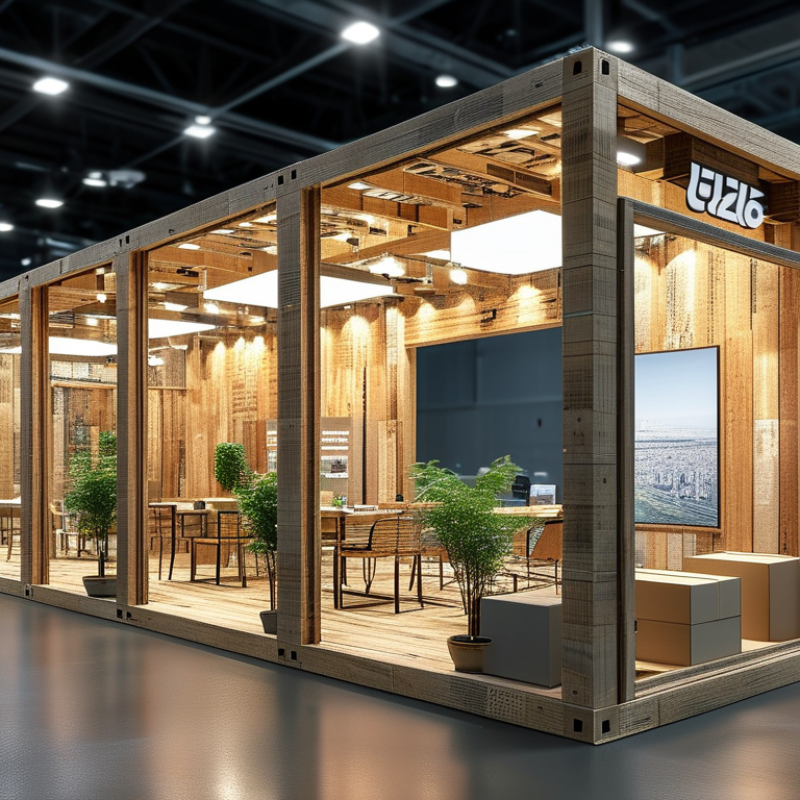
A modular trade show booth uses repeatable frames, panels, lighting, and graphics. Teams can reconfigure these parts for different floor plans, markets, and budgets. Unlike a custom-built stand, it does not begin from zero at every event. That practical difference matters when deadlines tighten. In UFI’s 2025 Global Exhibition Barometer, 53% of respondents expected exhibition activity to grow during 2025. More activity often means more venues, shipping schedules, and operational pressure. Modular systems help exhibitors respond with fewer redesigns and less material waste.
The structure also supports measurable visitor experiences. A company can move a meeting counter, widen a product zone, or add storage without rebuilding the entire booth. CEIR’s 2024 exhibition industry research continues to show strong business value from face-to-face events, especially for lead generation and relationship development. A modular booth gives those conversations a stable setting. Clear sightlines matter. So does a quiet place for serious discussion. However, modular does not automatically mean distinctive. Poorly planned graphics, weak lighting, and crowded furniture can make a reusable booth feel temporary. That is an uncomfortable weakness.
In 2026, global buyers should assess connection details, fire safety documentation, accessibility, packing volume, and replacement-part availability. These checks are less glamorous than visual design. They prevent expensive surprises. Reuse can lower long-term costs, but only when components survive repeated installation. Buyers should request lifecycle estimates, not just the first quotation. Data helps, although it cannot replace an experienced site inspection. A beautiful rendering may still fail beside a low ceiling or difficult loading route.
Sustainable Materials and Reusable Systems in Modern Booth Construction
In 2026, global buyers are examining booth materials beyond appearance. They want systems that reduce waste, travel efficiently, and perform reliably. Recycled aluminum frames can be reused across several exhibitions. Lightweight panels can replace heavier timber structures. Water-based graphics also reduce odor during indoor installation.
Practical experience matters here. A modular booth should fit into durable crates, with labeled parts and simple connectors. One damaged panel should not require rebuilding the entire display. Designers should also consider repair access, fire ratings, load limits, and local venue rules. These details often determine whether a sustainable concept works onsite. It looks simple on paper.
Reusable flooring, adjustable counters, and rented lighting can extend a booth’s working life. Buyers should request material specifications and clear reuse estimates. A supplier’s sustainability claim needs evidence, not attractive wording. Product records, recycling instructions, and installation training improve reliability for international teams. Digital assembly guides can reduce mistakes when local crews handle unfamiliar systems.
Still, reusable construction is not automatically sustainable. Long-distance shipping, frequent replacements, or poor storage can weaken its environmental value. Some recycled panels scratch easily, and repairs may be difficult in smaller markets. That limitation deserves honest planning. Buyers can compare expected uses, transport distances, maintenance needs, and end-of-life options before approving a design. Sustainable choices remain practical only when teams can maintain them.
2026 Top Modular Trade Show Booth Trends for Global Buyers
Sustainable Materials and Reusable Systems in Modern Booth Construction
Material recovery performance is an important reference when selecting recyclable panels, metals, graphics, flooring, and structural components for modular booth systems. Paper and paperboard show the highest recovery rate in this benchmark, while plastics remain a lower-recovery material and should be minimized or designed for repeated use. Reusable aluminum frames and replaceable graphics can help extend booth lifecycles and reduce the need for new materials.
Source: U.S. Environmental Protection Agency, Advancing Sustainable Materials Management: 2018 Fact Sheet. Rates represent U.S. municipal solid waste material recovery benchmarks and are not specific to individual trade show booths.
Smart Technology Features for More Interactive Trade Show Experiences
In 2026, modular trade show booths are becoming responsive spaces, not static backdrops. Global buyers expect useful interaction within seconds. Touch displays can show product configurations, material options, and live stock details. Visitors can save a selected layout through a consent-based QR code. A quiet demo zone supports serious conversations. Small detail, big difference. Motion sensors can wake screens when visitors approach, reducing unnecessary energy use. Yet technology should support conversation, not compete with it.
Across recent booth planning projects, the strongest systems use one clear interface. Staff can adjust content from a tablet, while visitors explore at their own pace. Real-time translation, captions, and adjustable text sizes make demonstrations more accessible. A digital meeting counter can display appointment times without exposing personal information. Reliable wired connections still matter. We have seen impressive concepts fail when wireless signals became crowded. A local content backup keeps presentations moving.
Interactive floors and projection walls may attract attention, but they need a practical purpose. Buyers should understand the next step, not merely watch an animation. We are still reconsidering how much data these features should collect. More tracking is not automatically better. Clear consent, limited storage, and visible privacy notices build trust across markets. Modular hardware also allows panels, sensors, and displays to be replaced instead of discarding the whole booth. Some experiments will miss the mark. That feedback can reshape the next floor plan.
How Global Buyers Can Evaluate and Select a Modular Booth Solution
Global buyers are seeking modular trade show booths that are reusable, flexible, and fast to install. In 2026, adaptable layouts, lightweight frames, integrated lighting, and low-waste materials will remain important. However, appearance should not lead the decision.
Evaluate the booth against your real event conditions. Check packed dimensions, shipping weight, setup time, storage needs, and available power. Request technical drawings and material documentation. Confirm that the structure meets the venue’s safety and accessibility requirements. A polished rendering can hide practical problems. I have seen attractive booths fail because counters blocked visitor flow or graphics arrived in the wrong size. Measure twice.
Tips:
Compare at least three proposals. Ask for a full cost breakdown, including transport, installation, replacement parts, and future reconfiguration. Review photos from completed projects, not only computer images. Test the lighting and screen placement from several visitor distances. Select graphics that can be updated without rebuilding the frame. Confirm who handles local installation and last-minute repairs. Avoid unclear promises. A cheaper option may become expensive after one event. Also, leave room for improvement; the first layout is rarely perfect.