Top 10 Industrial Food Packaging Machines for Your Production Line
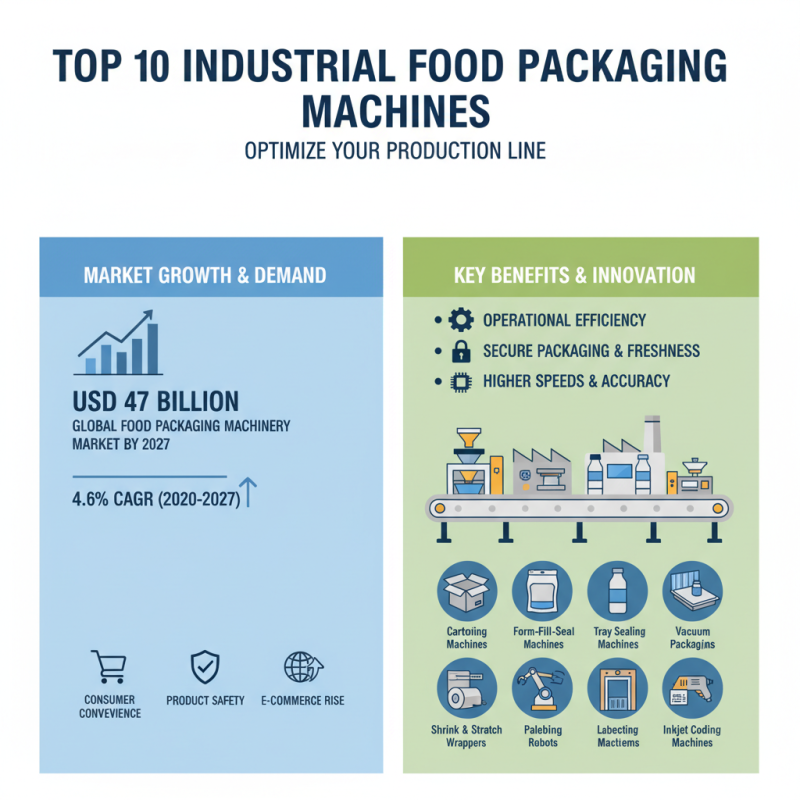
The demand for efficient and effective food packaging solutions has reached unprecedented levels in the industrial sector. According to a report by Grand View Research, the global food packaging machinery market is projected to exceed USD 47 billion by 2027, growing at a CAGR of 4.6% from 2020. This growth is driven by increasing consumer demand for convenience, enhanced product safety, and the rise in e-commerce, necessitating advanced industrial food packaging machines designed to streamline production processes and reduce costs.
Industrial food packaging machines play a pivotal role in enhancing the overall operational efficiency of production lines. They are instrumental in ensuring products are packaged securely, maintaining freshness and quality while meeting regulatory standards. With advancements in technology, modern machines are equipped with features that allow for higher speeds, better accuracy, and greater versatility, accommodating a range of products from solid foods to liquids. The necessity for innovation in design and functionality underscores the importance for manufacturers to adopt the latest packaging solutions to stay competitive in a rapidly evolving market.
In light of these trends, this article presents a comprehensive overview of the top 10 industrial food packaging machines that are essential for optimizing your production line. By investing in the right equipment, businesses can not only enhance their productivity but also ensure they meet the ever-changing demands of consumers and regulatory bodies alike.
Top 10 Industrial Food Packaging Machines for Your Production Line
In modern manufacturing, efficient food packaging is crucial for preserving product quality and ensuring smooth operations on production lines. Industrial food packaging machines play a vital role in automating the packaging process, improving speed and efficiency while reducing labor costs. With advancements in technology, these machines offer innovative solutions to meet the diverse needs of food producers, whether it involves sealing, filling, or labeling products.
When selecting packaging machinery, it's essential to consider factors such as the type of food being packaged, production volume, and packaging format. Horizontal and vertical form-fill-seal machines are popular choices for their versatility and ability to handle various packaging materials. Additionally, vacuum packaging machines are increasingly favored for perishable items, as they effectively extend shelf life by removing air and sealing the product tightly. Furthermore, automated labeling machines ensure that products are accurately marked, enhancing traceability and compliance in food safety regulations. Overall, selecting the right equipment can significantly impact productivity and product quality in any food production line.
Understanding the Role of Packaging Machines in Food Safety Standards
The role of packaging machines in ensuring food safety standards cannot be overstated in today's production environments. These machines are designed to create airtight seals that prevent contamination, preserve freshness, and extend the shelf life of food products. By utilizing advanced technology, modern packaging machines effectively safeguard against external factors such as moisture, light, and microbial contamination, which can significantly compromise food safety. Consistent and reliable packaging practices help companies adhere to stringent regulatory compliance and maintain consumer trust in the safety of their products.
In addition to protecting food items, packaging machines also contribute to traceability and transparency within the supply chain. Many of these machines are equipped with coding and labeling systems that provide essential information about product origins, expiration dates, and handling instructions. This transparency not only helps meet legal requirements but also empowers consumers to make informed choices about the products they purchase. With the continuous evolution of food safety standards, investing in high-quality packaging machinery becomes crucial for manufacturers who aim to operate efficiently and responsibly in the competitive food industry.
Key Features to Look for in Industrial Food Packaging Machines
When selecting industrial food packaging machines for your production line, several key features play a crucial role in enhancing efficiency and ensuring product quality. One significant consideration is the machine's flexibility. A report by Smithers Pira indicates that the demand for customizable packaging solutions is increasing, with 53% of manufacturers seeking machines capable of handling various package styles and sizes. This flexibility allows businesses to respond swiftly to market trends and consumer preferences, ultimately boosting profitability.
Another vital feature is automation capability. Research from PMI Media highlights that automation in food packaging can lead to a 20-30% increase in production efficiency. Machines equipped with advanced automation technologies reduce manual labor and minimize human error, improving overall operational consistency. Additionally, the integration of real-time monitoring systems ensures that production processes are tracked meticulously, allowing for quick adjustments and minimizing downtime.
Lastly, sustainability is an ever-growing concern in the food packaging sector. According to a report by the International Packaging Association, 63% of consumers prefer brands that use environmentally friendly packaging. Consequently, selecting machines that offer eco-friendly packaging options, such as biodegradable materials and energy-efficient processes, is essential. Investing in such technology not only aligns with consumer expectations but also complies with increasing regulatory demands surrounding packaging sustainability.
Comparative Analysis of Popular Packaging Machine Types and Their Efficiency
In the realm of industrial food packaging, efficiency is paramount for optimizing production lines. A comparative analysis reveals that different types of packaging machines, such as vacuum sealers, flow wrappers, and carton sealers, each come with unique efficiencies tailored to specific packaging needs. According to the Food Packaging Market Report, automated packaging systems can increase throughput by up to 40% compared to manual processes, significantly decreasing labor costs and minimizing the risk of contamination.
When assessing these machines, it is crucial to consider factors such as speed, compatibility with various materials, and ease of maintenance. For instance, flow wrappers are particularly effective for packaging snacks and bakery products at high speeds, making them a favored choice for producers seeking rapid output. A recent study indicated that manufacturers utilizing automated flow wrap machines can achieve a packaging speed of up to 300 packs per minute, dramatically enhancing overall productivity.
Tips: To maximize the efficiency of your packaging line, conduct a thorough analysis of your production volume and the types of products being packaged. Prioritize machines that offer flexibility in terms of material handling and pack styles, as this will help adapt to changing market demands without incurring significant downtime. Additionally, invest in regular maintenance to ensure your machines operate at peak performance, extending their lifespan and reducing unexpected repair costs.
Top 10 Industrial Food Packaging Machines Efficiency Comparison
Impact of Automation on Food Packaging Production and Cost Reduction
Automation has revolutionized the food packaging industry, significantly enhancing production efficiency and reducing overall costs. According to a report by the International Federation of Robotics, the adoption of robotics and automated systems in food packaging can lead to a productivity increase of up to 30%. This transformation is primarily driven by the ability to achieve higher speed and accuracy in packaging processes, which not only accelerates throughput but also minimizes human error. As a result, businesses can meet consumer demand more effectively while maintaining consistent quality.
To maximize the benefits of automation in food packaging, businesses should consider investing in integrated systems that streamline operations from filling to sealing. Research shows that companies utilizing automated solutions report a reduction in labor costs by nearly 20-25%. Emphasizing the need for skilled personnel to manage these automated systems is crucial, as it ensures smooth operation and maintenance.
Tips: Initially, conduct a thorough assessment of your production needs to determine which aspects of automation could deliver the best return on investment. Additionally, invest in employee training programs to equip your team with the necessary skills to operate advanced packaging machines efficiently. Embracing automation in food packaging not only simplifies processes but can also contribute to long-term sustainability and competitiveness in the market.
Top 10 Industrial Food Packaging Machines for Your Production Line
| Machine Model |
Type |
Automation Level |
Production Speed (units/hour) |
Cost Savings (%) |
| Model A |
Filling Machine |
Fully Automated |
1200 |
20 |
| Model B |
Cartoning Machine |
Semi-Automated |
800 |
15 |
| Model C |
Sealing Machine |
Fully Automated |
1000 |
25 |
| Model D |
Labeling Machine |
Fully Automated |
1500 |
30 |
| Model E |
Palletizing Machine |
Fully Automated |
500 |
35 |
| Model F |
Wrapping Machine |
Semi-Automated |
700 |
18 |
| Model G |
Vacuum Packaging Machine |
Fully Automated |
600 |
22 |
| Model H |
Shrink Wrap Machine |
Fully Automated |
850 |
27 |
| Model I |
Flow Wrapping Machine |
Semi-Automated |
950 |
19 |
| Model J |
Bottling Machine |
Fully Automated |
1300 |
23 |
Conclusion
In the modern food production landscape, industrial food packaging machines play a critical role in ensuring the safety and quality of food products. Understanding the various types of packaging machines, along with their efficiency and features, is essential for optimizing production lines. Key characteristics to consider include the ability to meet stringent food safety standards and enhance operational efficiency.
The impact of automation in this field cannot be overstated, as it significantly reduces production costs while improving reliability and speed. As the industry continues to evolve, future trends highlight a strong emphasis on innovative technologies and sustainable practices, which are shaping the design and functionality of industrial food packaging machines. Embracing these advancements is crucial for manufacturers looking to stay competitive while prioritizing food safety and sustainability.